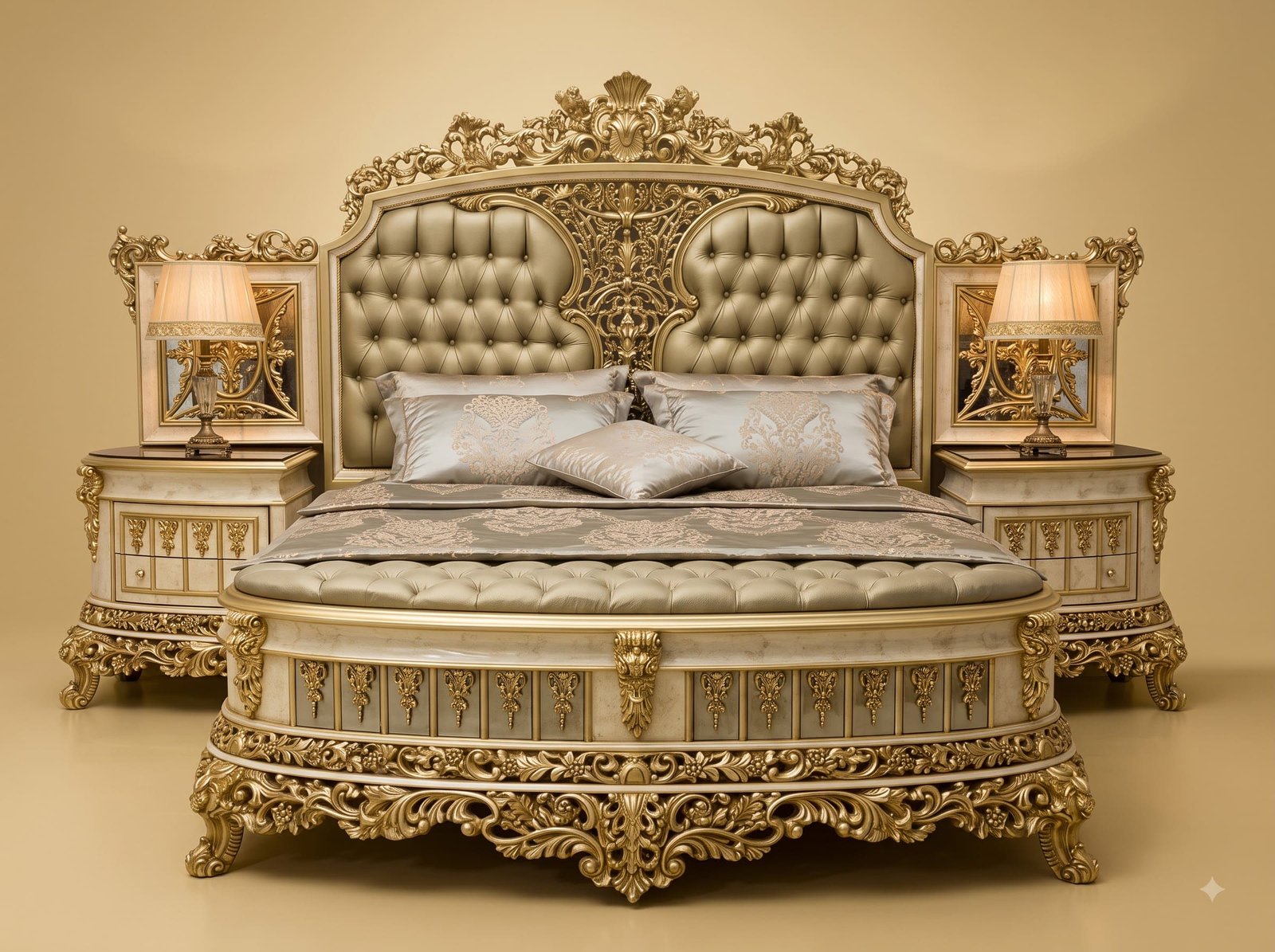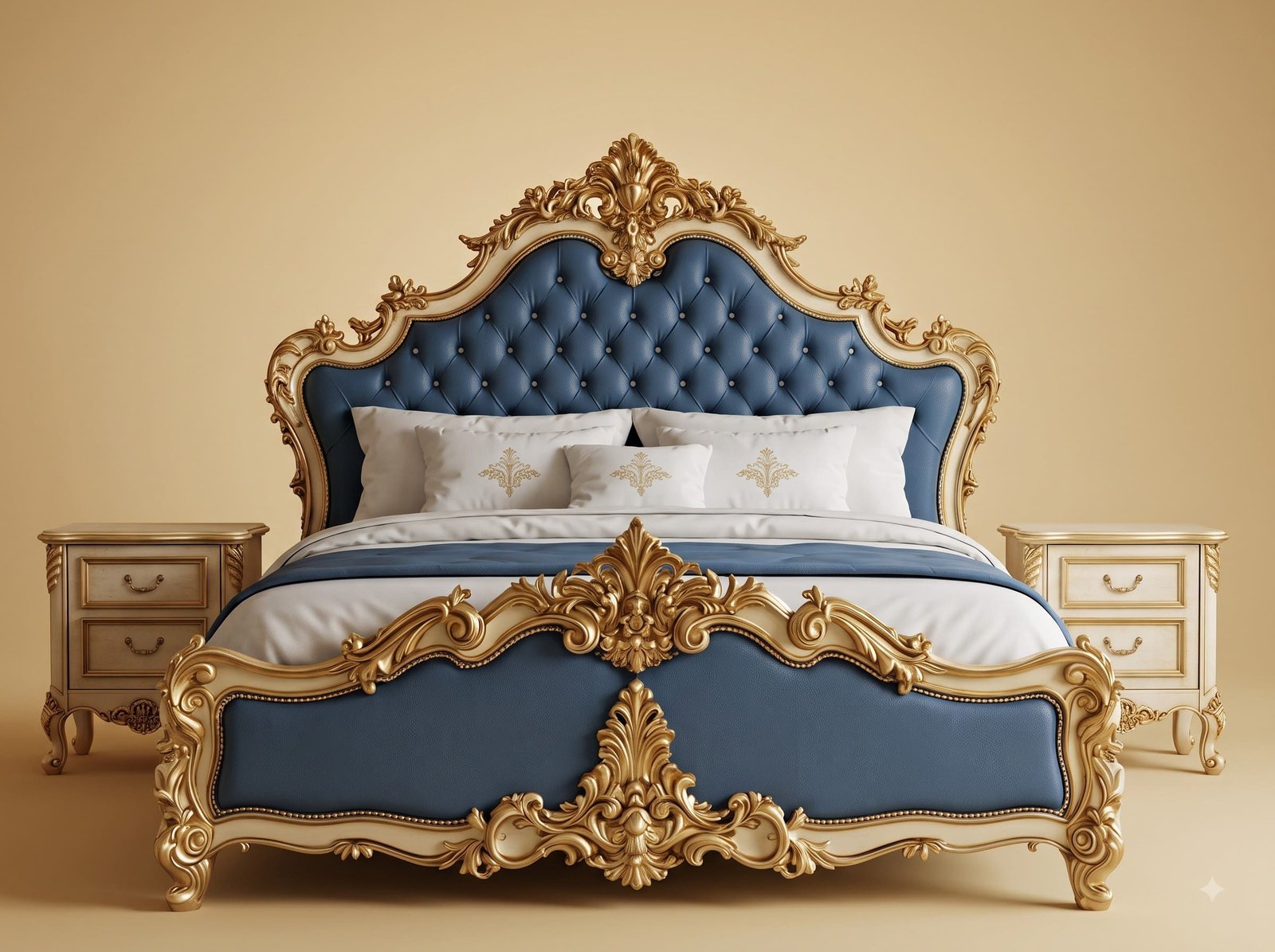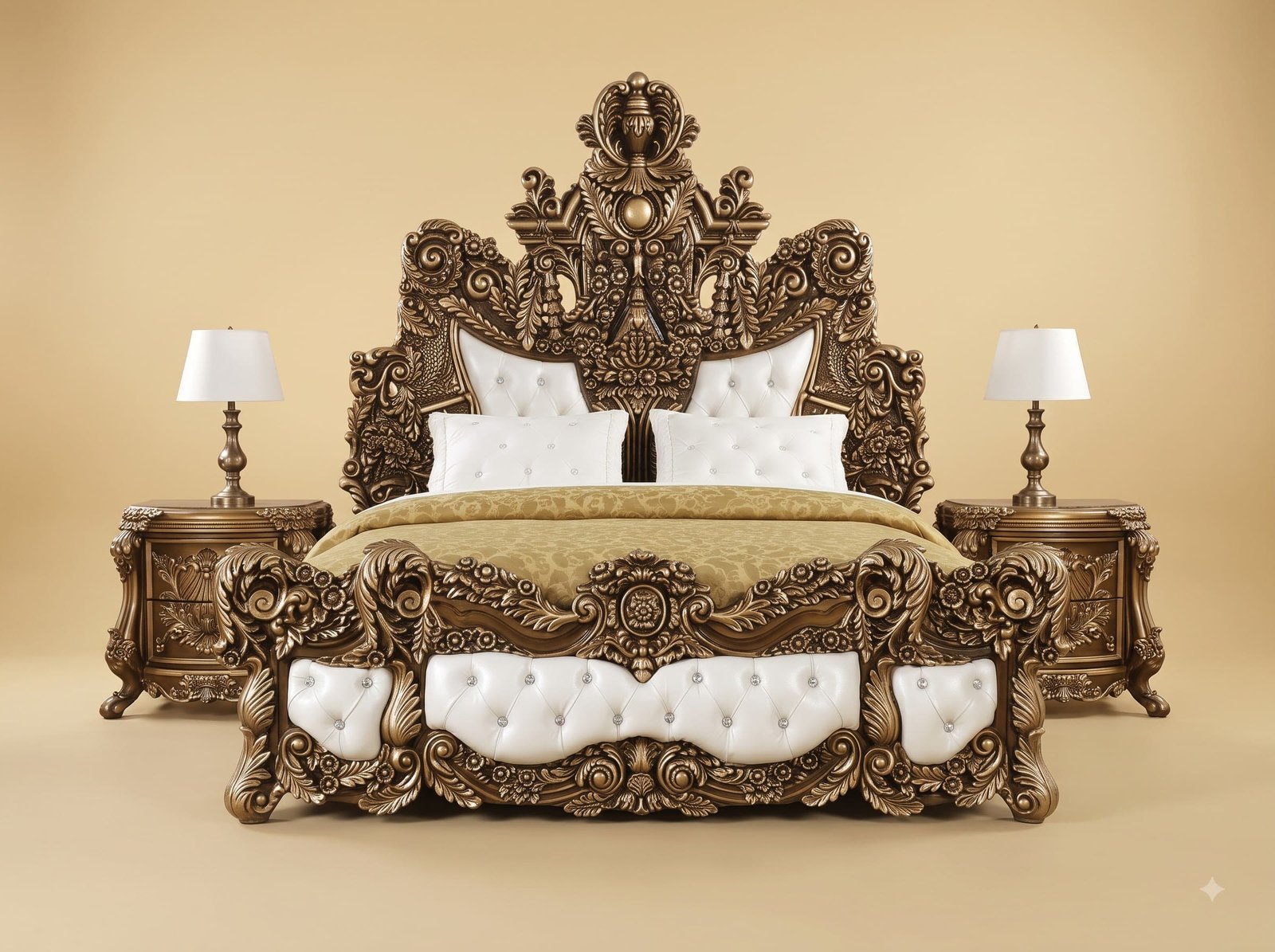
Furniture that borrows from buildings is an old habit. Pilasters, capitals, pedestals, urns and finials all began as architecture, and cabinetmakers took them because they solved a problem: how to make something tall look deliberate rather than merely big. Break the height into stages and the eye climbs it comfortably; leave it as one plane and it reads as a wall.
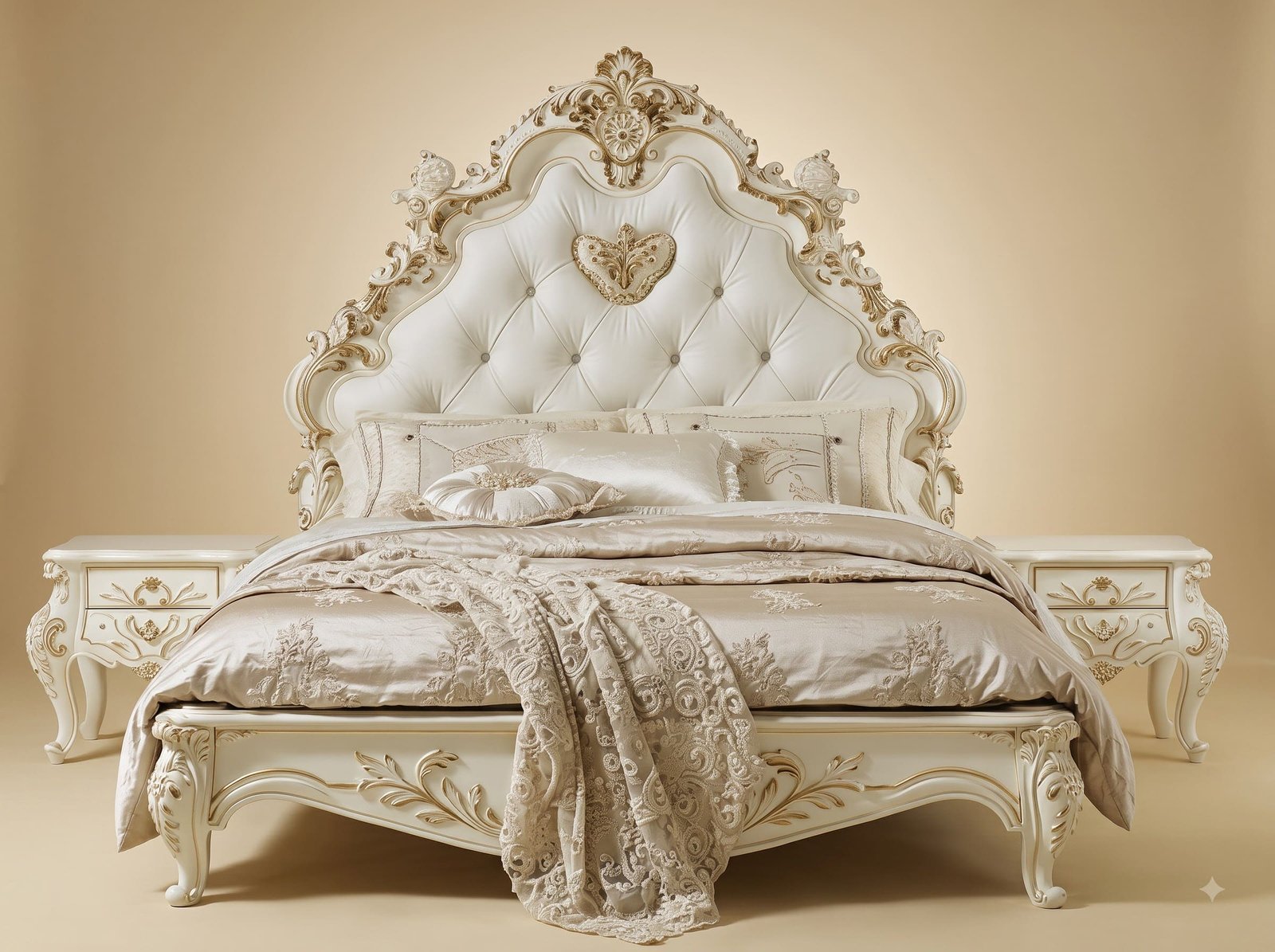
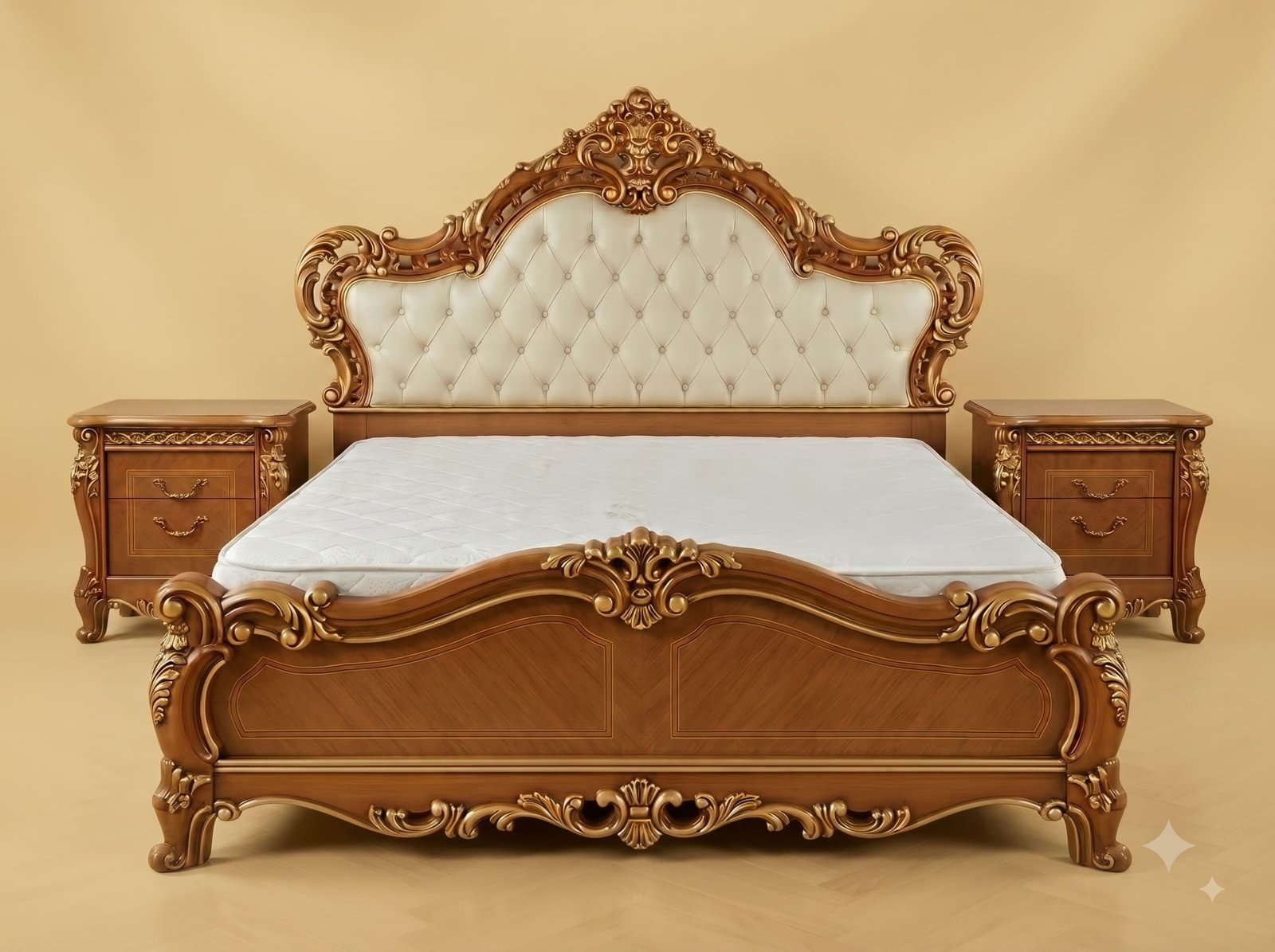
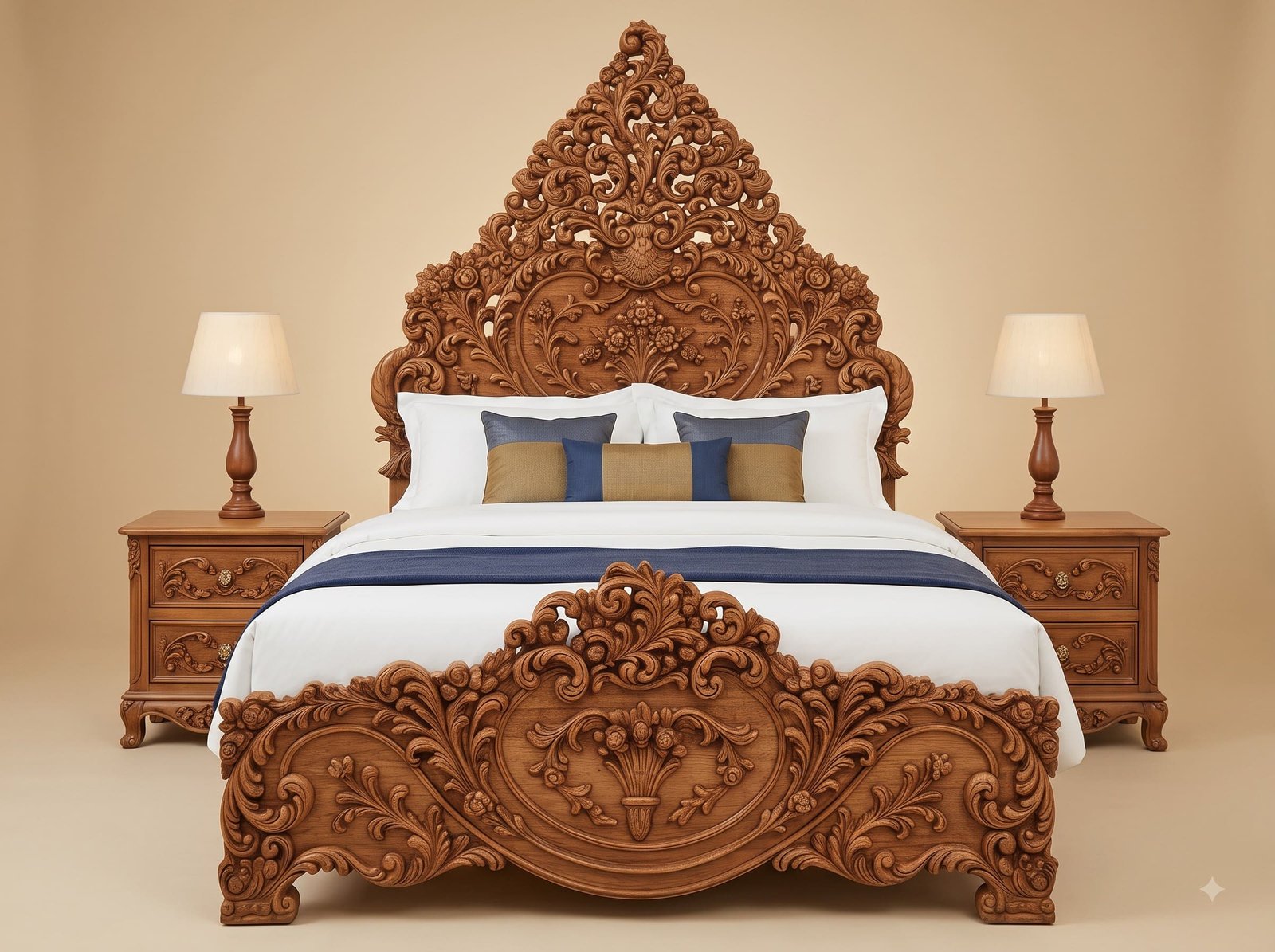
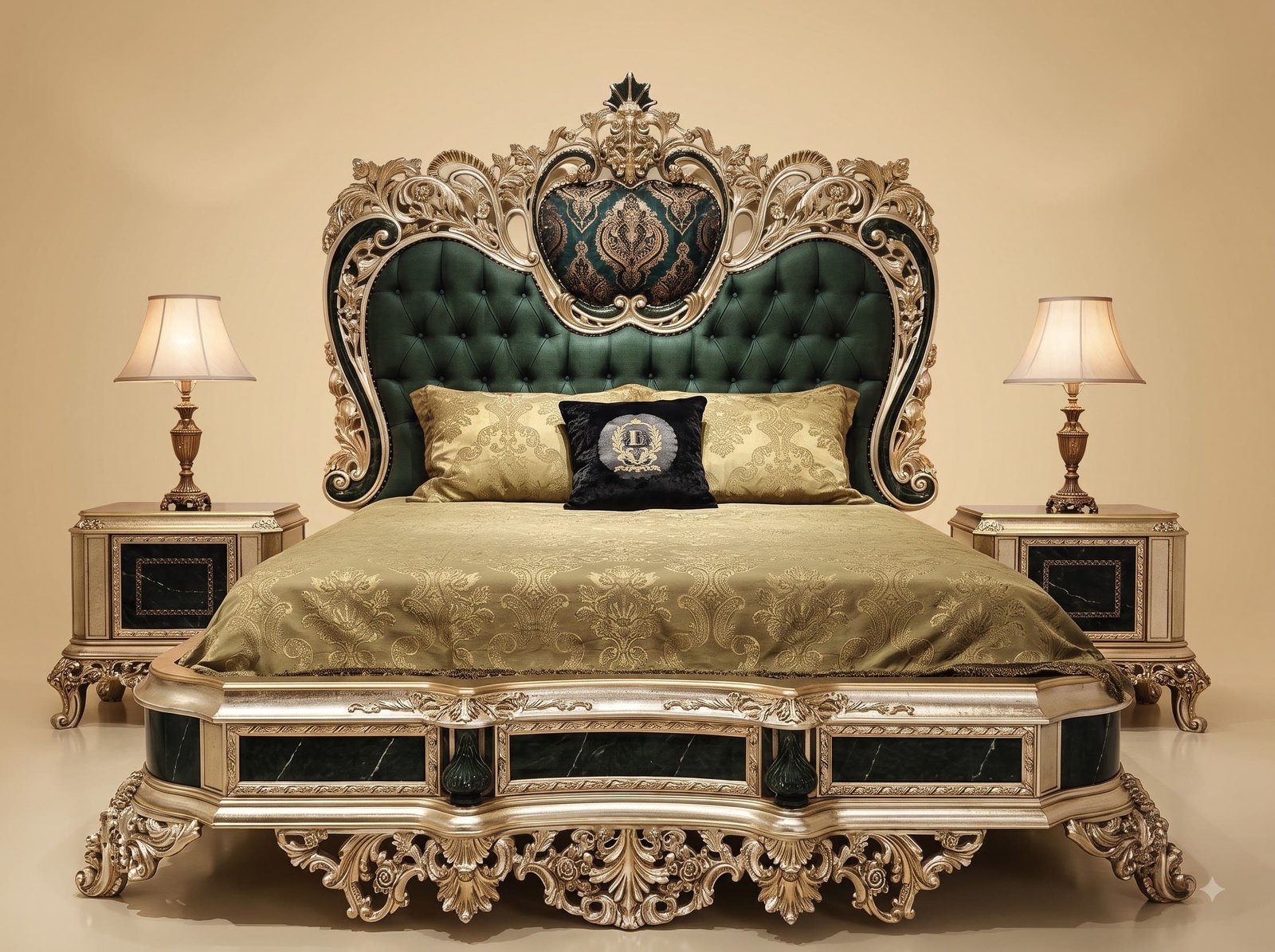
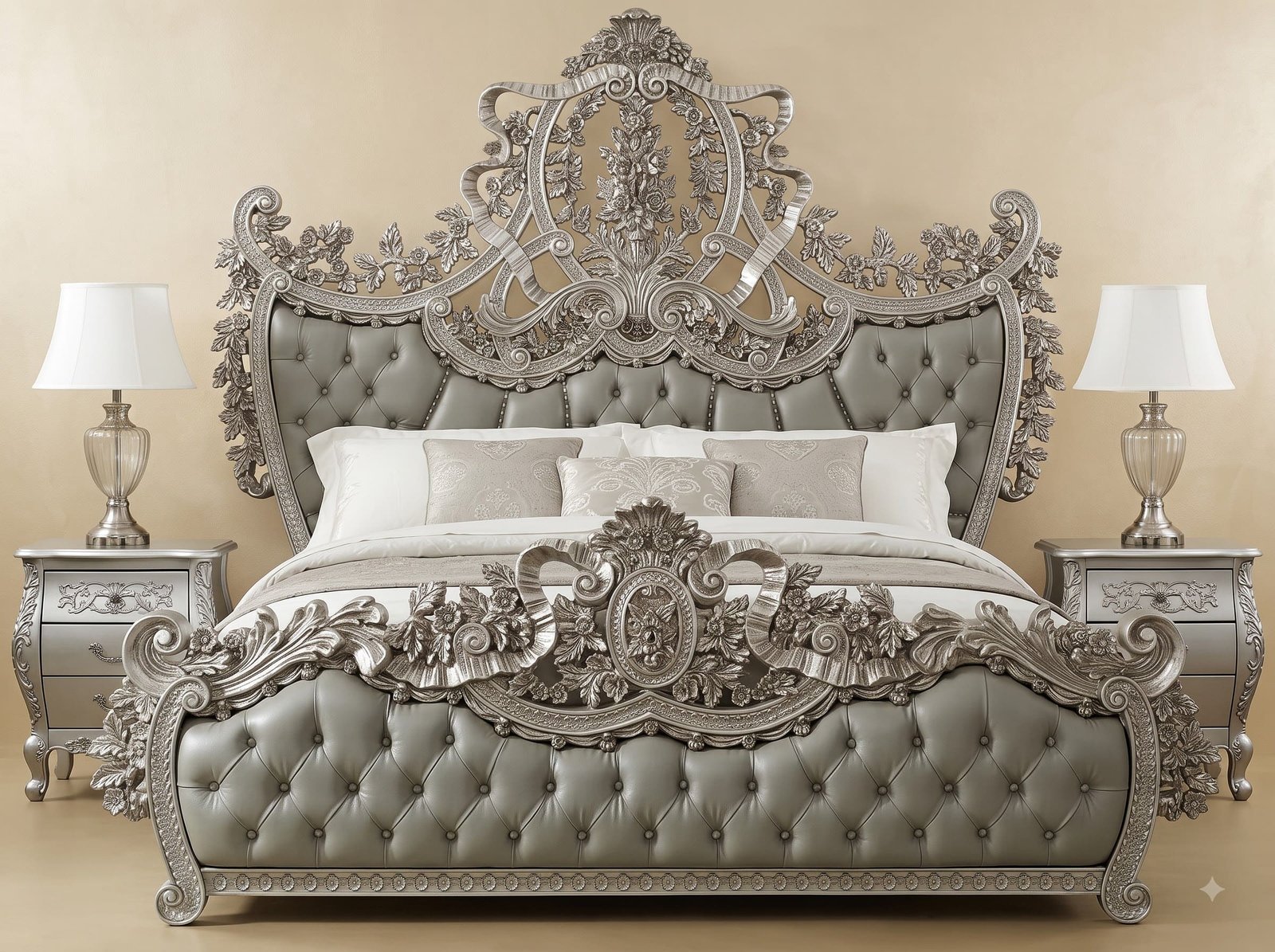
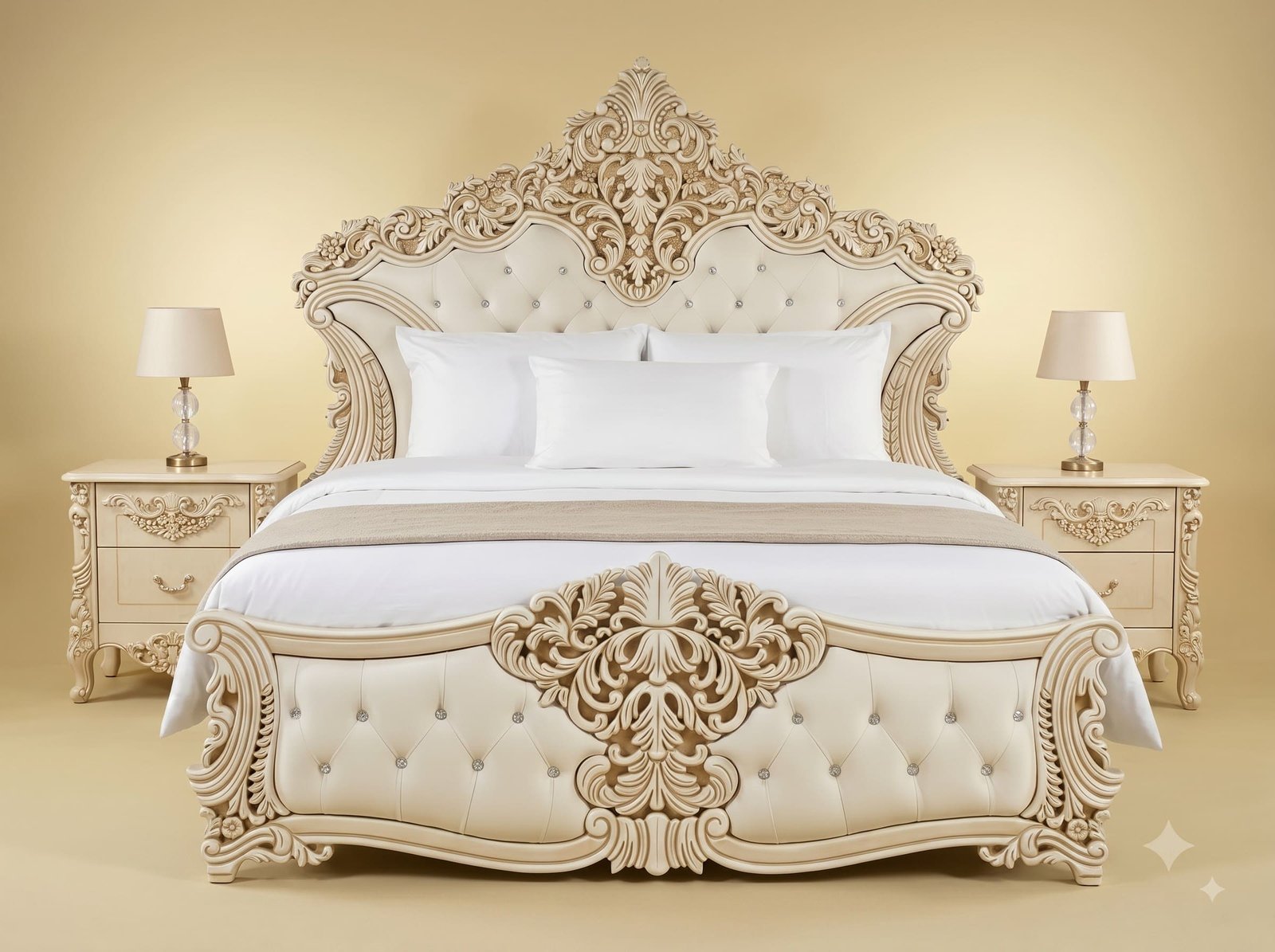
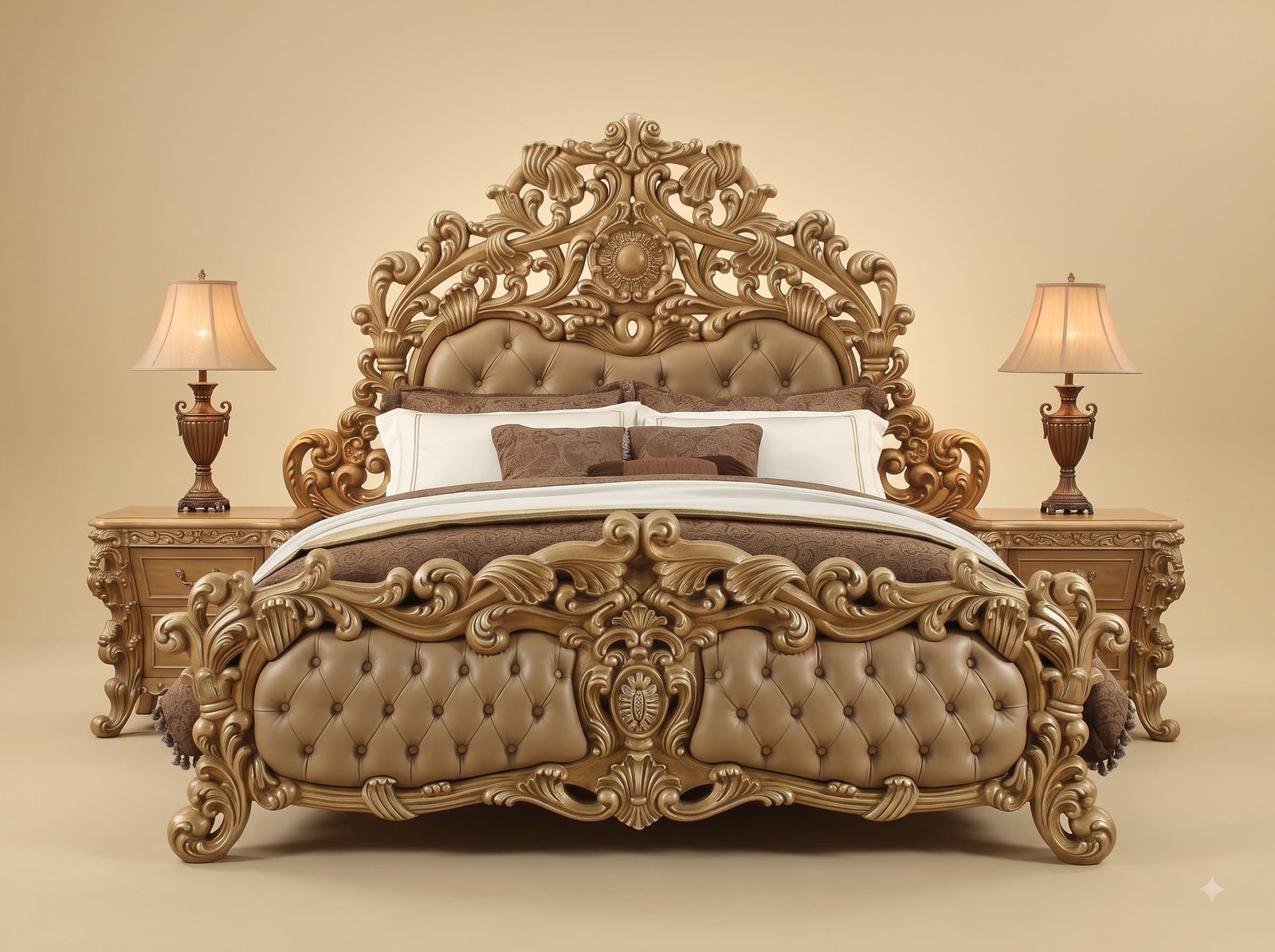
That is what is happening on this headboard. Every step outward and downward from the centre is a stage, and each one is carved to a slightly different scale so the composition tapers rather than stacking.
Symmetry is the discipline that makes it work, and it is unforgiving. A scroll on the left has to mirror a scroll on the right within a hair, or the whole design looks like it is leaning. Our master Indian artisans carve matching elements as pairs, side by side, moving between them rather than finishing one and then starting the other - the only reliable way to keep two hand-cut forms honest to each other.
 Ask Price On WhatsApp