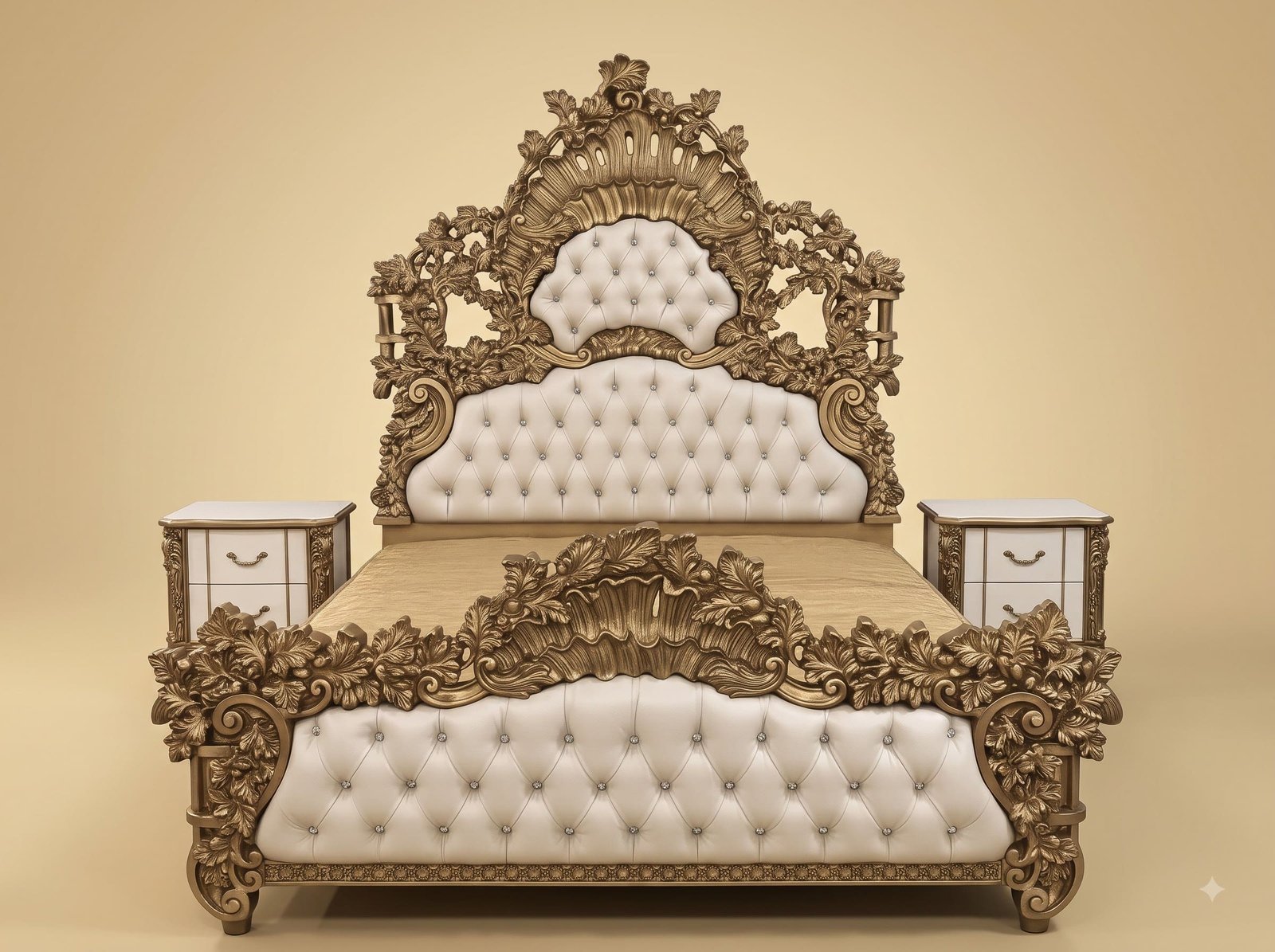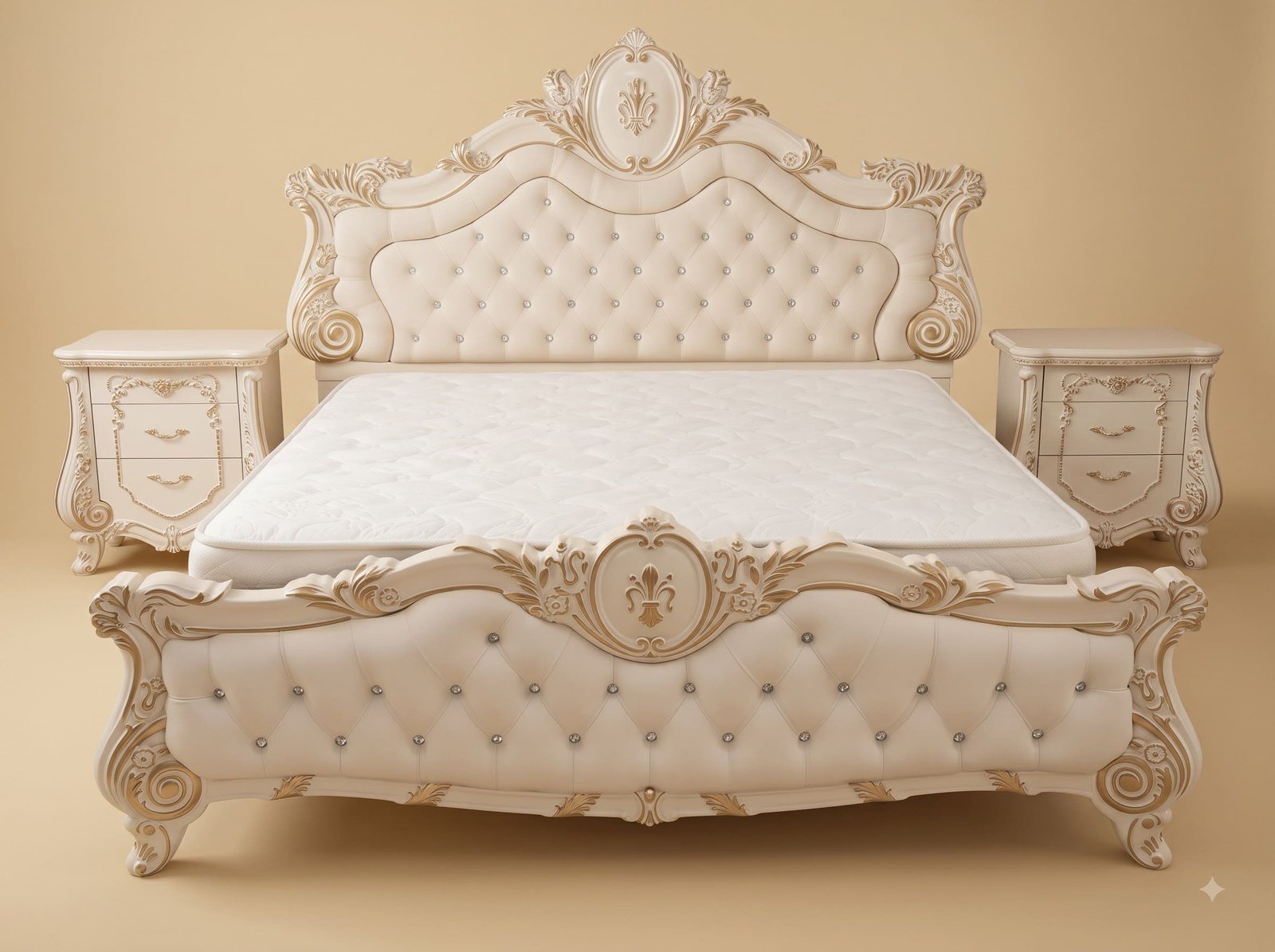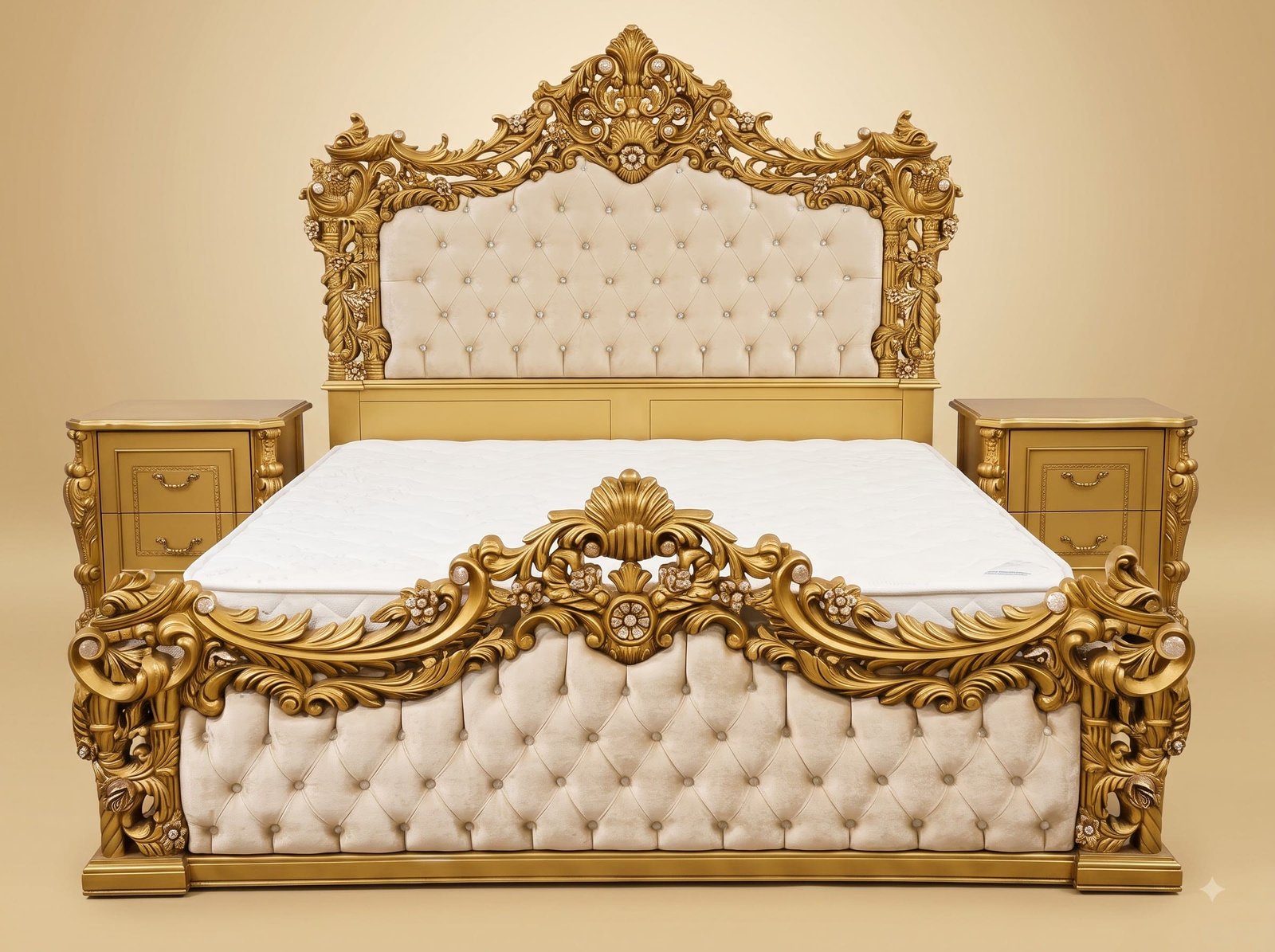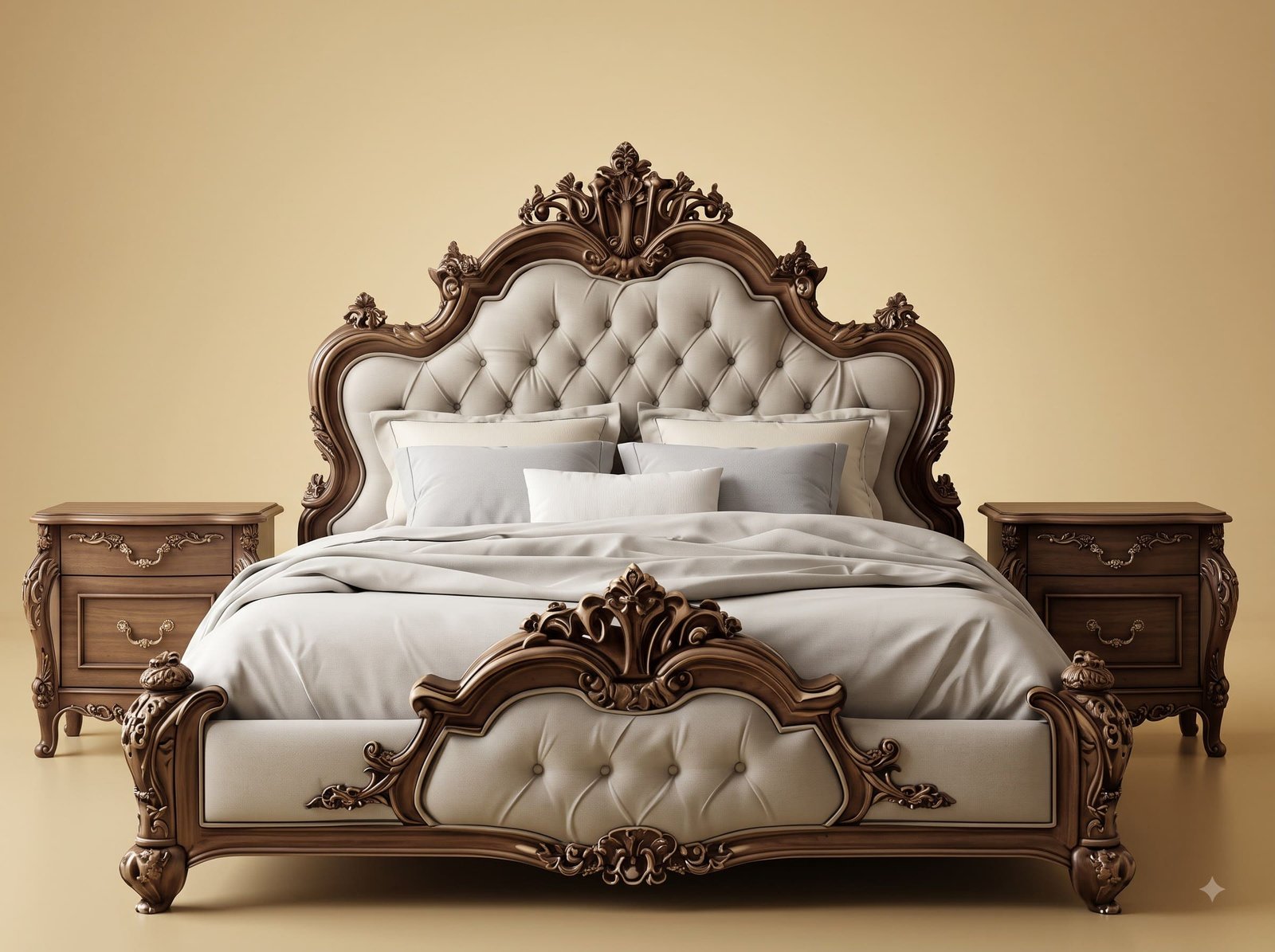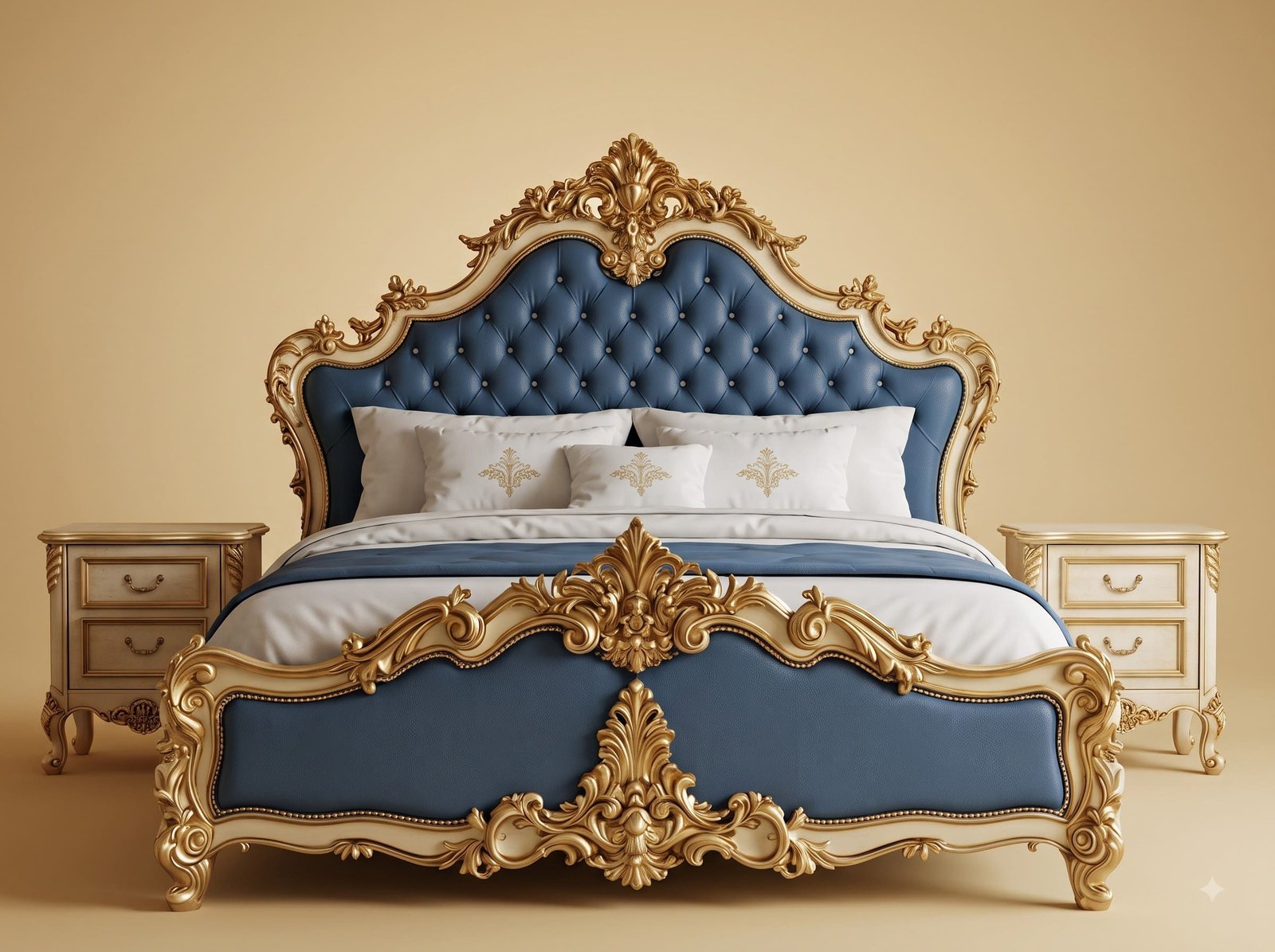
Close-set studs along an upholstered edge began as fixings and stayed as ornament. Before staples existed, a tack was how fabric was held to a frame, and upholsterers set them in a tight row because a row of tacks grips more evenly than a scattered few. Someone noticed the row looked deliberate, and it has been a decorative border ever since.
They also solve a real problem on a smooth panel. Flat upholstery has nothing to break up its expanse, so its edges become the whole design, and a studded line draws that edge precisely.
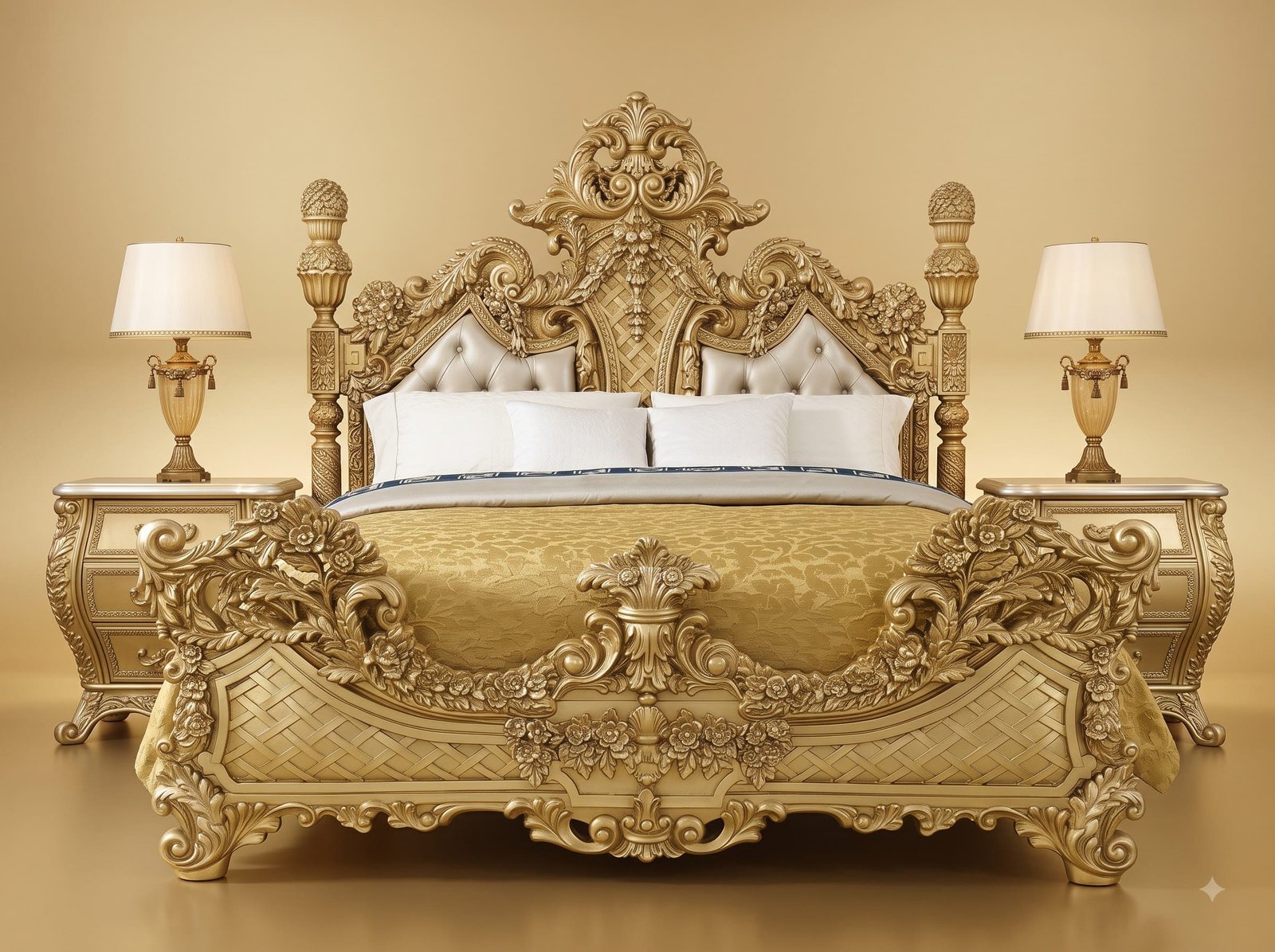
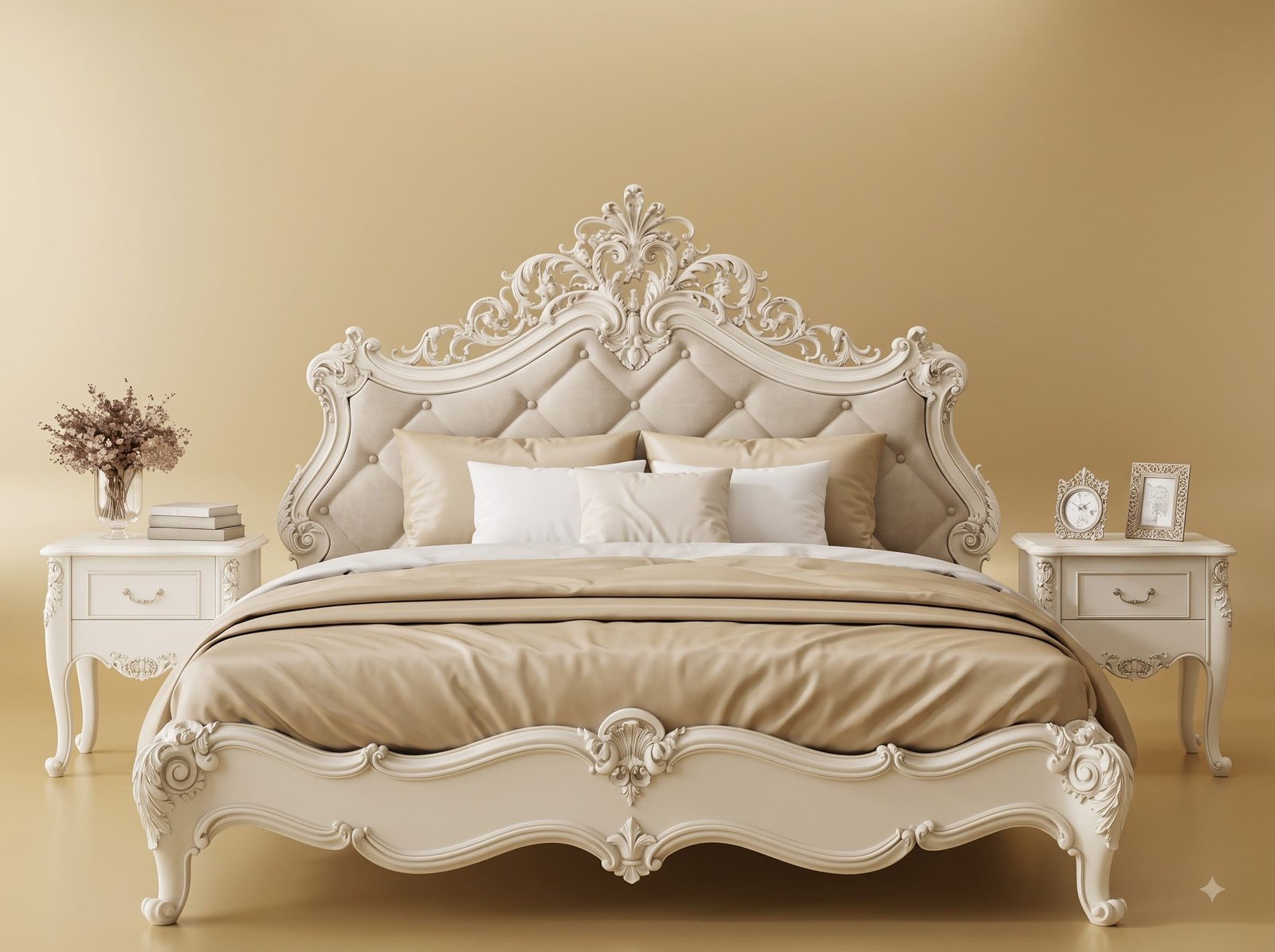
The other decision on this bed is the two-tone finish. Gilding an entire carved frame gives you a gold object; gilding only the raised carving over an ivory ground gives you a drawn line, which is why the piece stays light despite the depth of the work. Our master Indian artisans lay that gold by hand along each raised edge, and the value of it lies in the line never wavering - a fraction of a millimetre of drift and the eye reads it as a blur rather than an outline.
 Ask Price On WhatsApp