Carving First, Upholstery Second
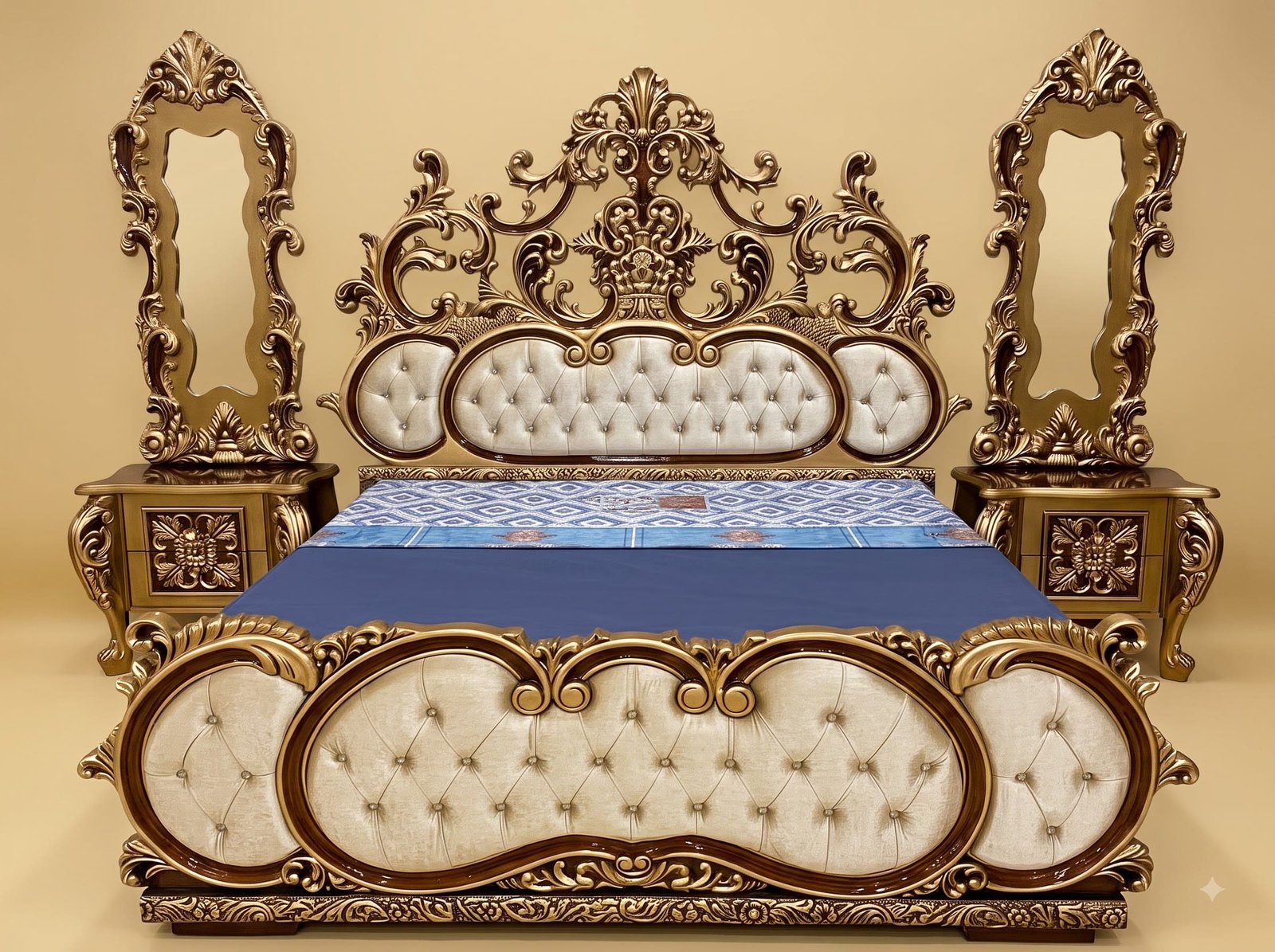
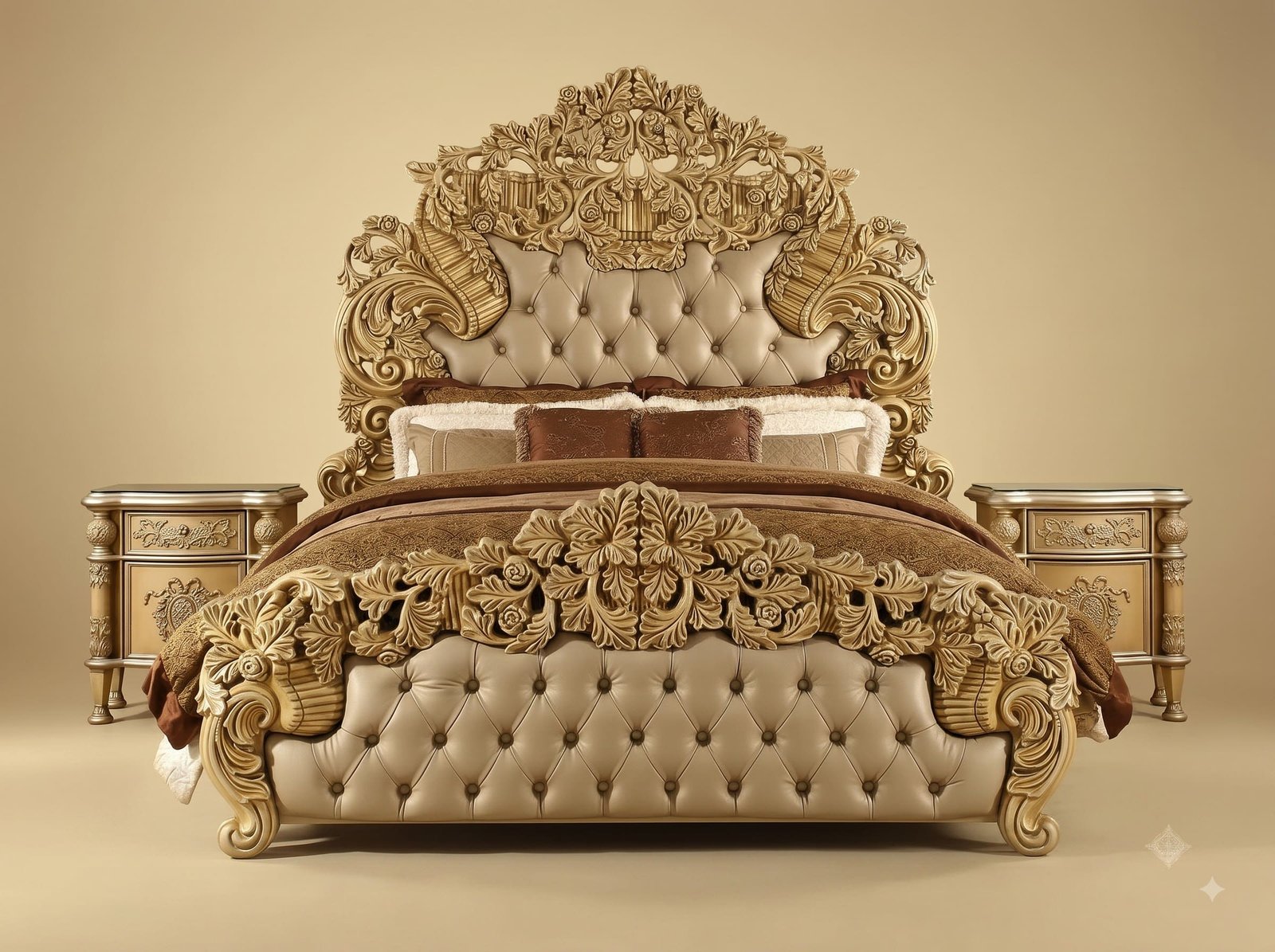
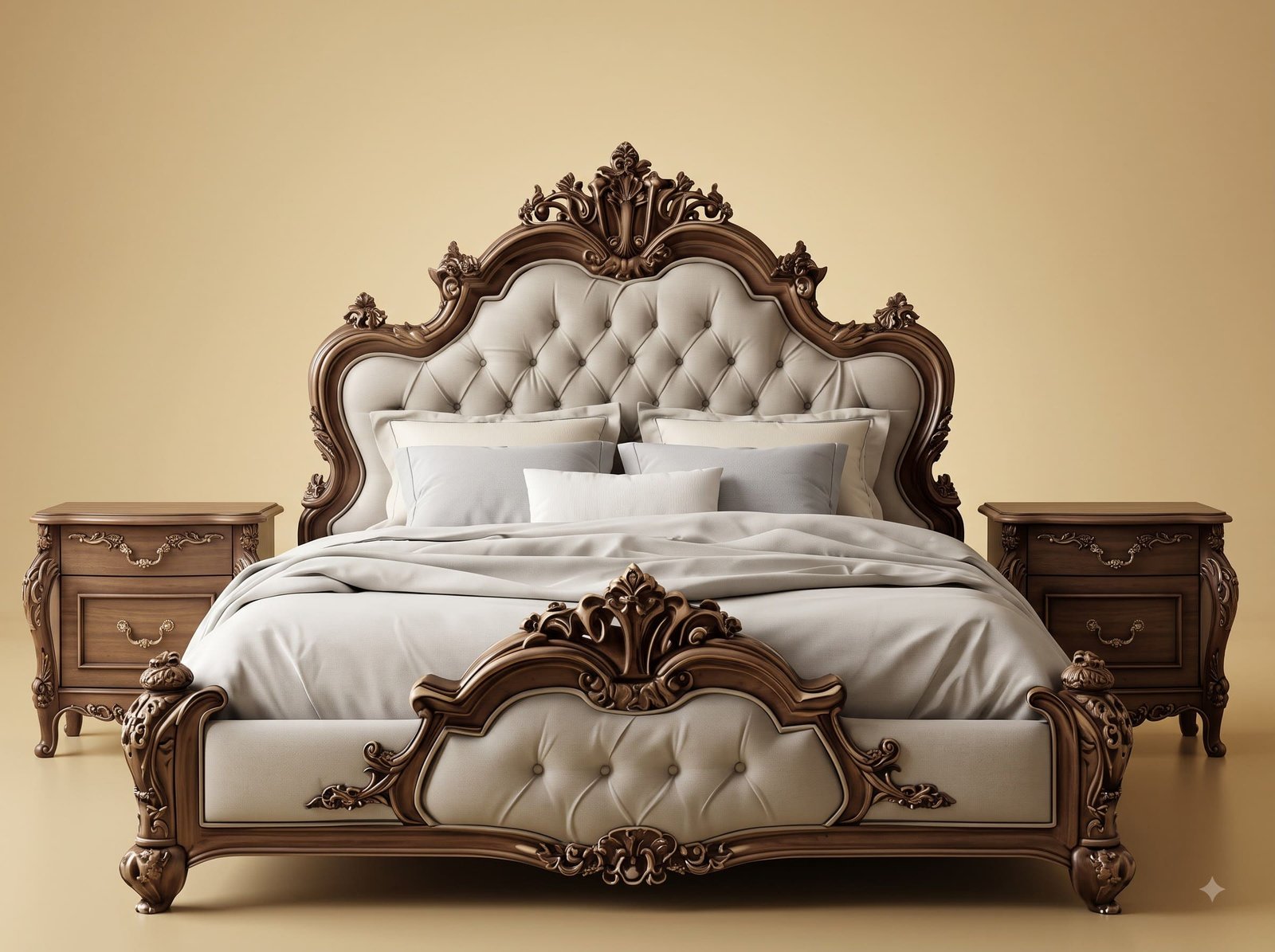
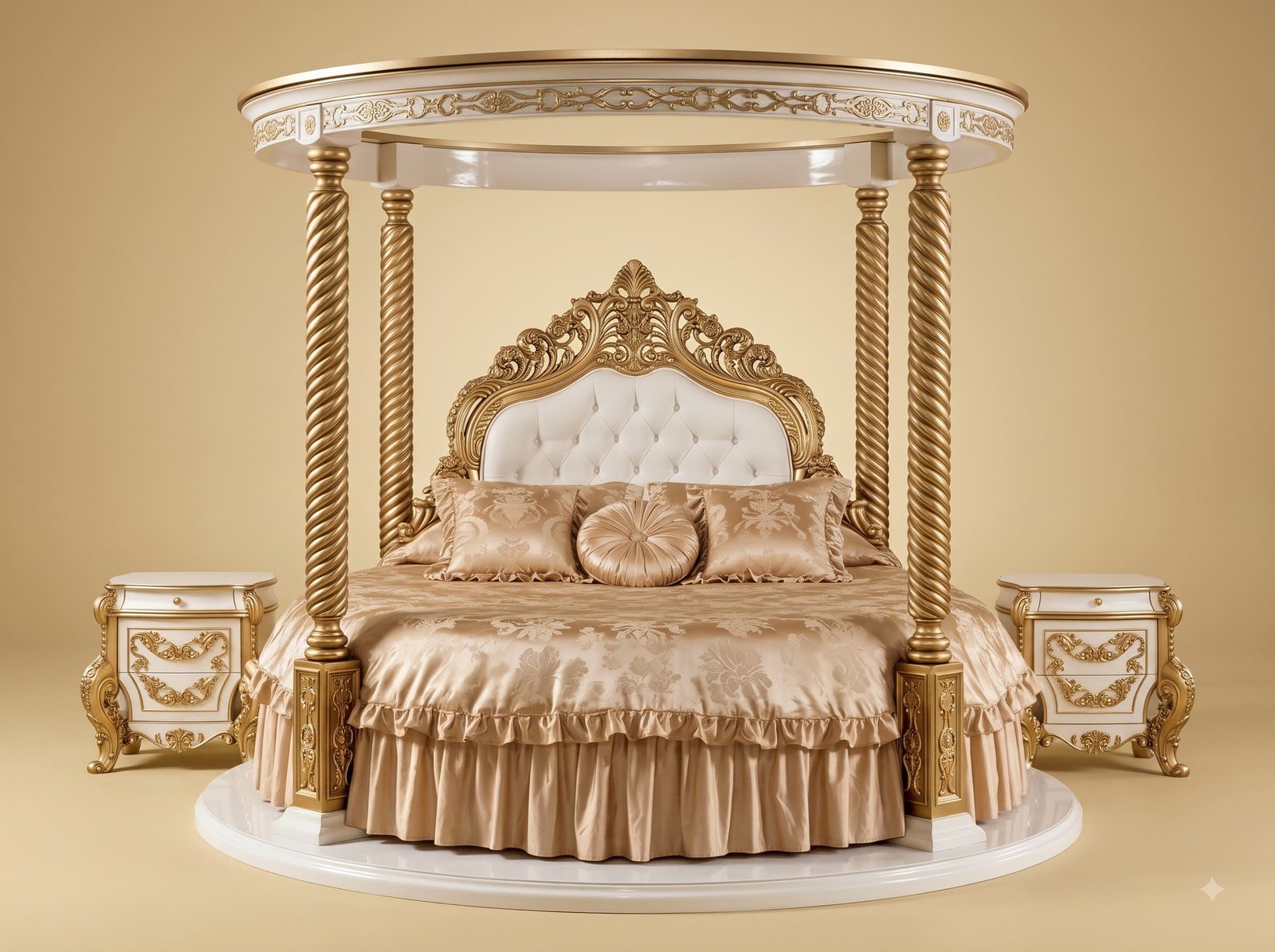
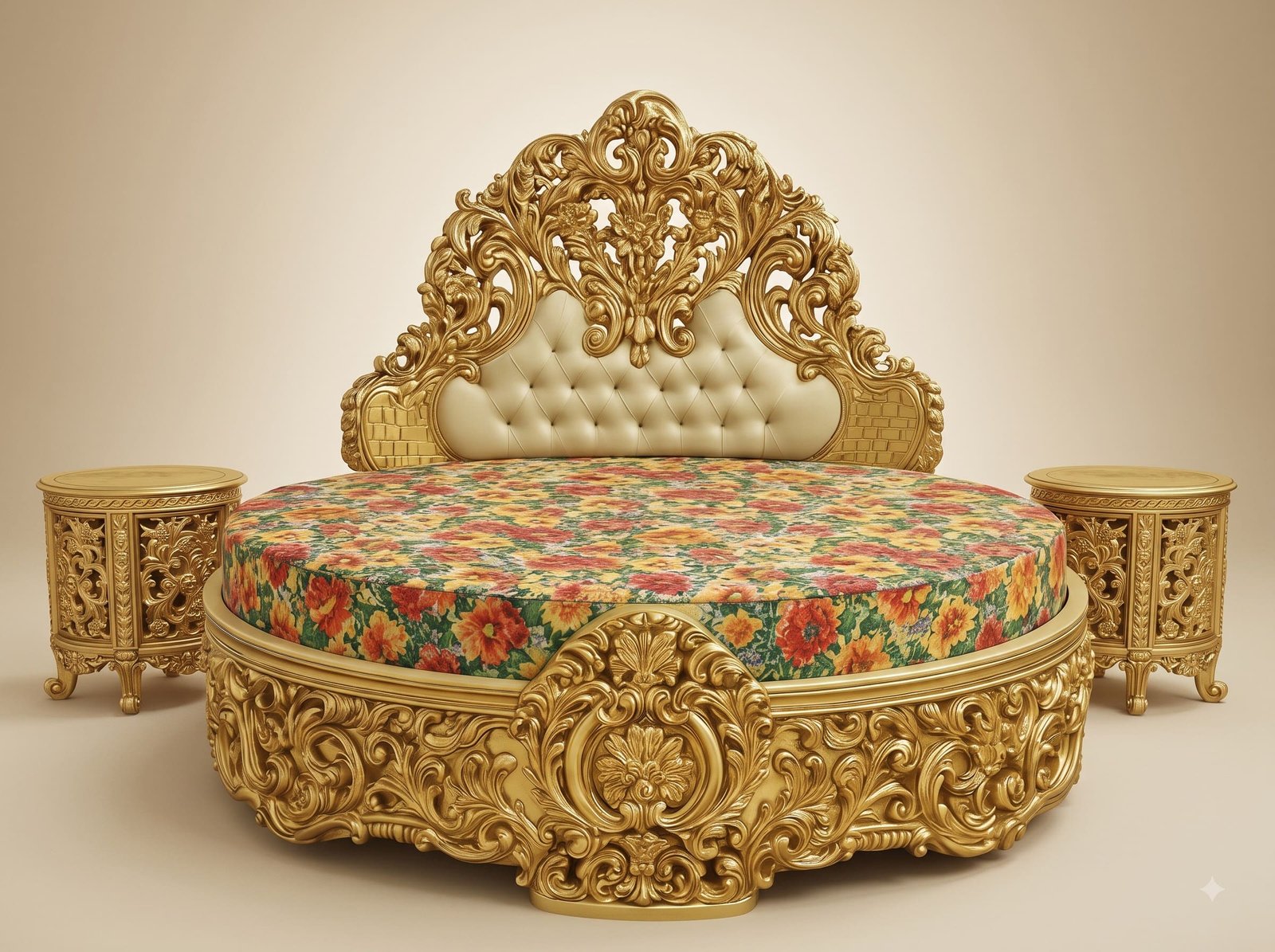
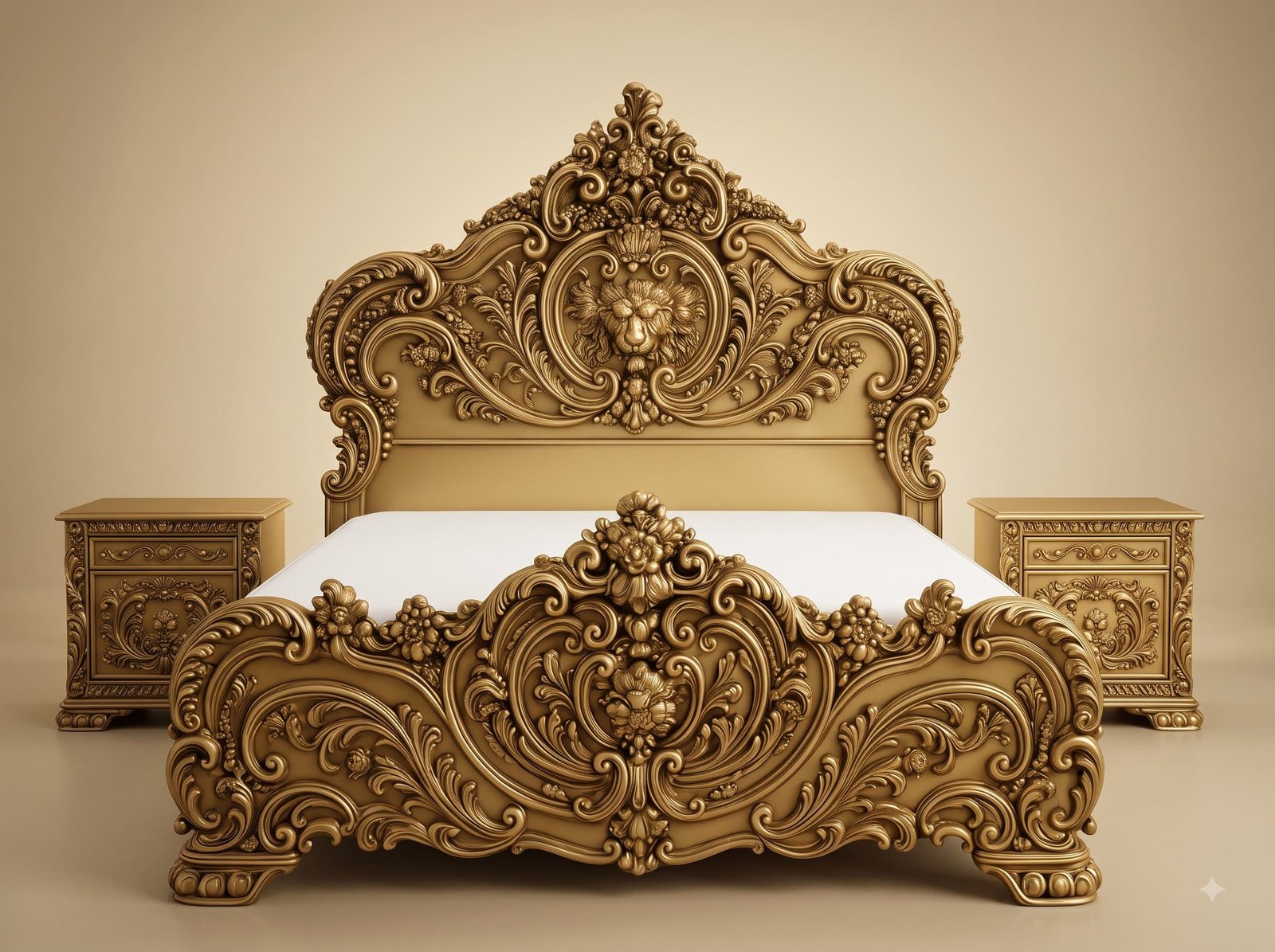
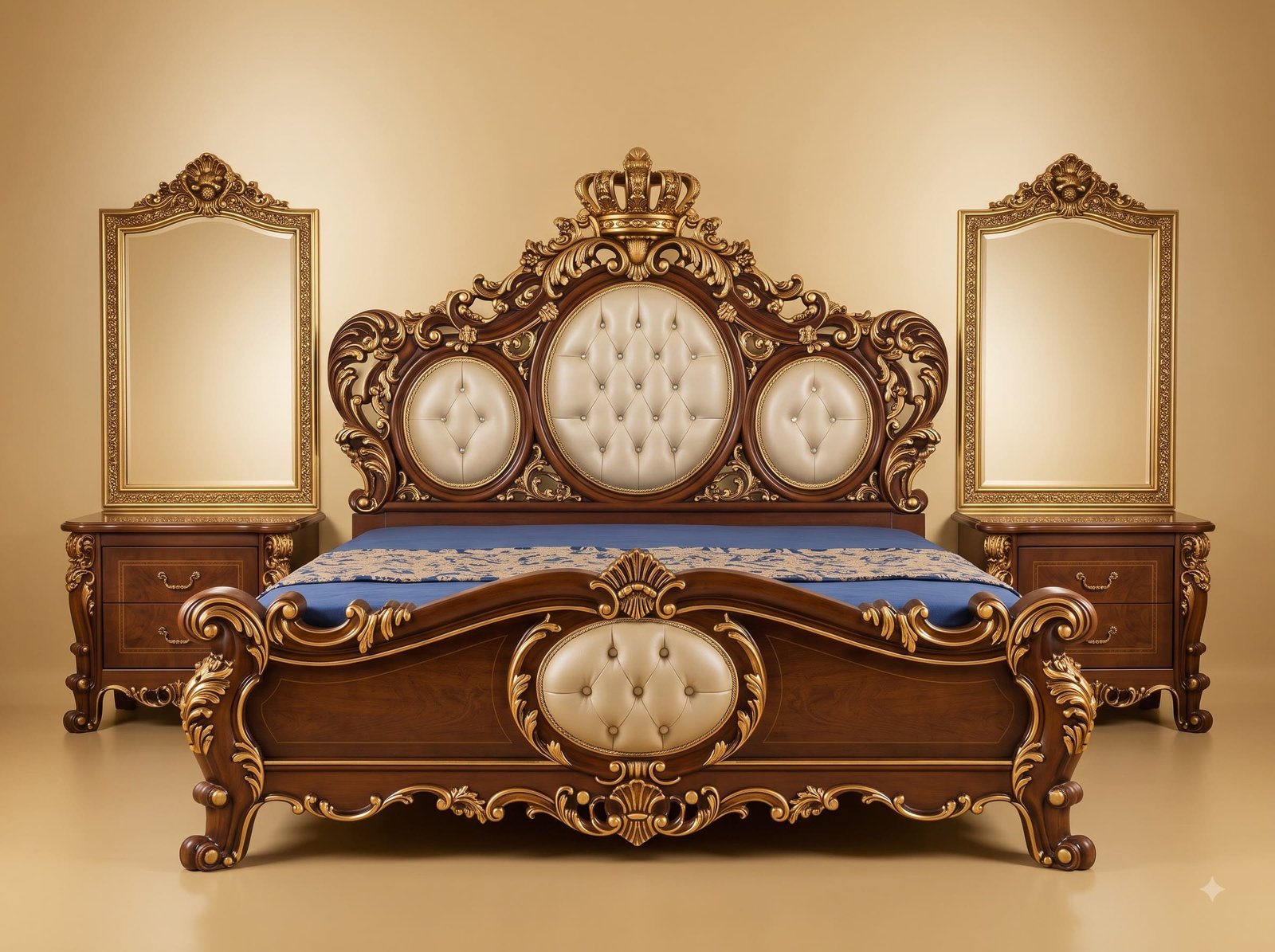
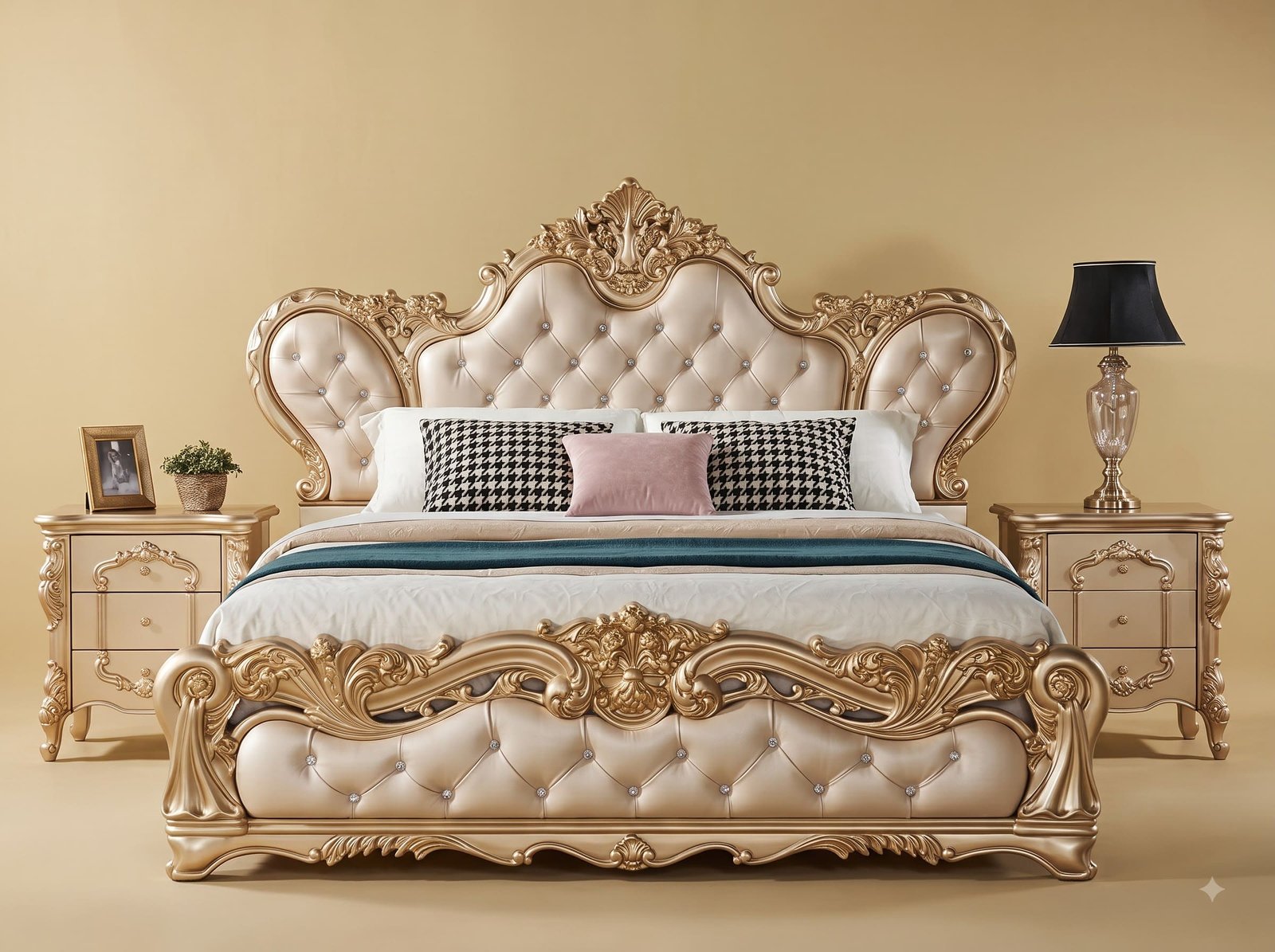
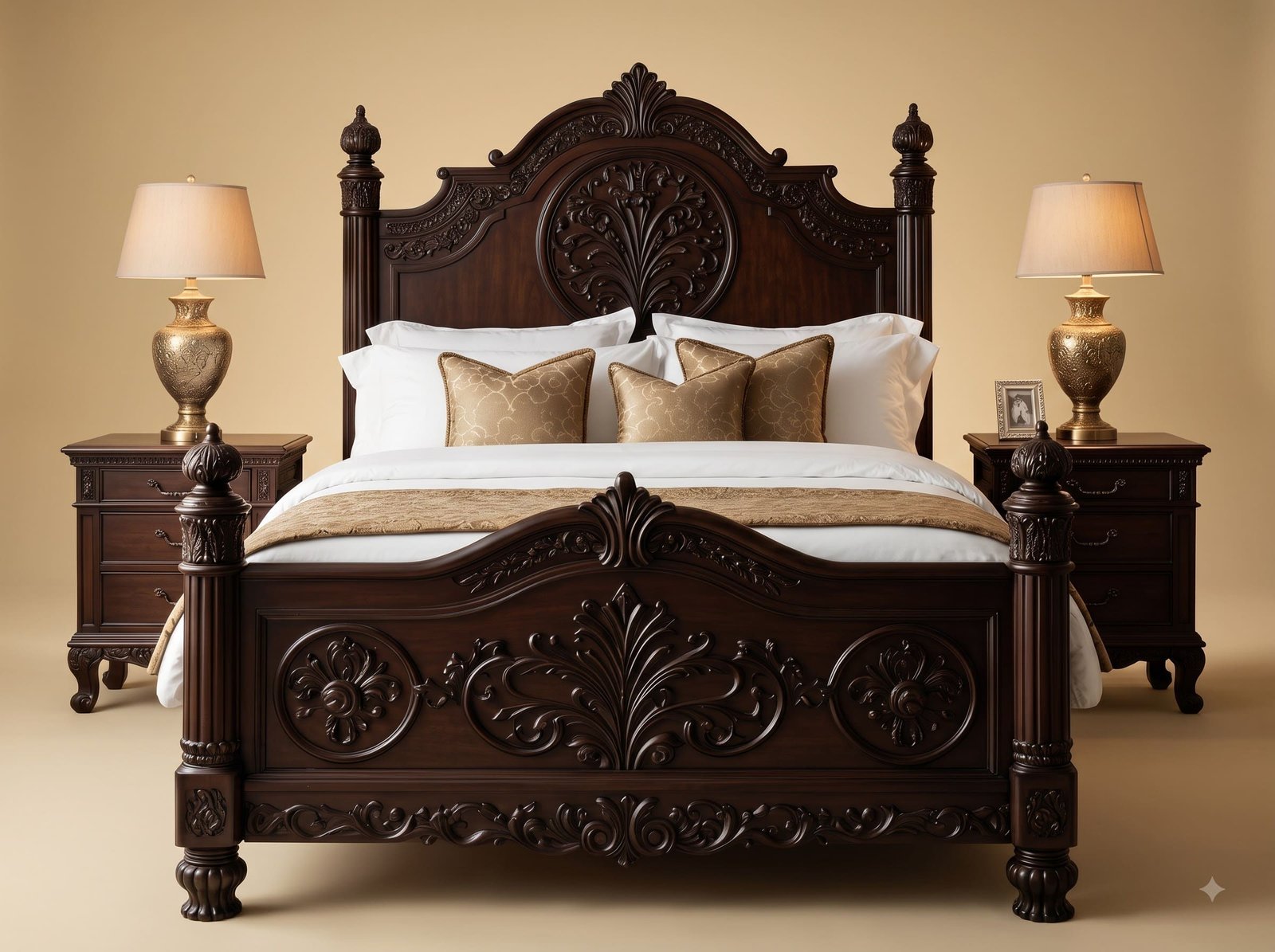
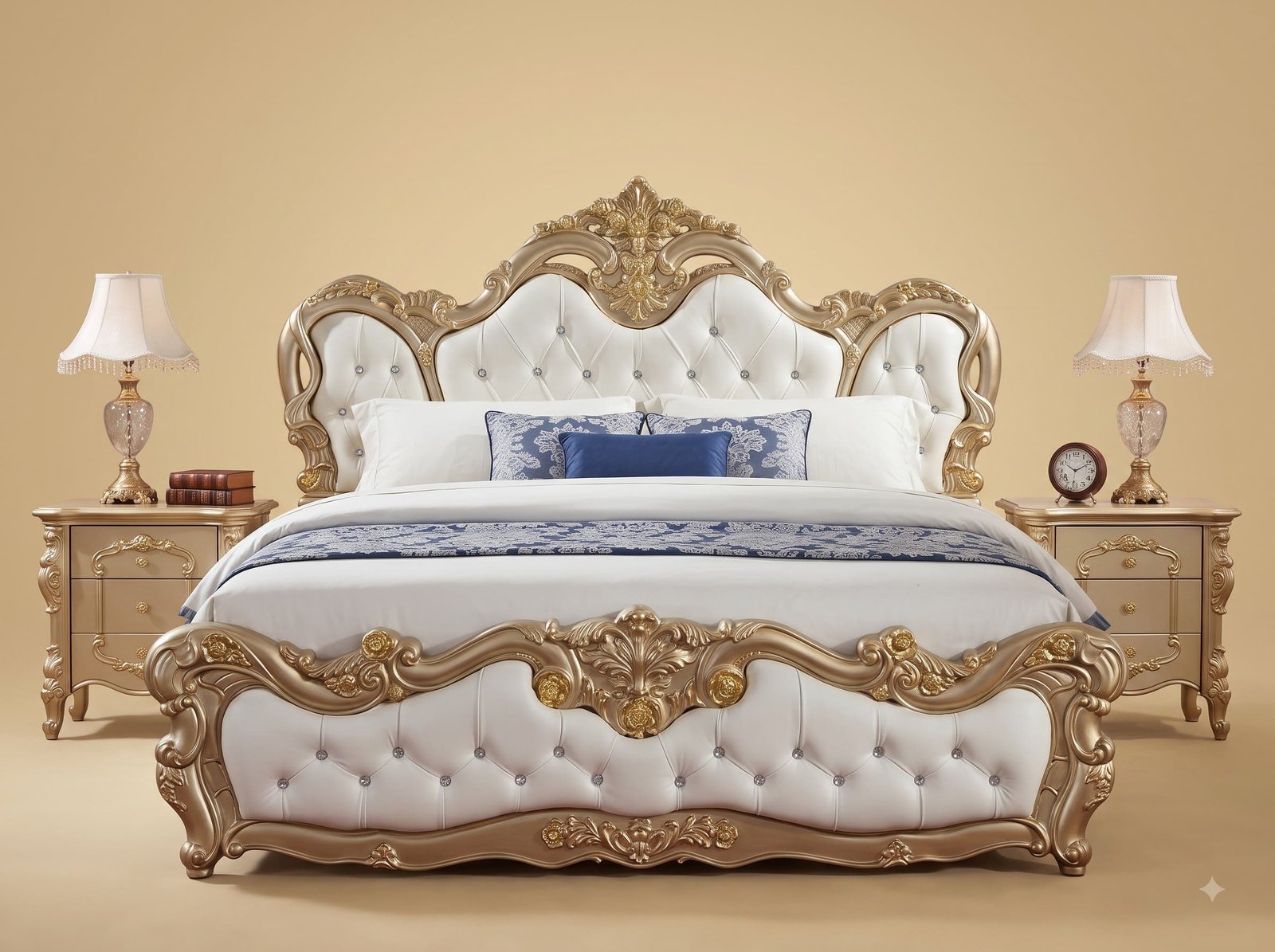
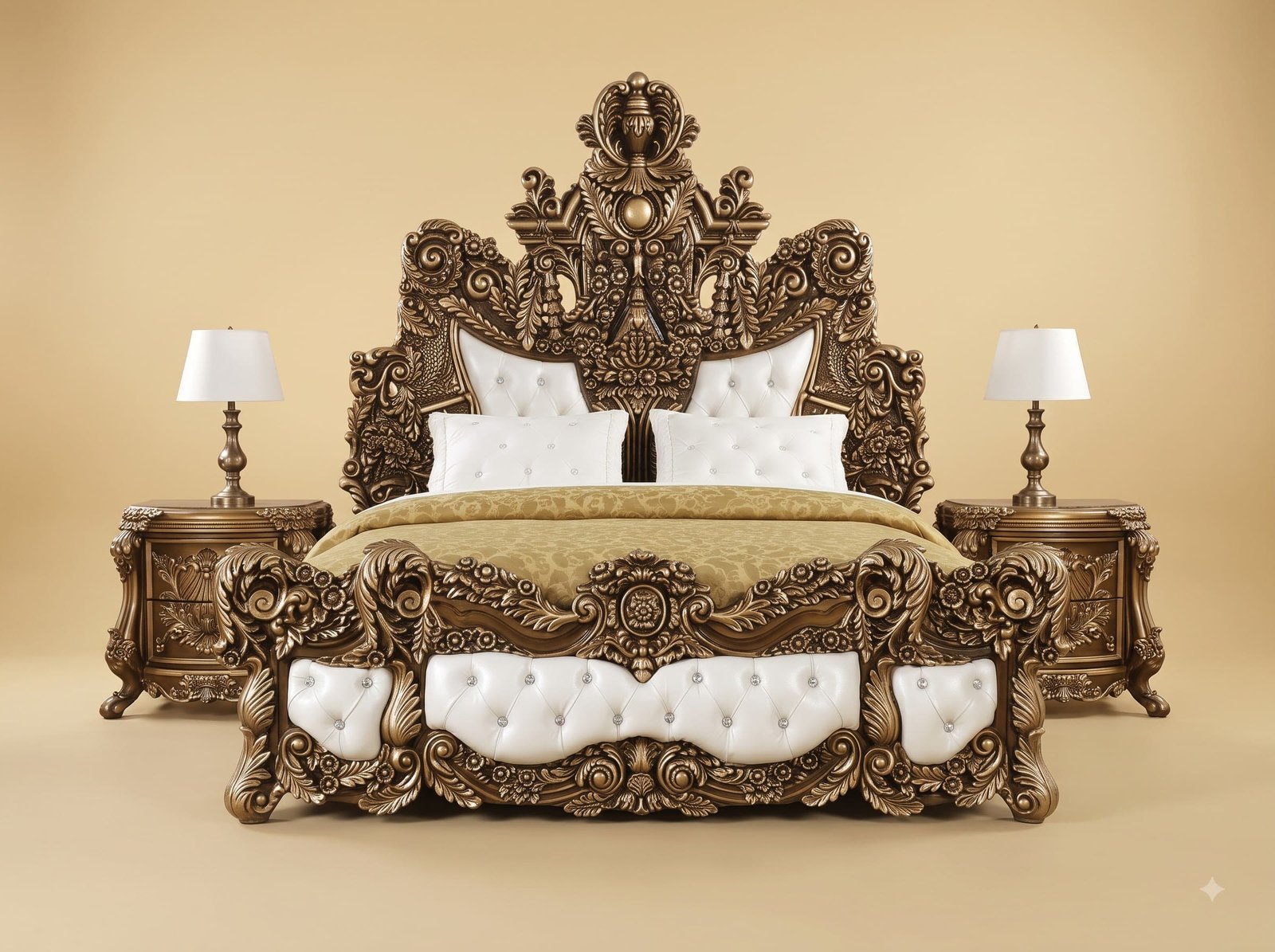
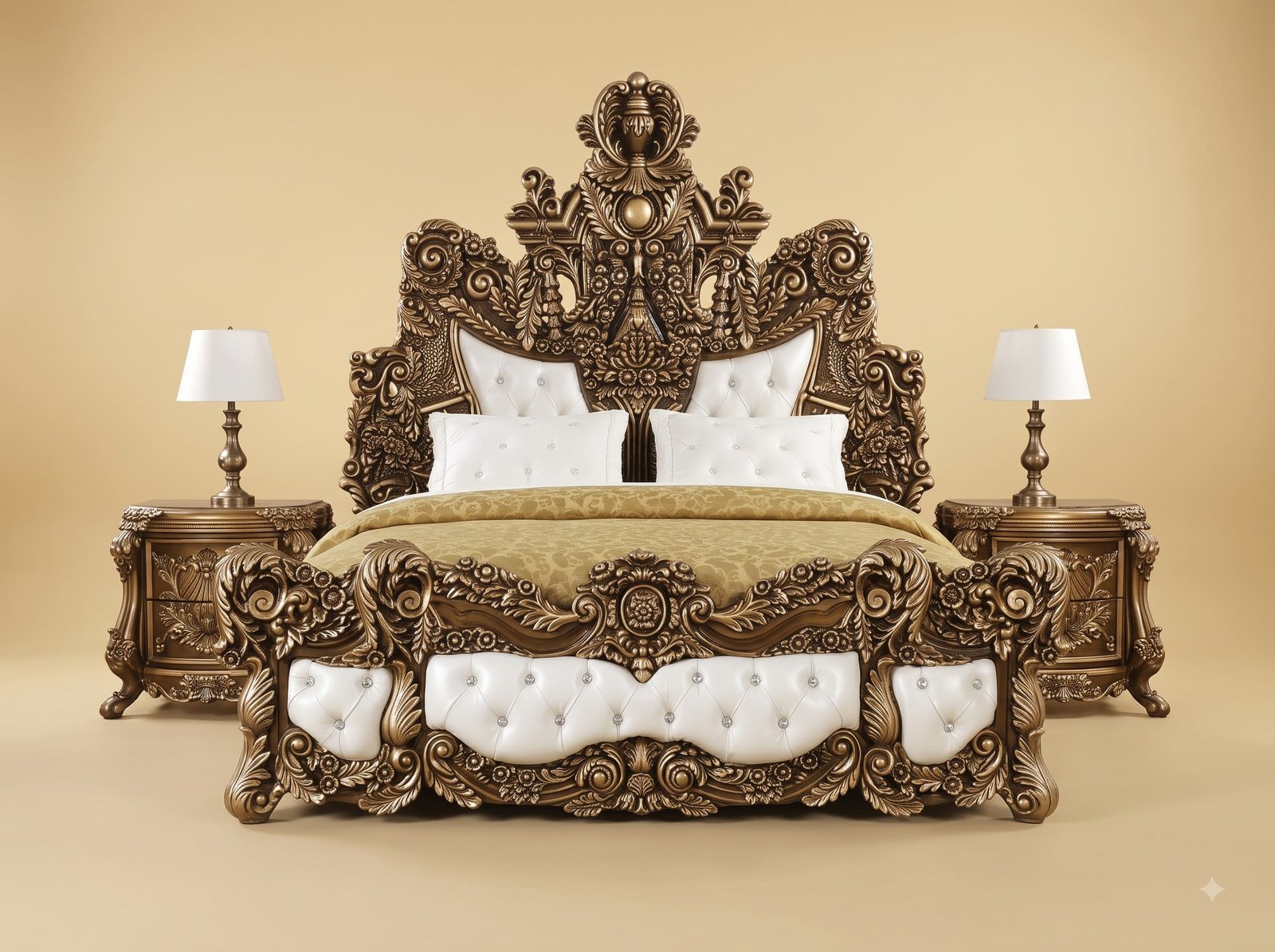
Look at how much fabric is on this bed and then at how much wood. That ratio is the whole design argument. An upholstered bed with a carved surround is quick to build: the frame is cut, the carving runs around the perimeter, and a single large padded panel fills the middle in a day. Reverse the proportions, as this piece does, and the labour changes entirely, because every part of the surface that would have been covered in fabric now has to be carved by hand instead. There is no shortcut and no machine substitute; the tiers of scrollwork on the central column and the pierced sections either side of it are cut individually with chisels.
The finish was chosen to serve the carving rather than the other way round. Antique gold, laid dark into the recesses and burnished back on the raised surfaces, produces a gradient across every scroll so the eye reads depth. A uniform bright gold on a piece with this much relief would collapse the whole headboard into a single glare and waste the work underneath it. The small inset cushions are white for the same reason: they are there to break the mass and give the head of the bed somewhere soft, not to compete for attention. Master Indian artisans carve, finish and upholster each one by hand, and the photographs here show the actual bed.
 Ask Price On WhatsApp