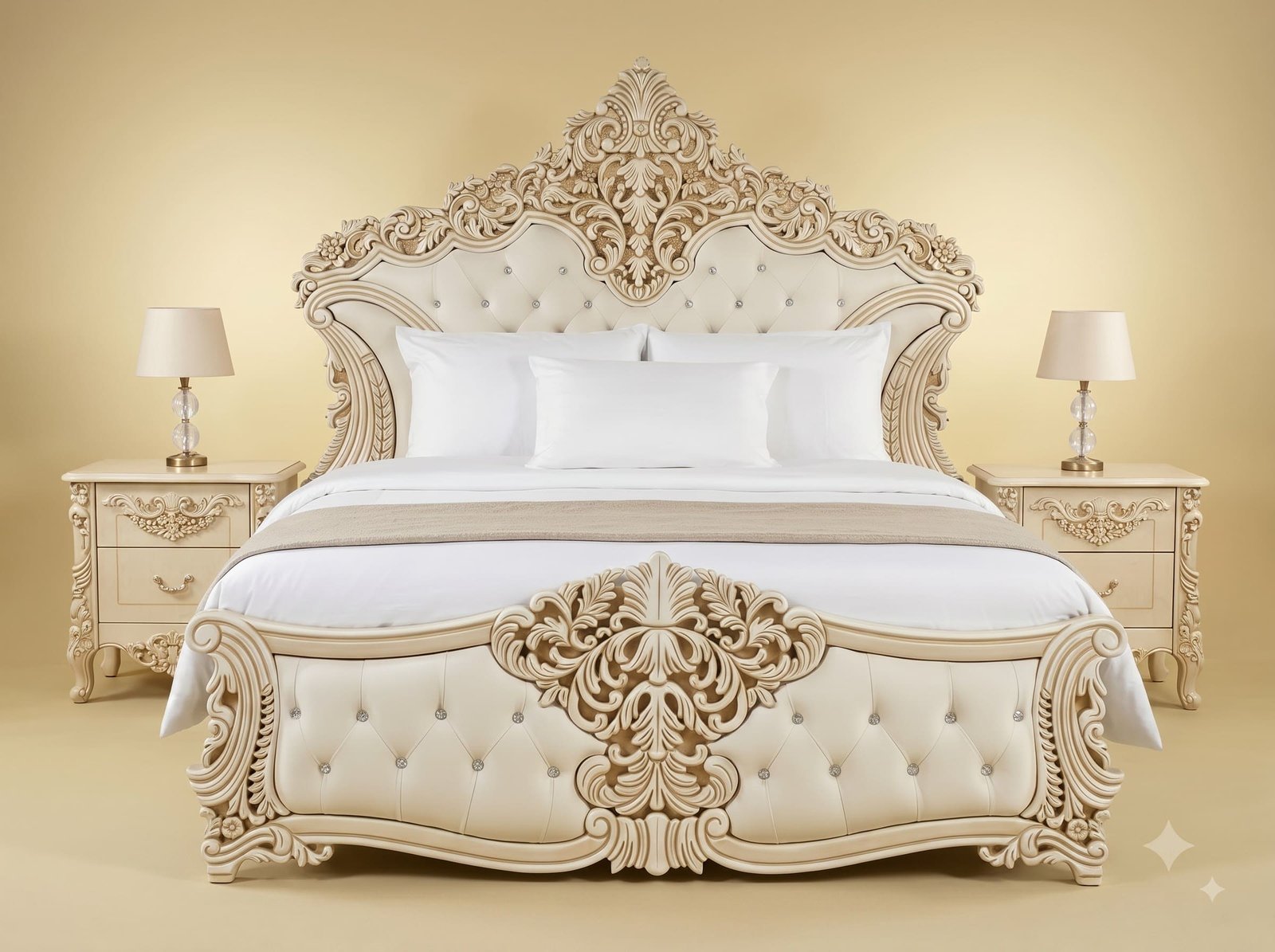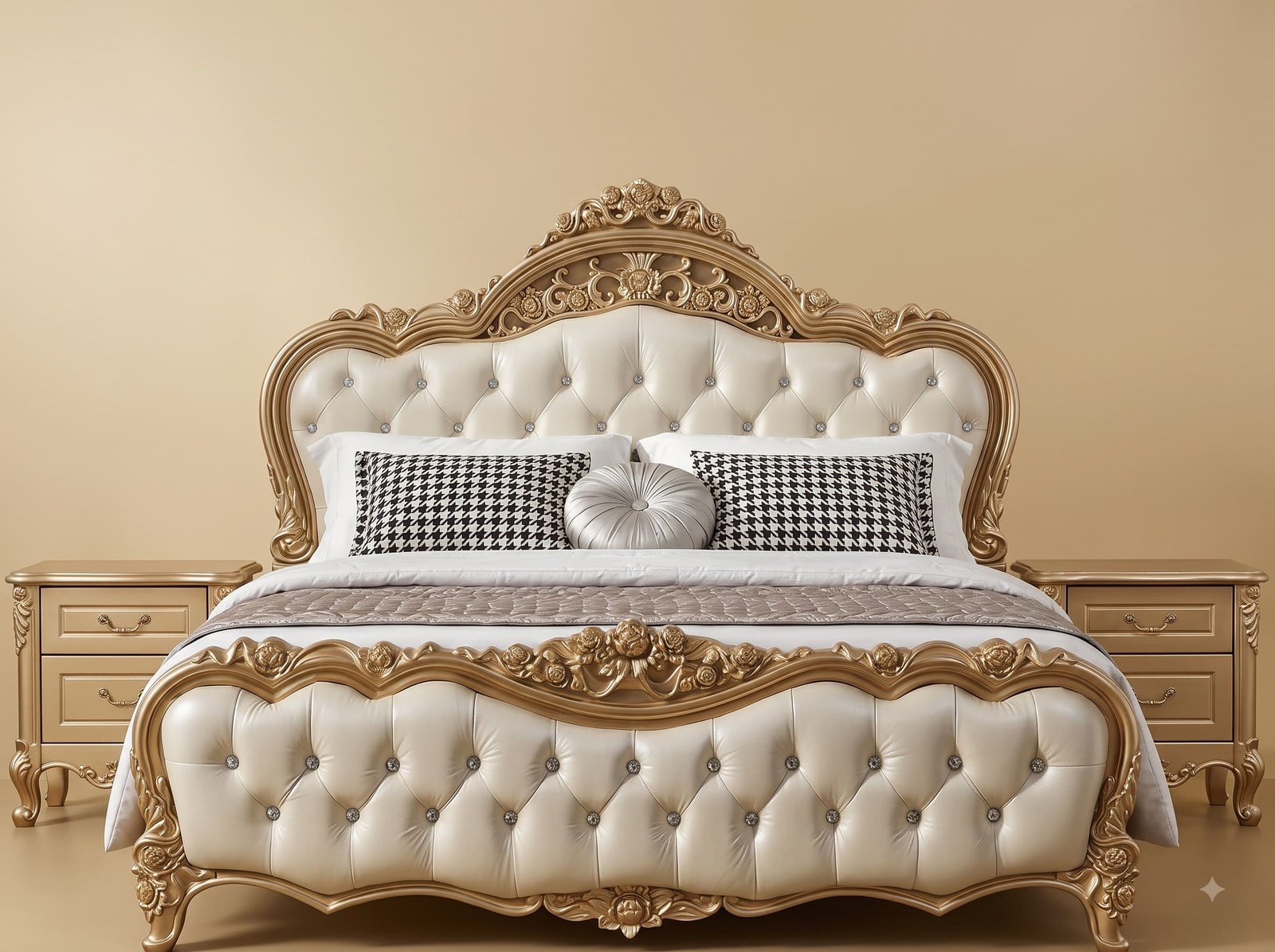
The serpentine line - a curve that rises, falls and rises again - was called the line of beauty by the painter William Hogarth in 1753, and cabinetmakers had been using it for decades before he named it. His argument was simple: the eye enjoys following a curve that changes direction, and tires of one that does not. Furniture proved him right long before anyone wrote it down.
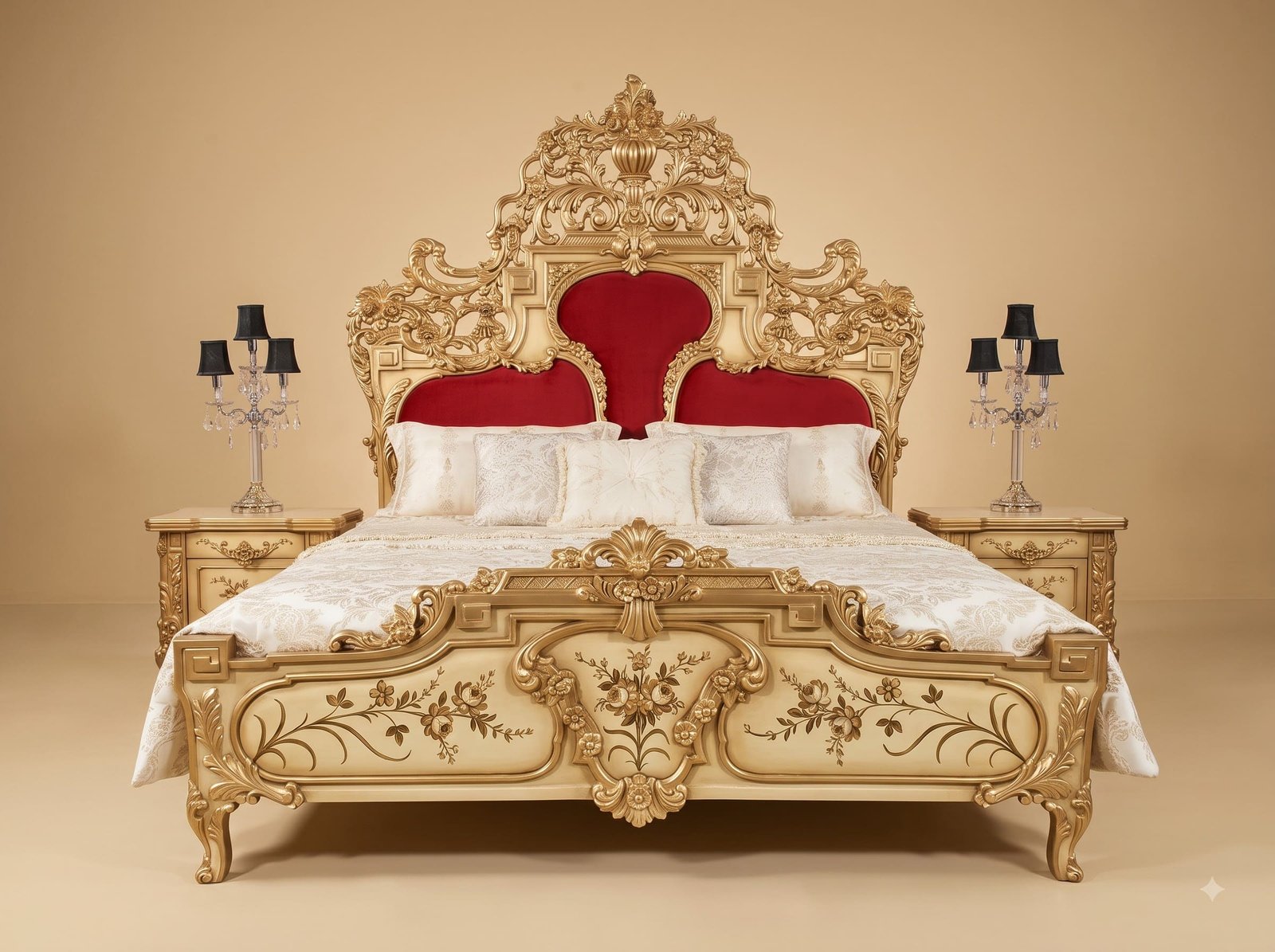
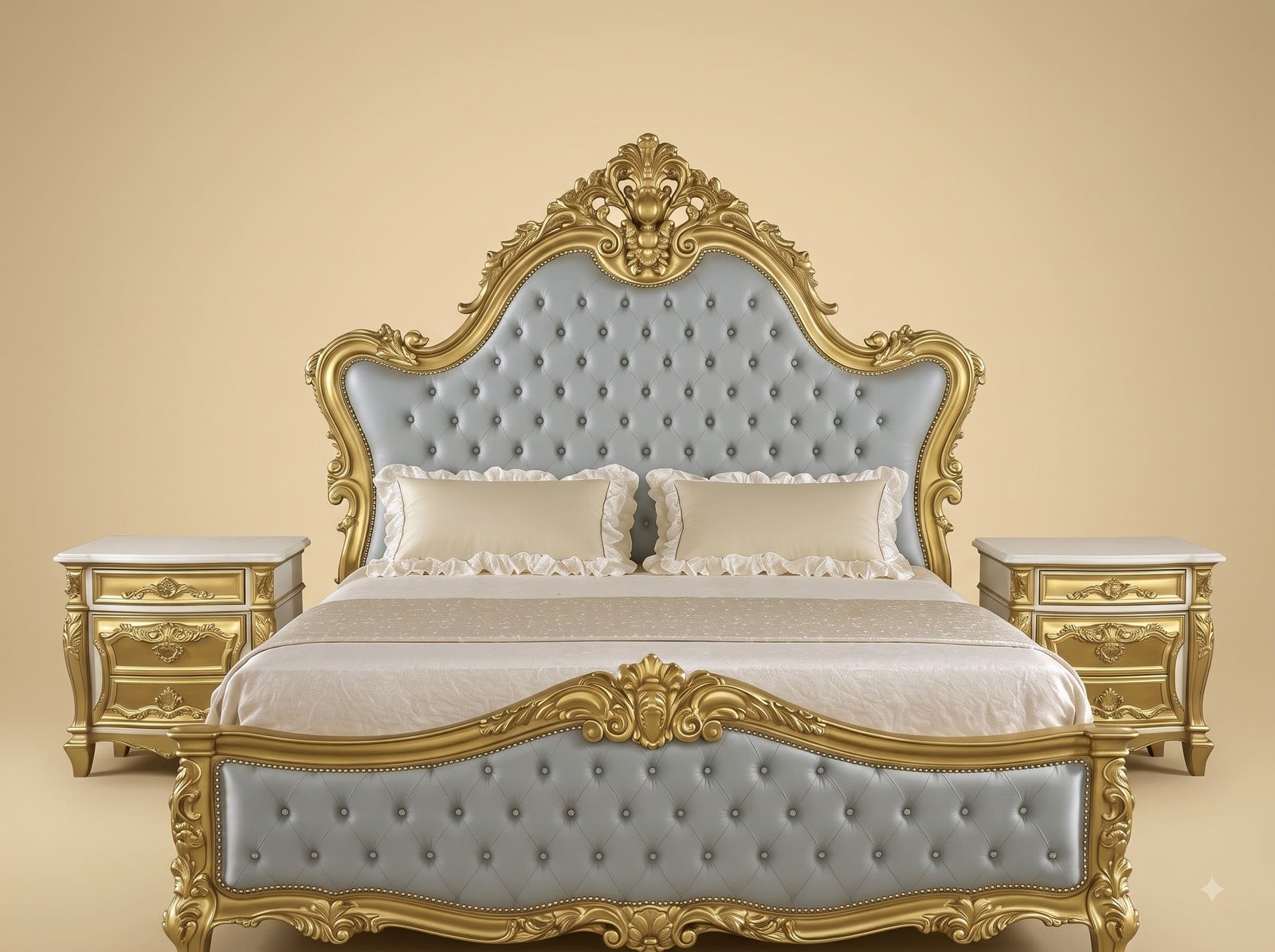
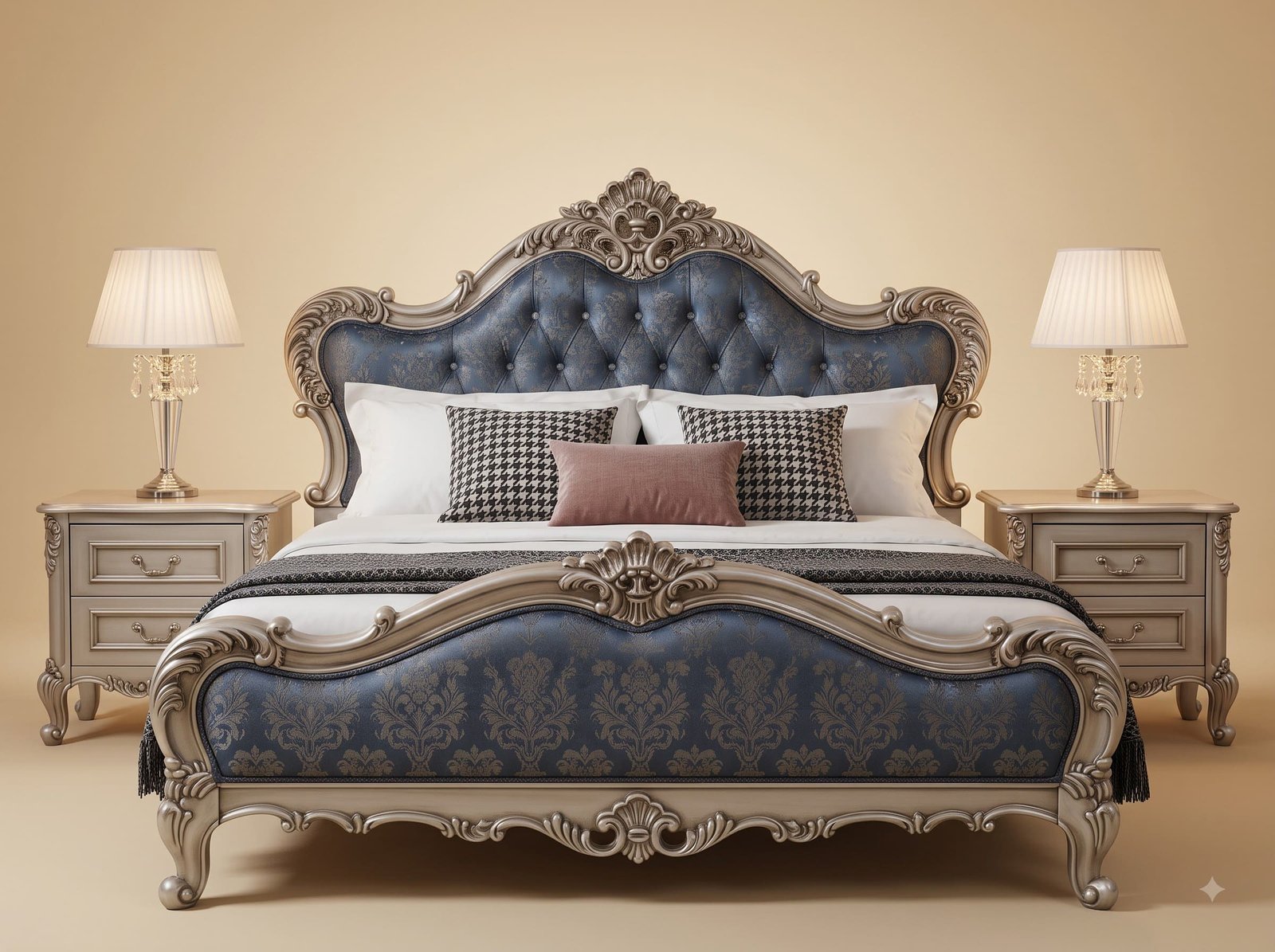
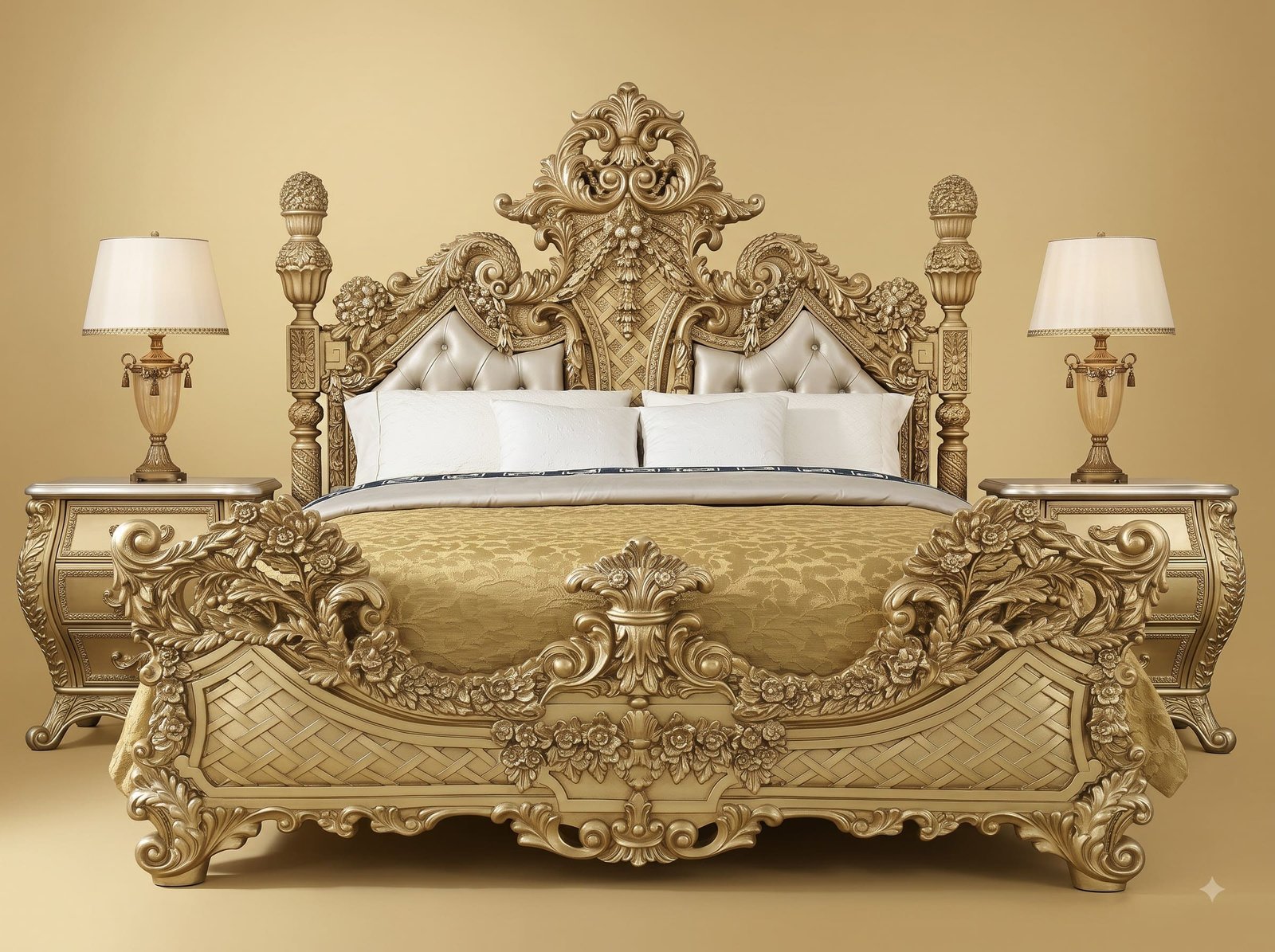
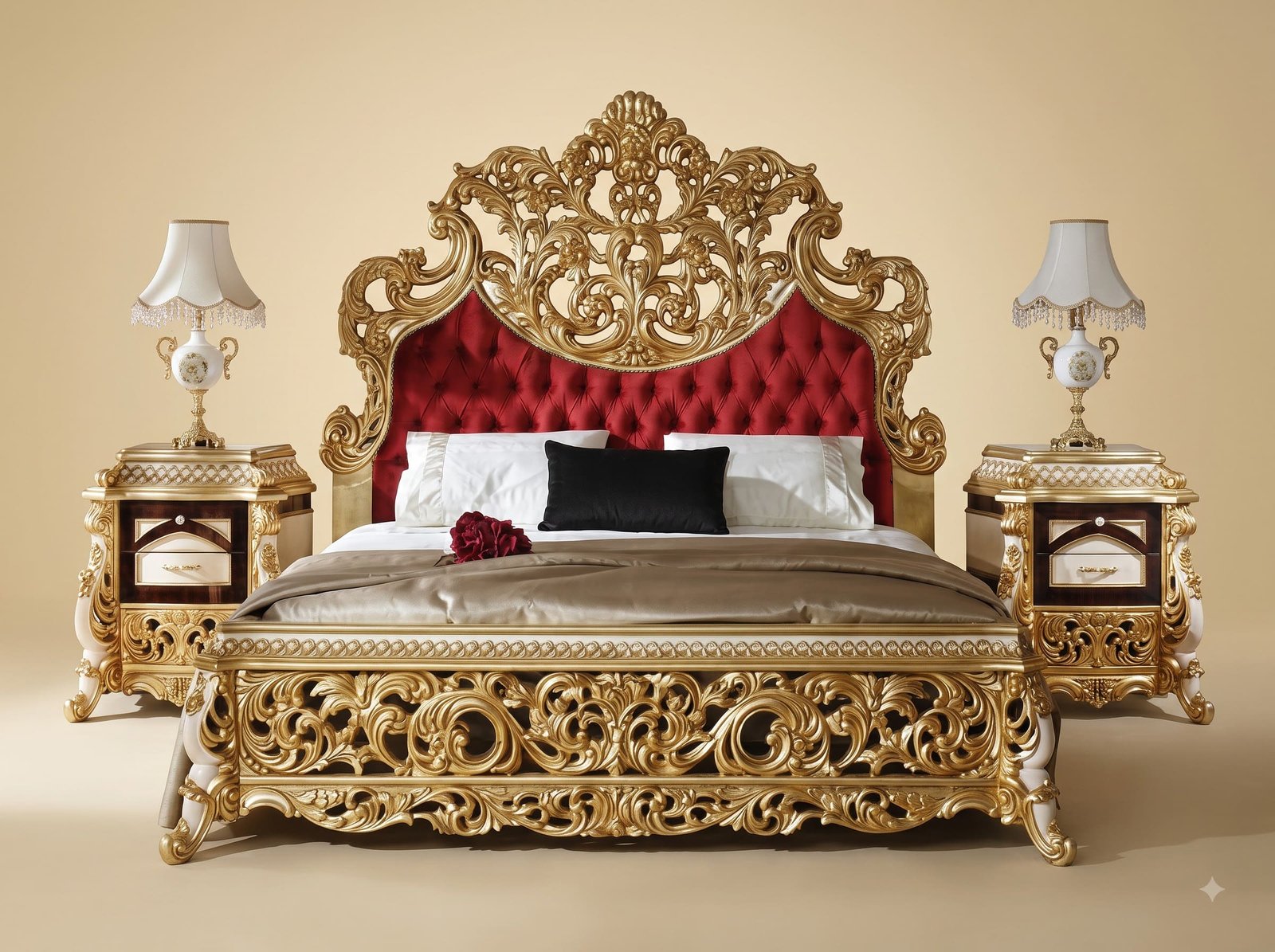
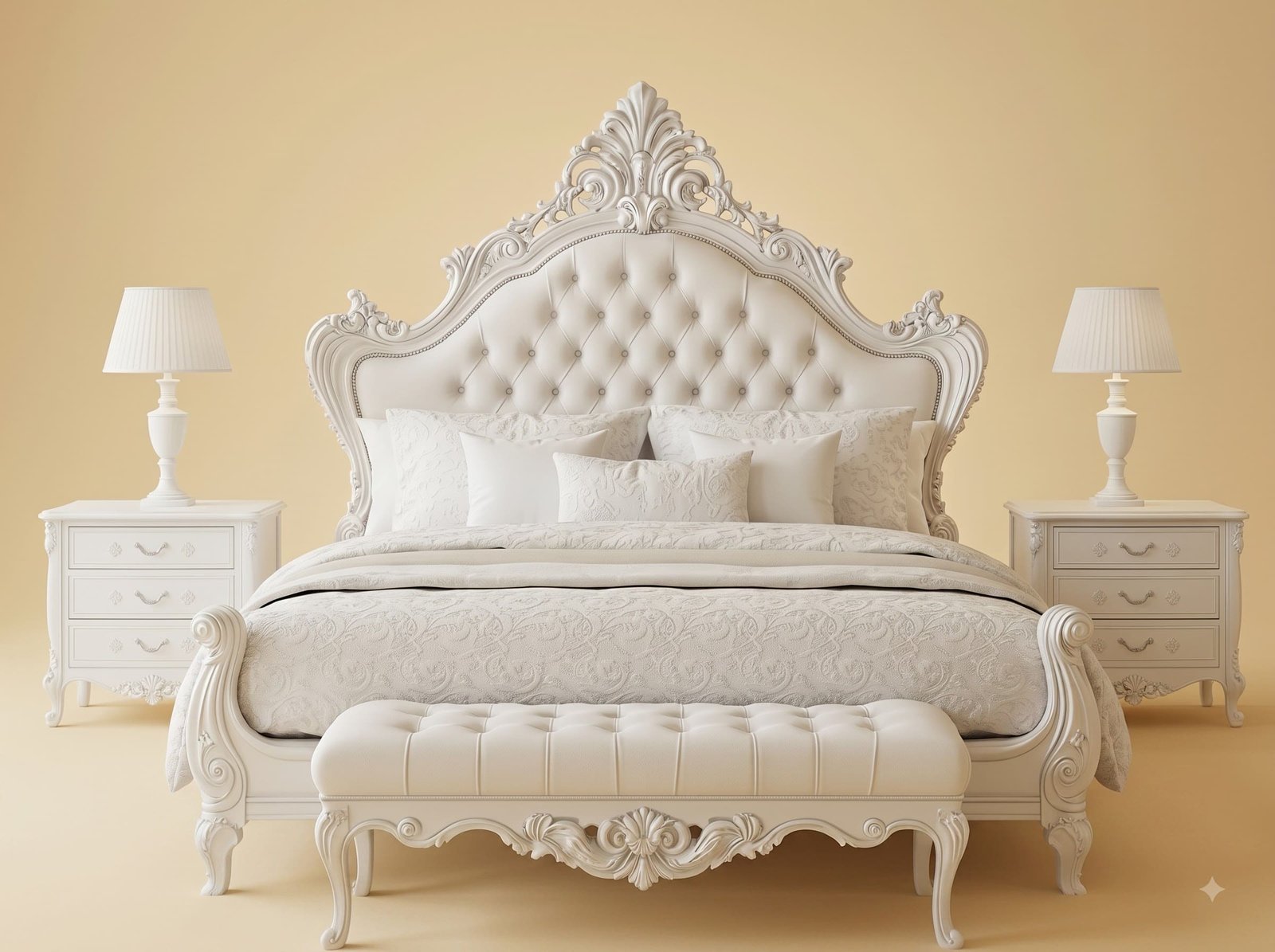
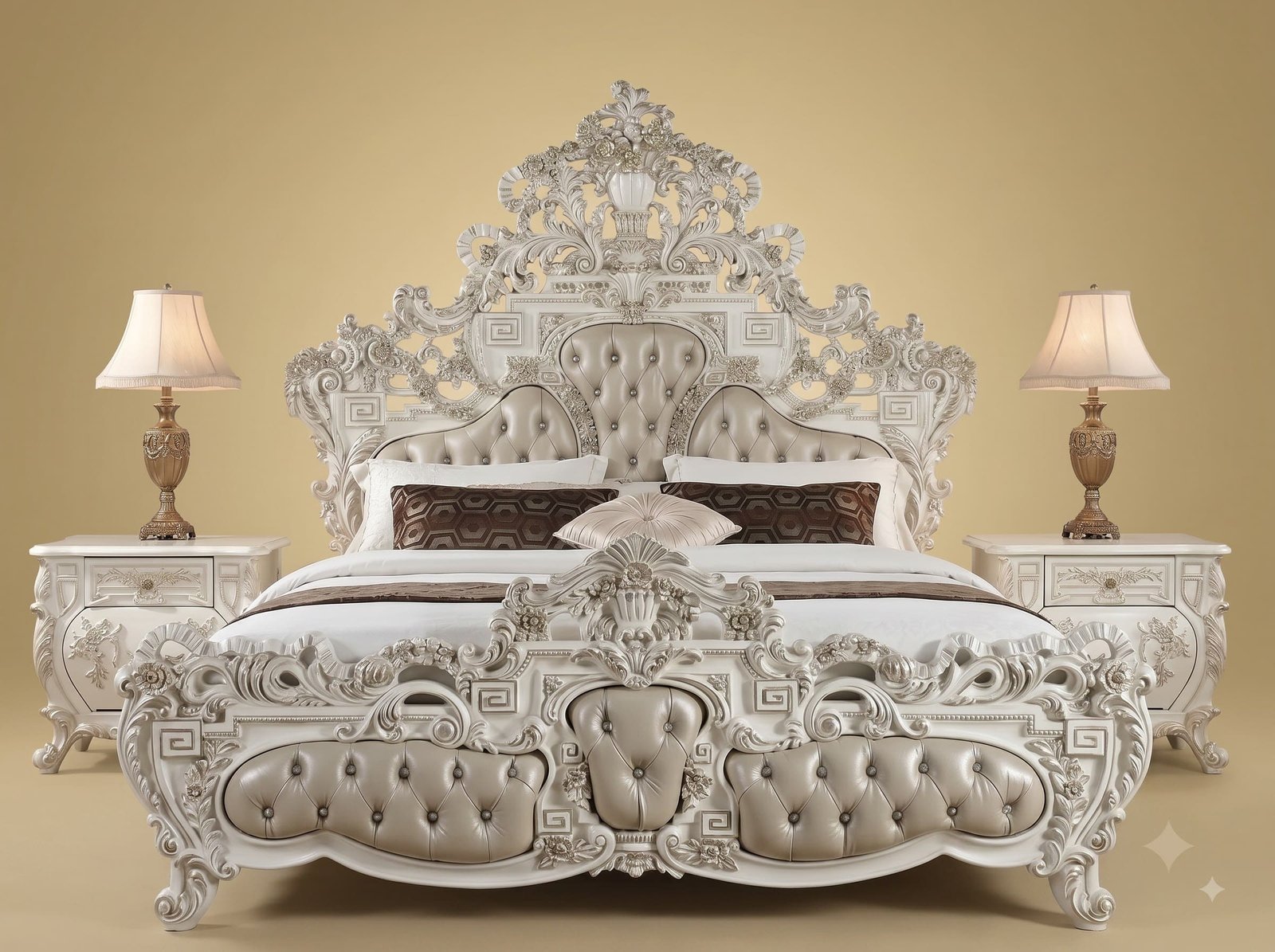
Both ends of this bed are drawn on that line, and the carving follows it rather than interrupting it. That is why the frame here is kept slim: a heavy carved border would break the curve into segments, and the whole point is that the eye travels the full width without stopping.
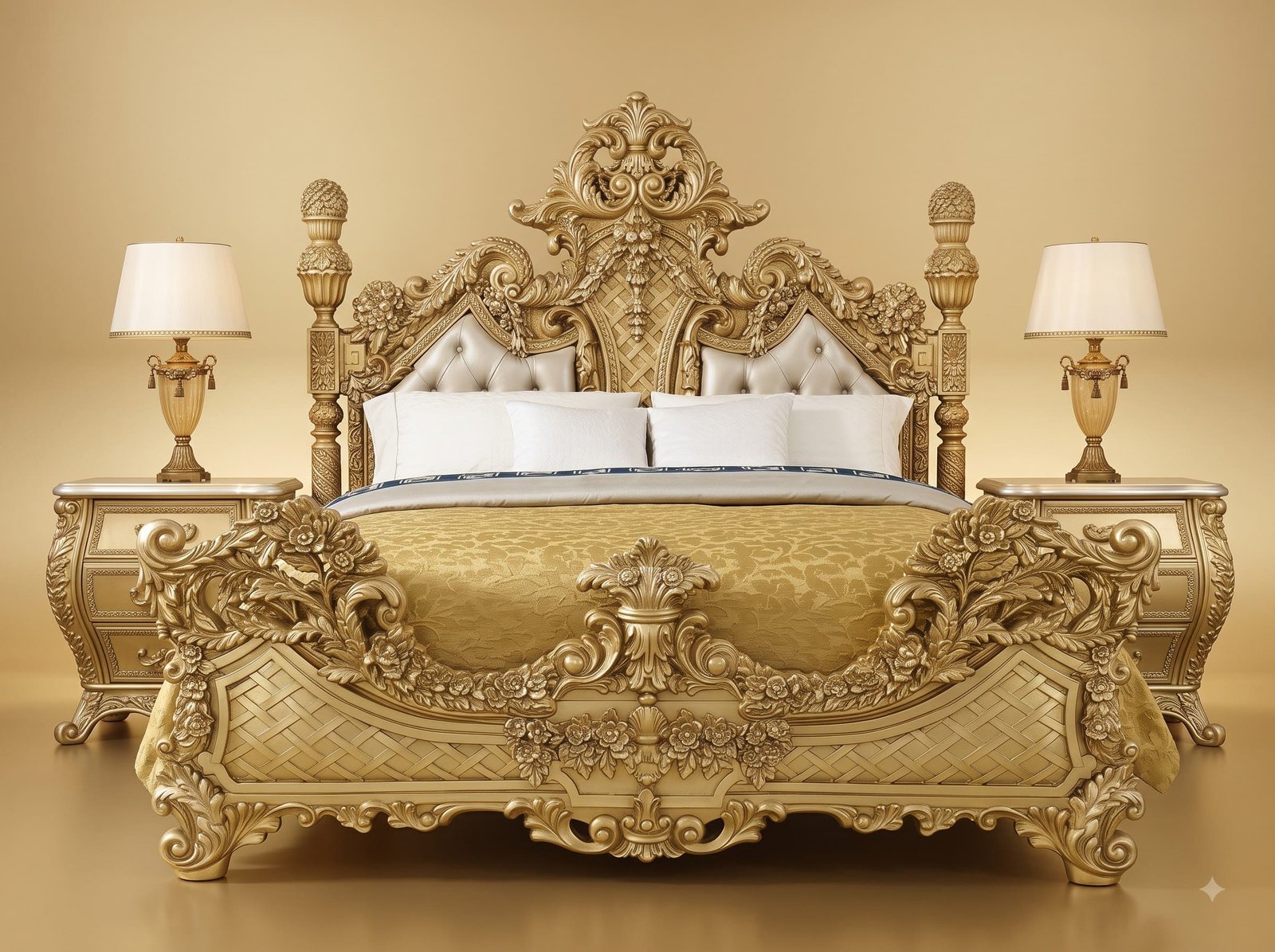
The roses are placed where the curve changes direction - at the shoulders and the centre - which is the traditional discipline. Ornament at the turning points reads as punctuation; ornament spread evenly reads as pattern. Our master Indian artisans set out the full curve at actual size before cutting anything, because a serpentine that is even slightly uneven is obvious from the doorway and impossible to correct later.
 Ask Price On WhatsApp