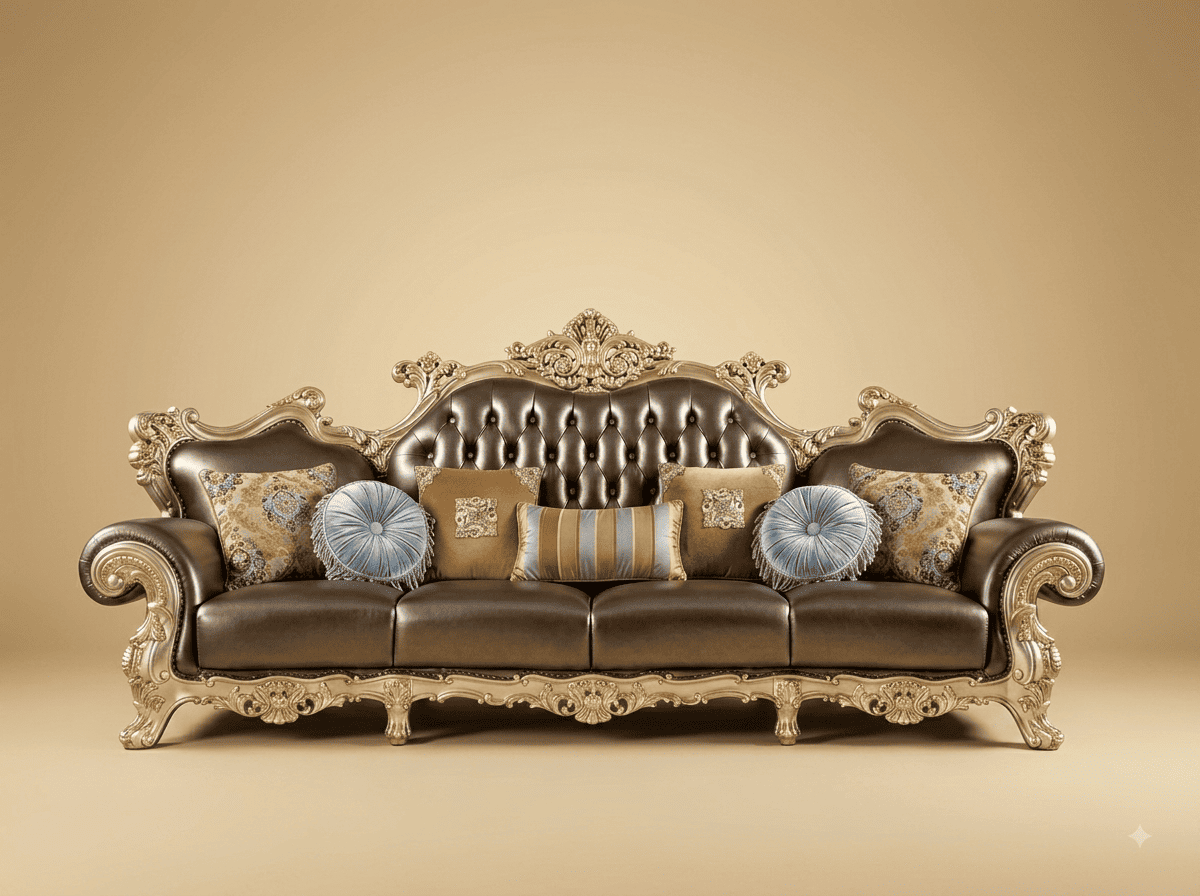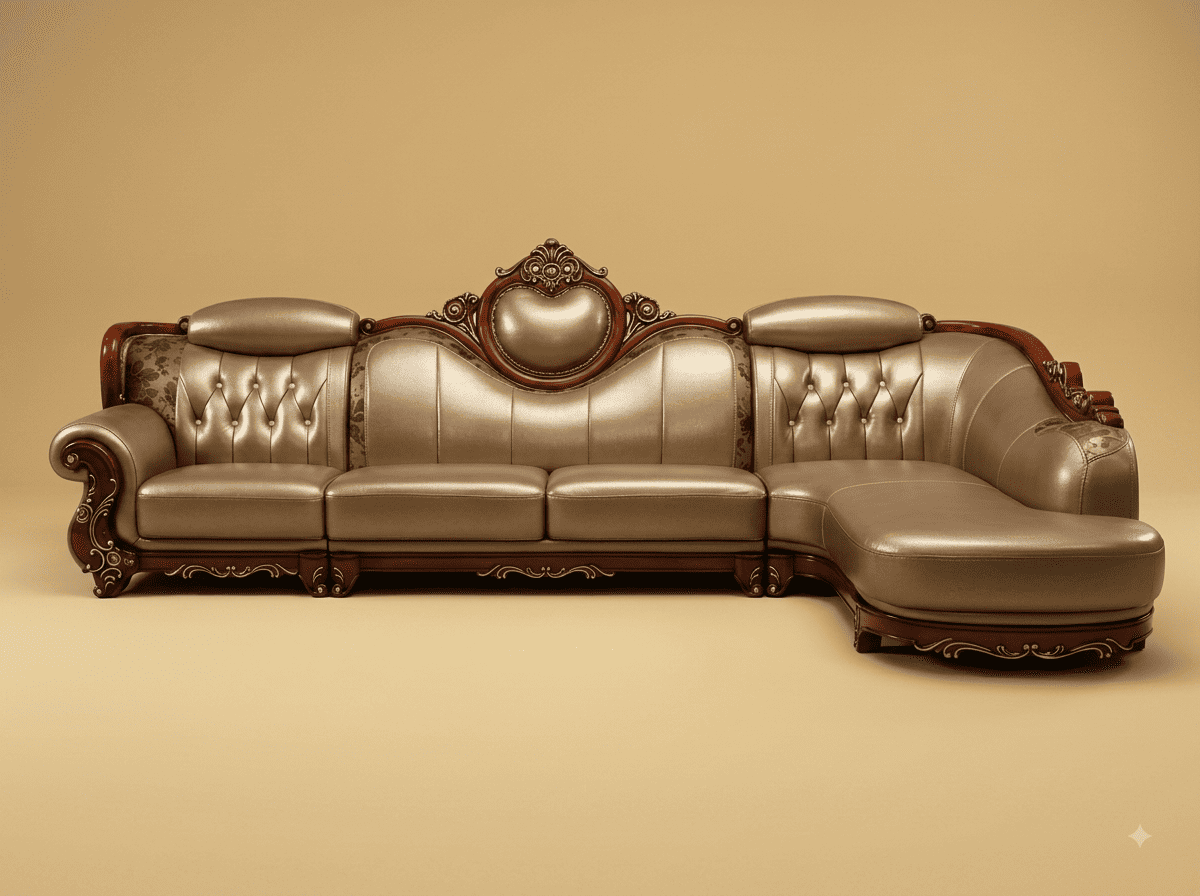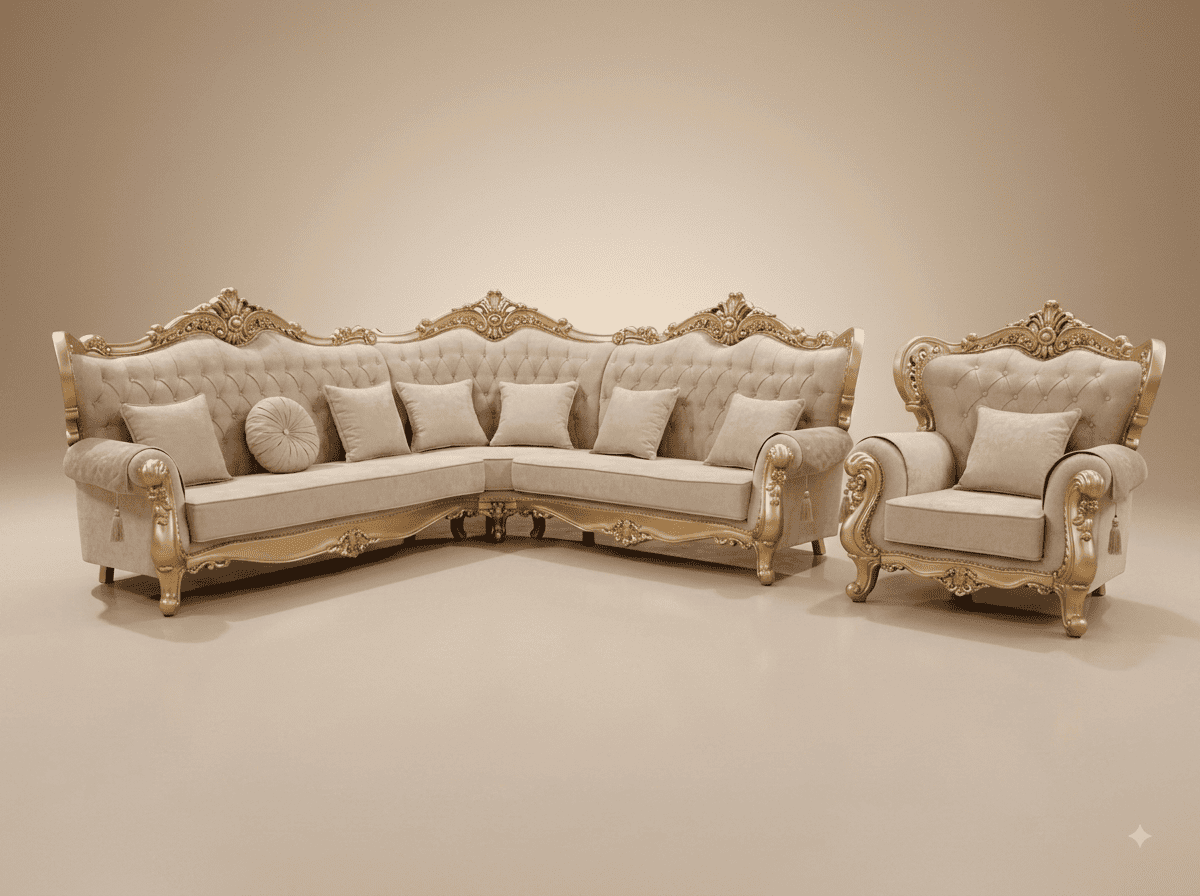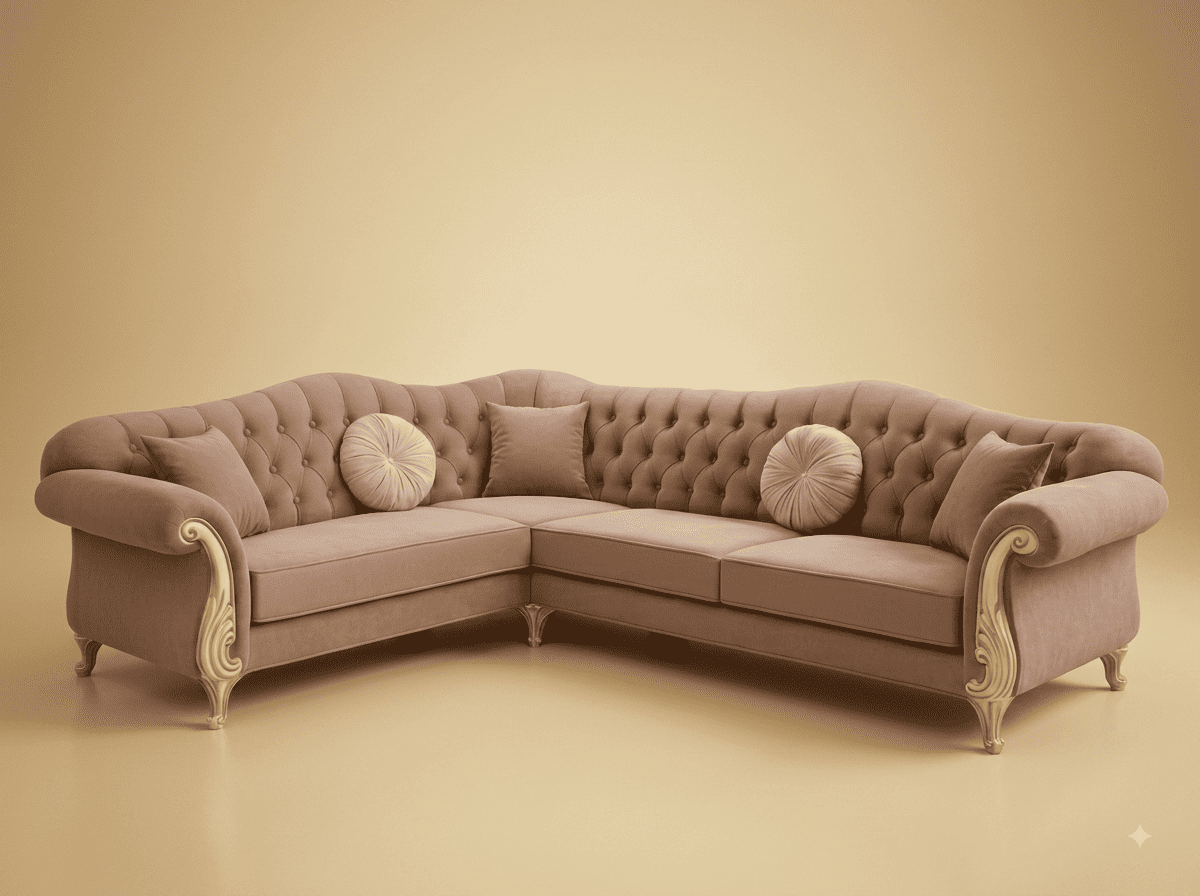
The Chesterfield's deep buttoning was never decorative to begin with. Early upholstery was stuffed with horsehair, and horsehair migrates - it drifts to wherever the sitter's weight pushes it, leaving hollows in some places and lumps in others. Buttoning divided the surface into small compartments so the stuffing could not travel. The diamond pattern is simply what the cover does between the fixing points.
Modern fillings do not migrate, so the buttoning survives purely for its looks - and because it does something no flat upholstery can: it turns a large plain surface into a field of light and shadow that changes as you move past it.
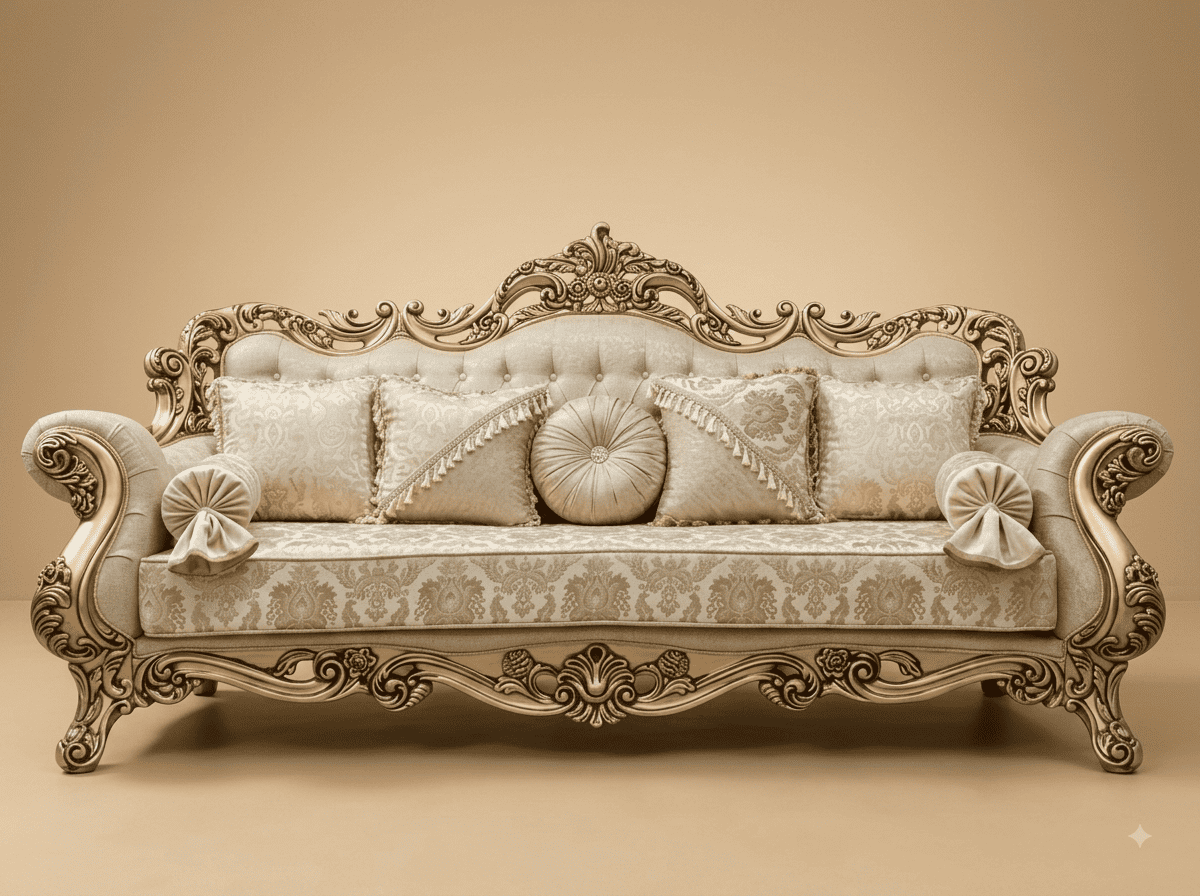
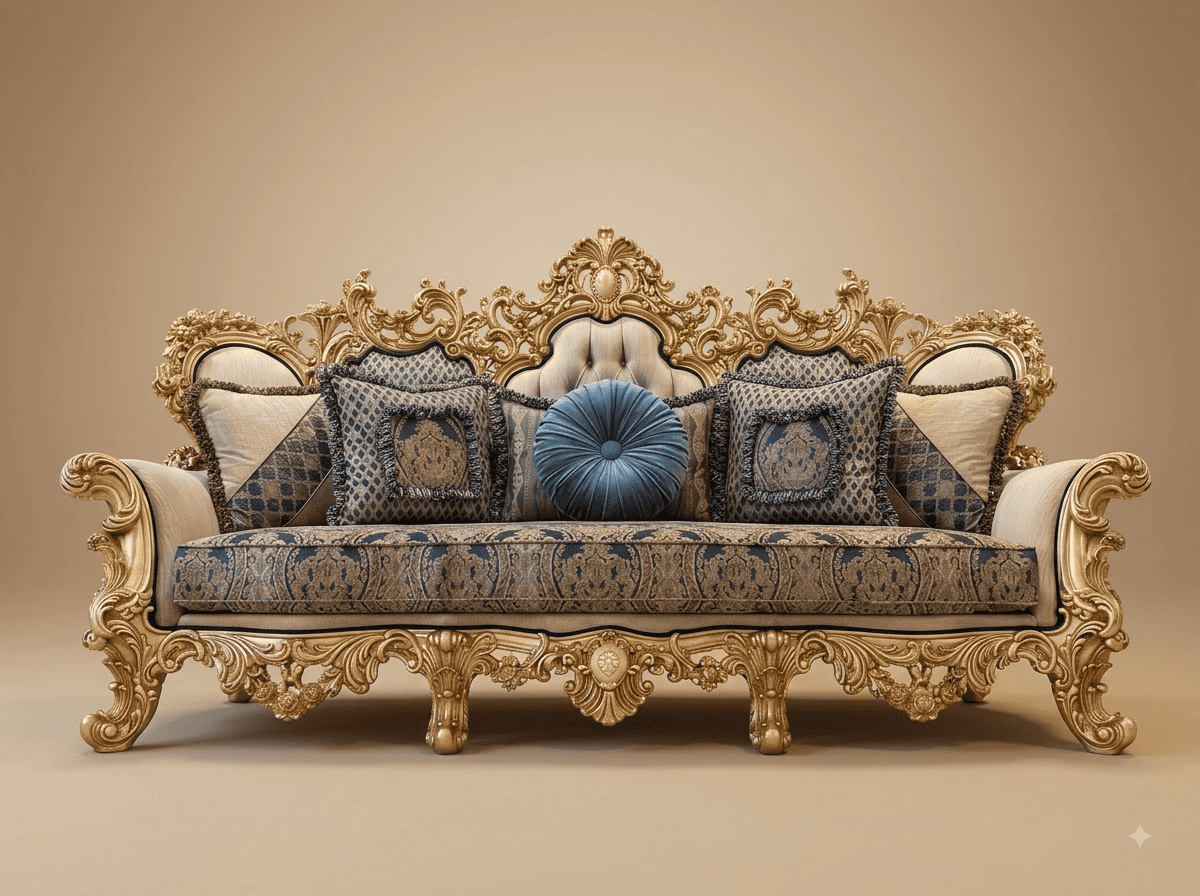
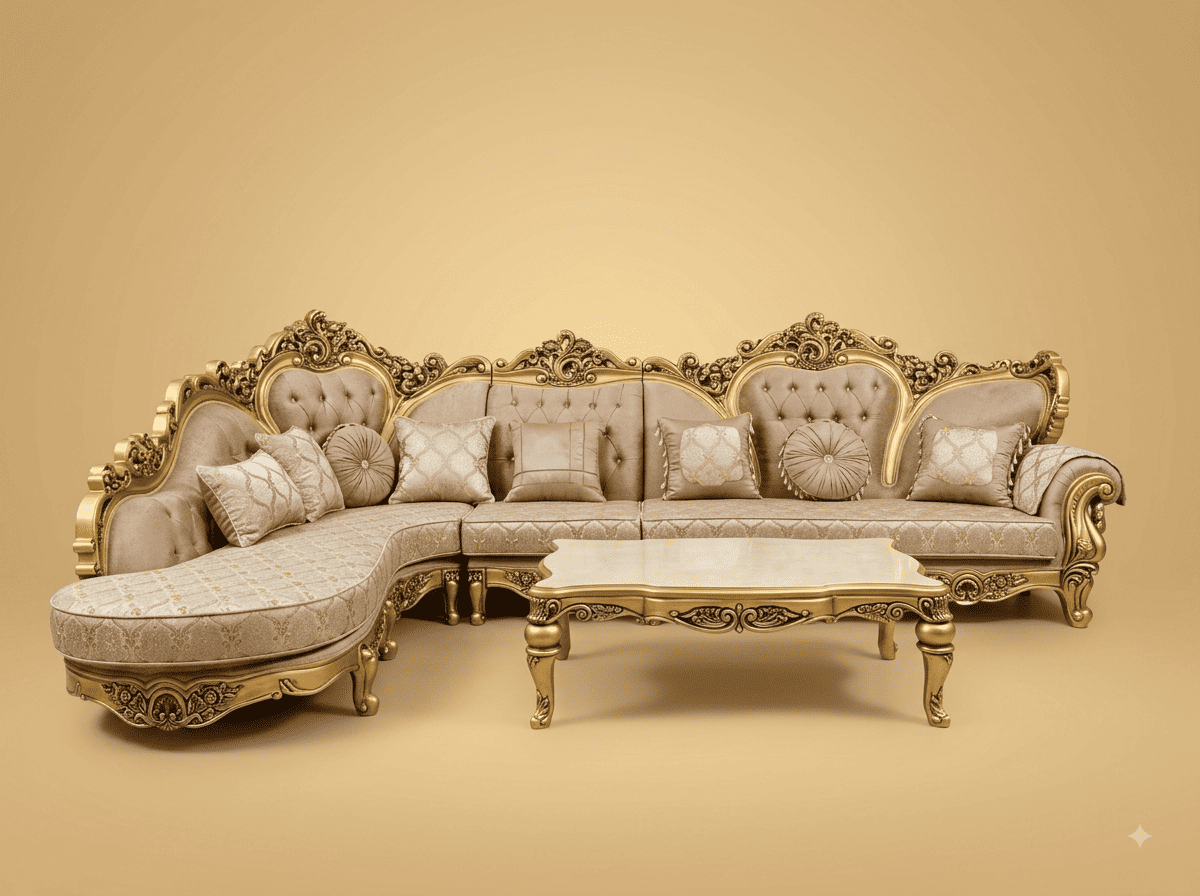
What our master Indian artisans keep from the original is the discipline about where carving belongs on a piece like this. The Chesterfield form is about the upholstery, so the teak shows only at the arm brackets and the legs - the two places where the frame is genuinely doing visible work. Adding a carved crest to a Chesterfield would be decorating a design whose entire argument is that it does not need decorating.
 Ask Price On WhatsApp