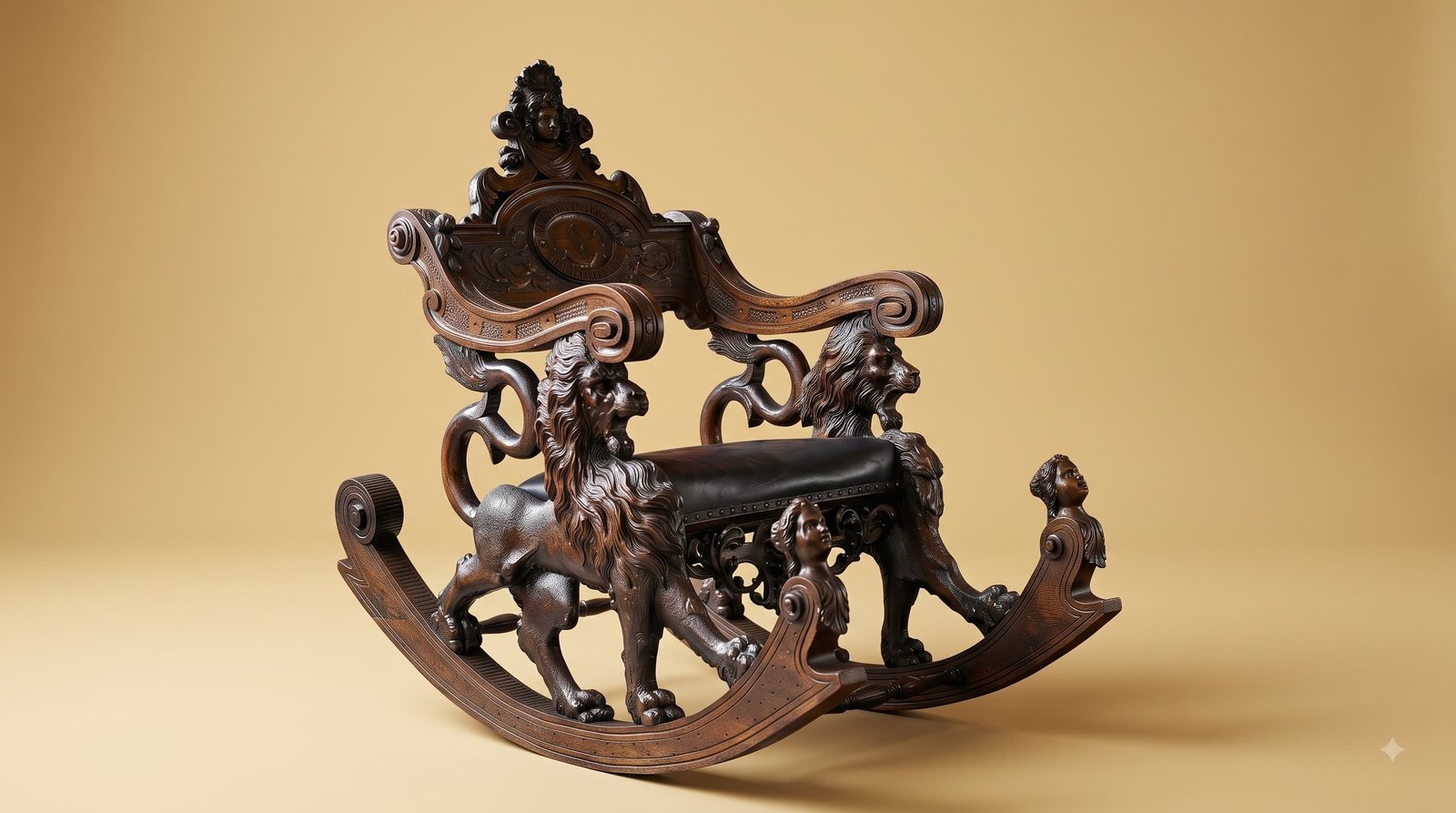
Carving a lion that is also a chair leg is two problems solved at once, and the second one decides the first.
A figure carved in the round is worked from all four faces of a block at the same time. The carver draws the profile on the side and the front view on the face, then takes both down together in stages - never finishing one side before starting another, because a figure roughed out fully from one direction will always be wrong when seen from ninety degrees away. The mane, the turn of the head and the set of the shoulders emerge together or not at all.
But this lion has to hold up a person. Its four legs are the load path between the arm above and the rocker below, so the grain of the block is chosen to run down through those legs, not across them. Wood is many times stronger along the grain than across it, and a leg carved across the grain would be a decorative object waiting to snap.
That single decision, made before any tool touches the block, is why the animal can be this slender and still be structural. The carver spends weeks on the mane. The chair stands because of ten minutes spent choosing which way up the timber went.
 Ask Price On WhatsApp