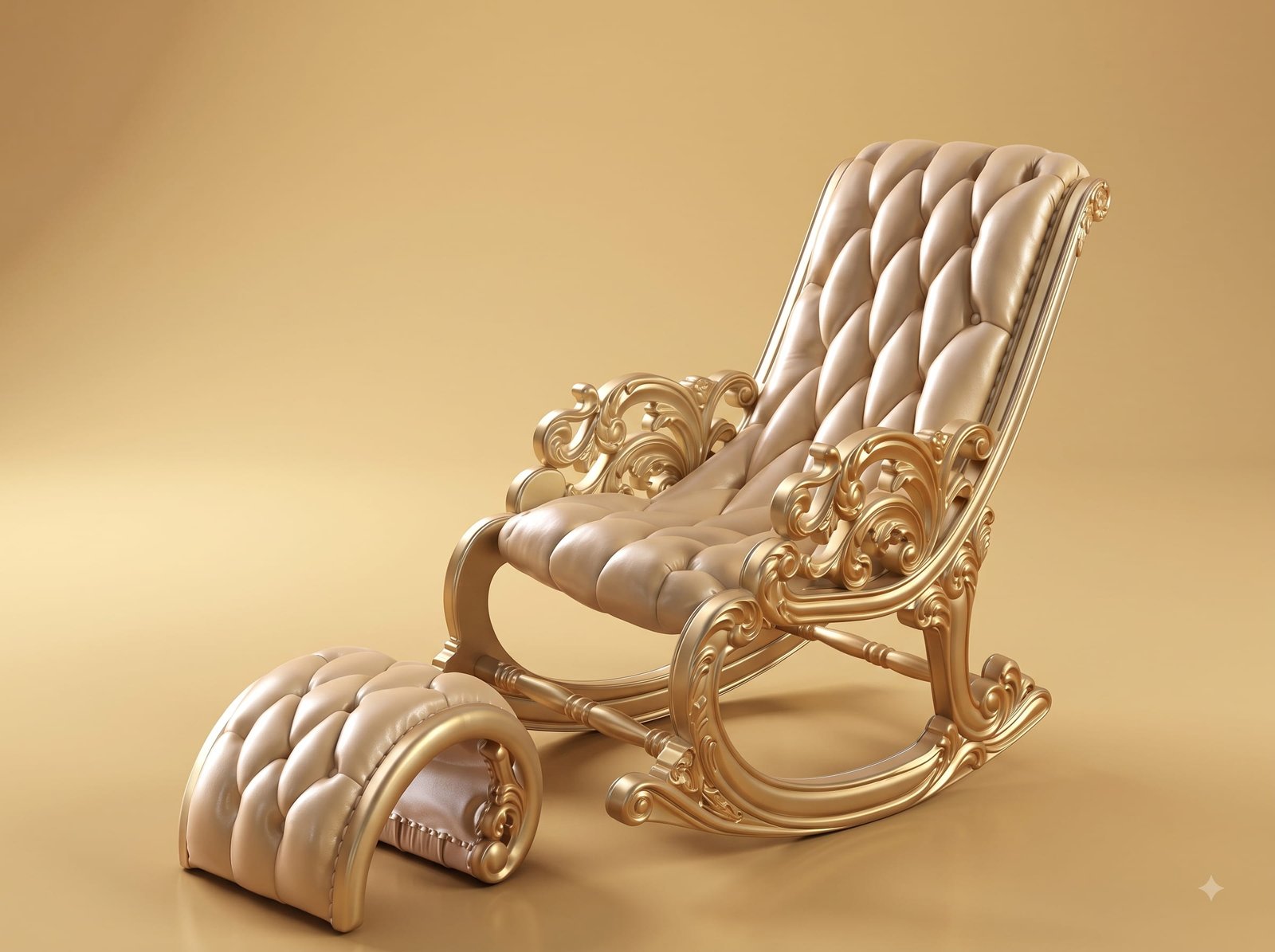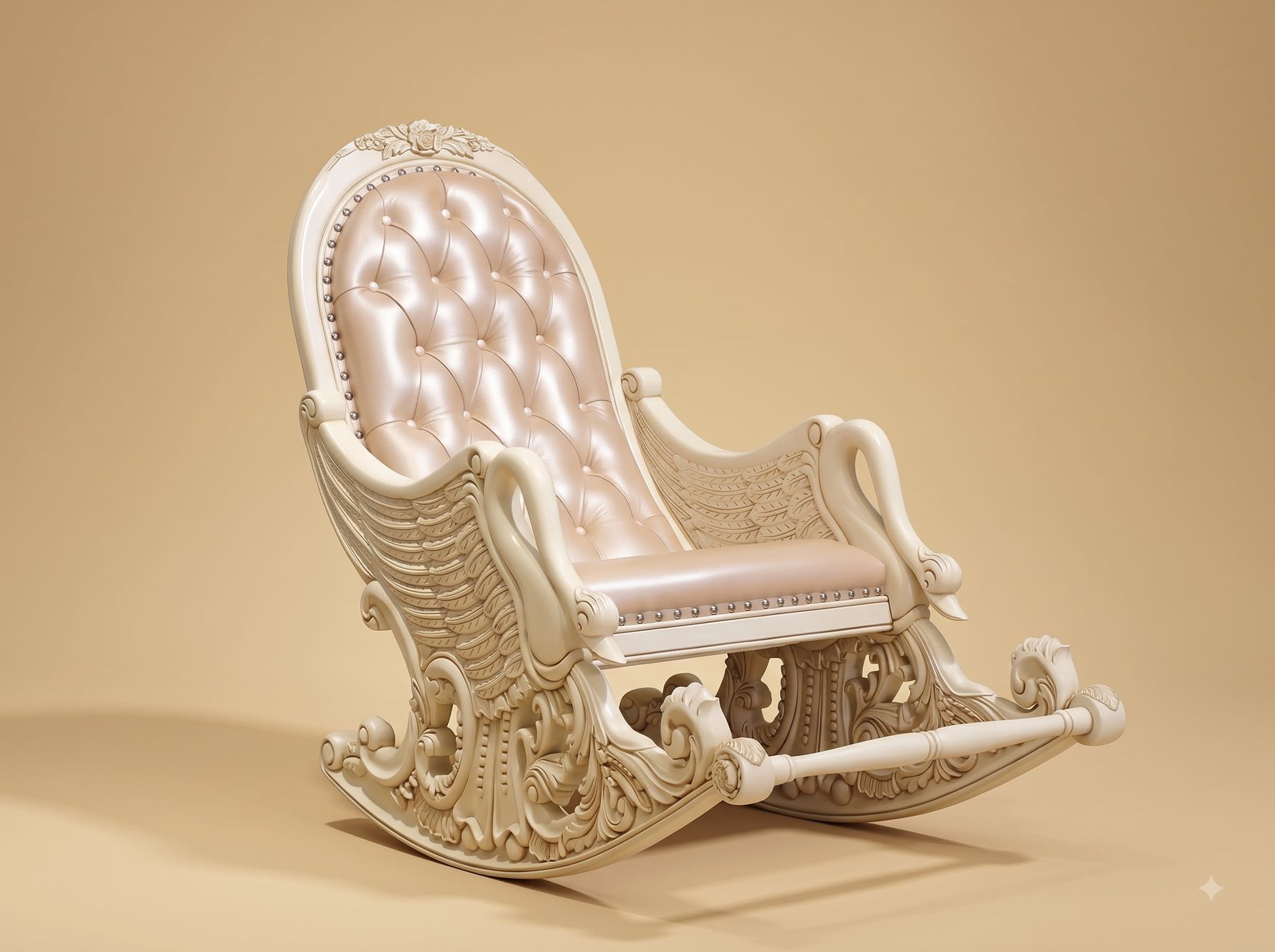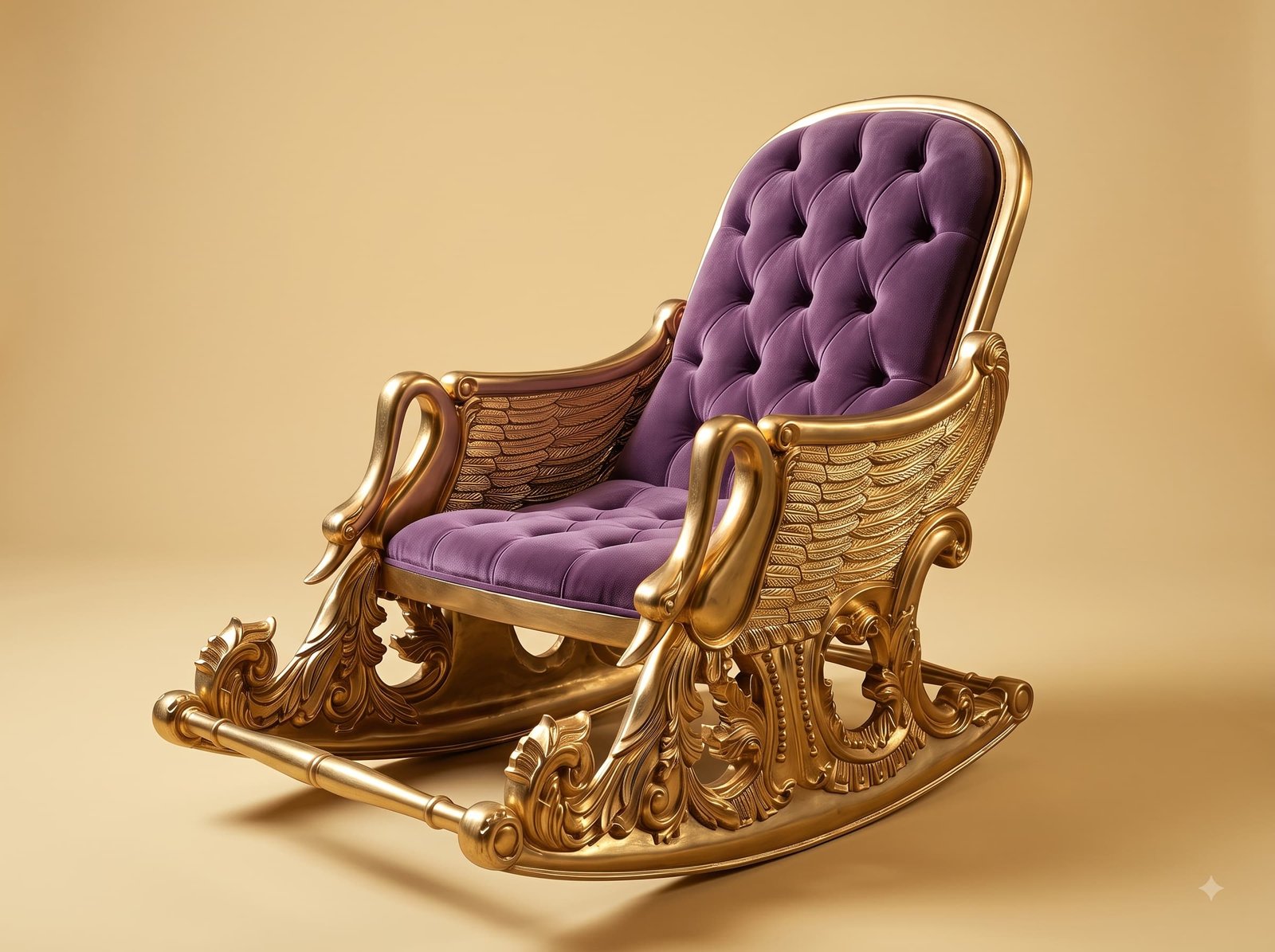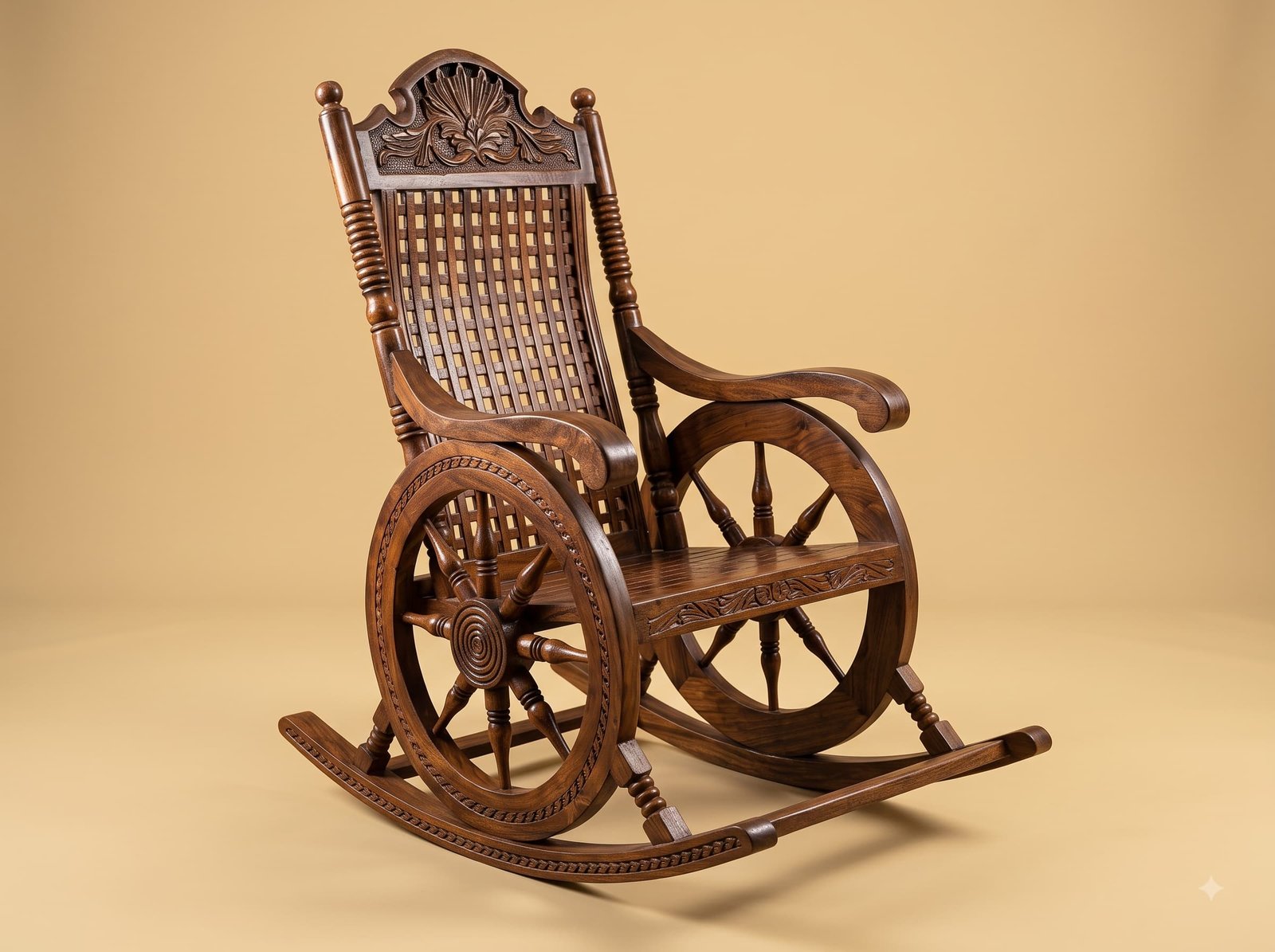
The lattice on the back of this chair is not glued into place. It is deliberately left free to move, and that is what keeps it flat for fifty years.
The panel is made of two sets of thin slats, each notched halfway through where it crosses another so the two sets sit into each other and finish level - a cross-halving, cut by hand at every intersection. That gives a flat woven grid out of straight pieces. The grid then sits inside a groove ploughed around the inside of the back frame.
Here is the part that matters. Wood expands and contracts across its width with the seasons, and a panel this wide can move by several millimetres between a dry March and a wet July. If the panel were fixed in its groove, that movement would have nowhere to go: in the wet season it would push the frame apart at the joints, and in the dry season it would split itself trying to shrink. So the groove is cut deeper than the panel needs, and the panel floats in it - held captive on all four sides, fixed on none.
The chair breathes with the weather and nothing about it changes. It is the oldest solution in the trade, and nobody has found a better one.
 Ask Price On WhatsApp