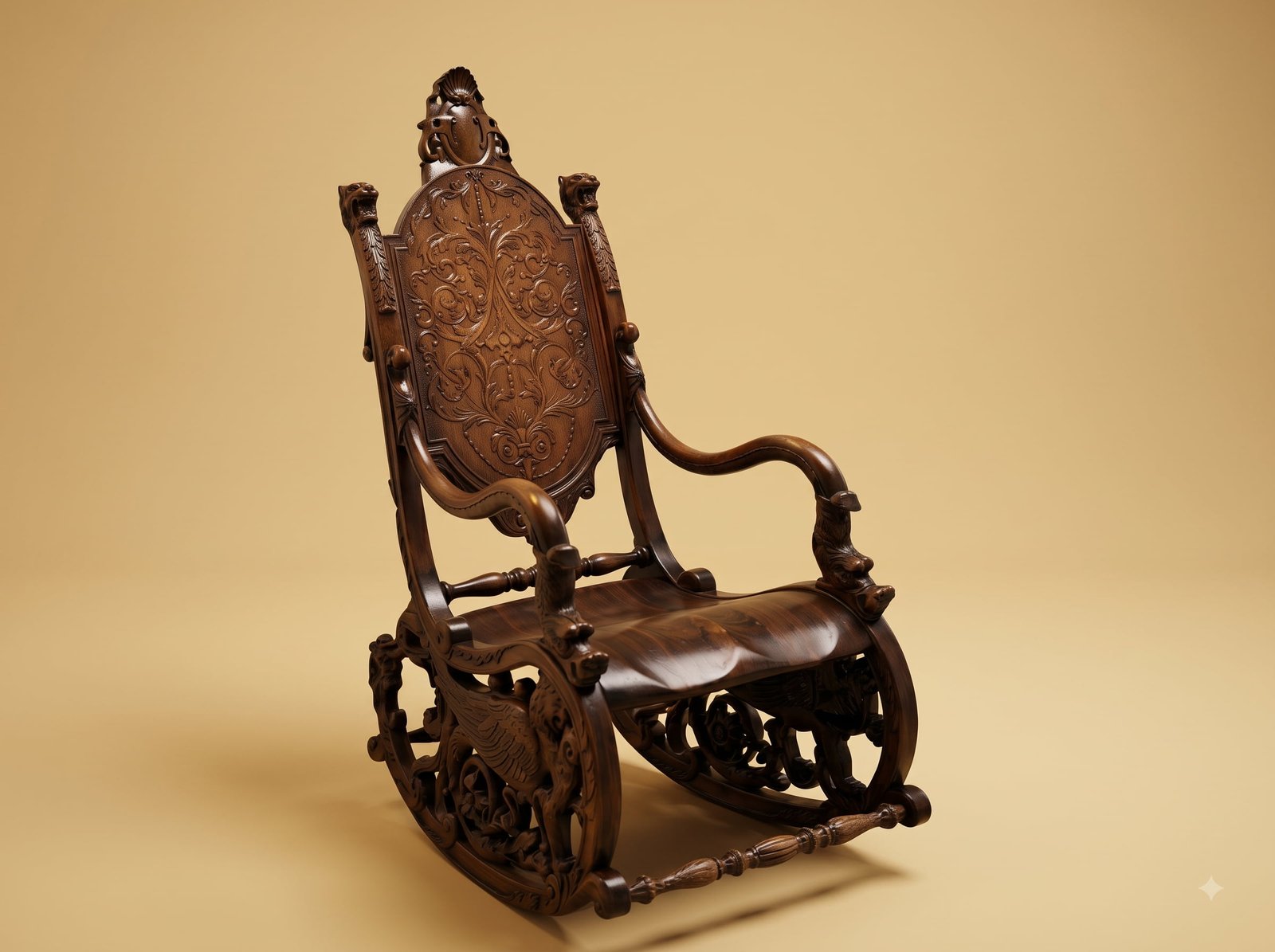
The seat on this chair has no cushion, and it does not need one. That is down to a shape hollowed out of a solid board by hand, and to a rule about which direction the tool travels.
A seat like this starts as one thick plank. The carver marks the hollows - deeper where the weight of the body lands, rising to a low ridge at the front centre so the thighs are not pressed against a hard edge - and then removes the waste with a curved-blade tool, working across the grain rather than along it. Working across is counter-intuitive and it is the whole trick: cutting along the grain, the tool follows the fibres and dives, tearing out lumps below the surface you wanted. Cutting across, it severs the fibres cleanly and the hollow stays exactly as deep as intended.
The last stage is done with the board held up to a raking light, because a shallow scoop is almost impossible to judge by eye under flat lighting - low light throws every remaining ridge into shadow and shows the carver where more has to come off.
An hour or two of that, and a plank becomes a seat that fits a person. It is the oldest chairmaking skill there is, and there is still no way to fake it.
 Ask Price On WhatsApp