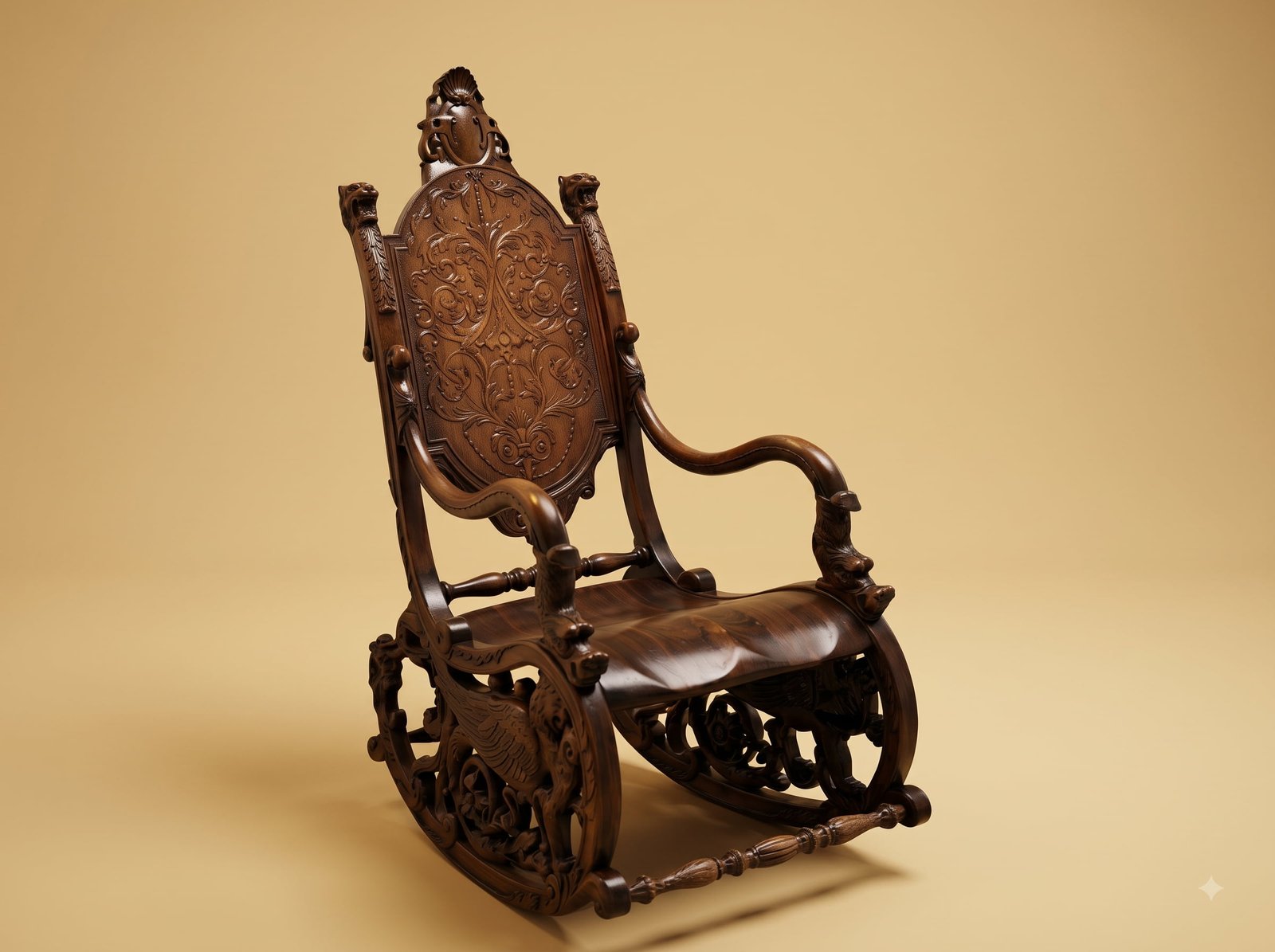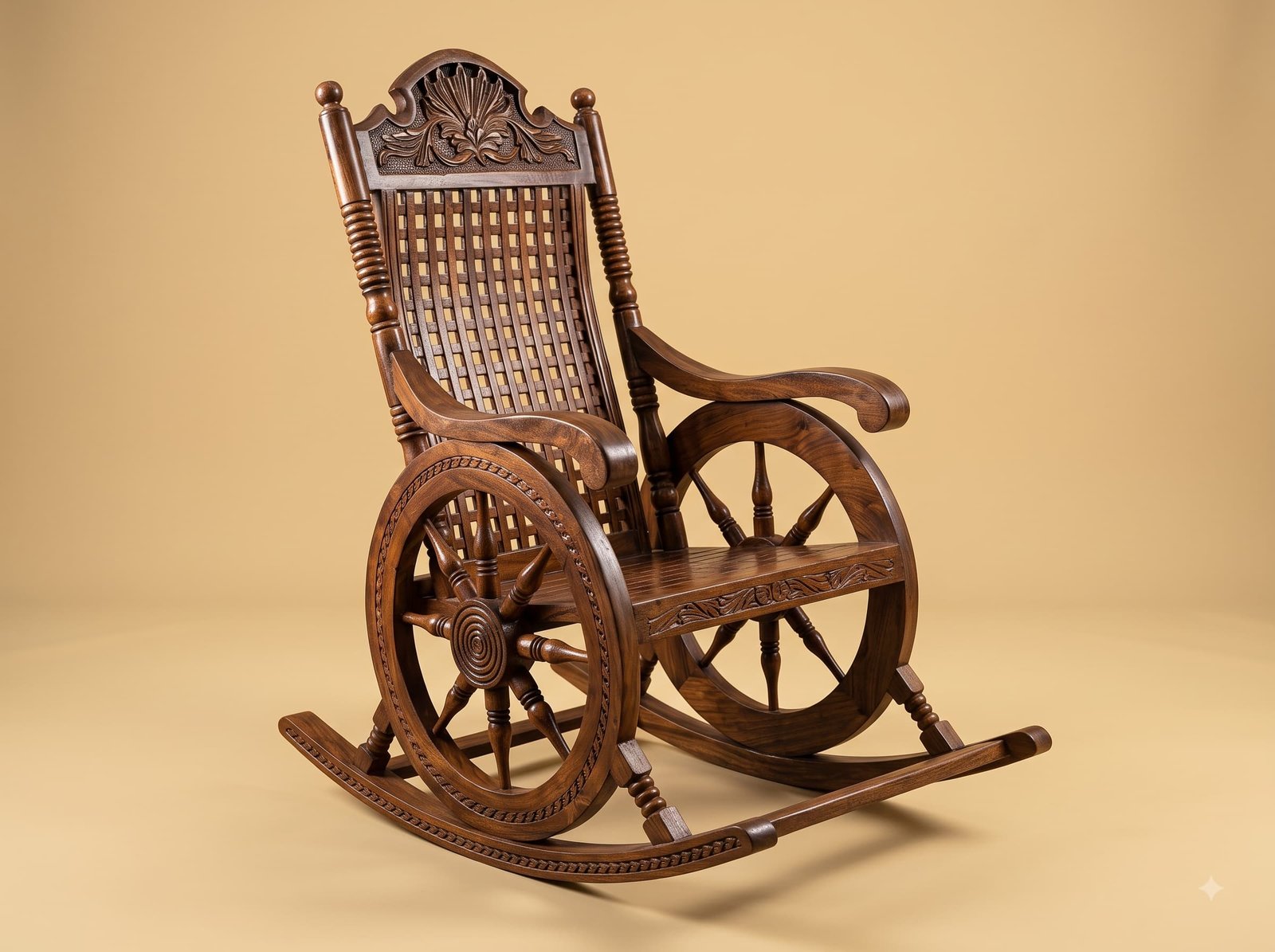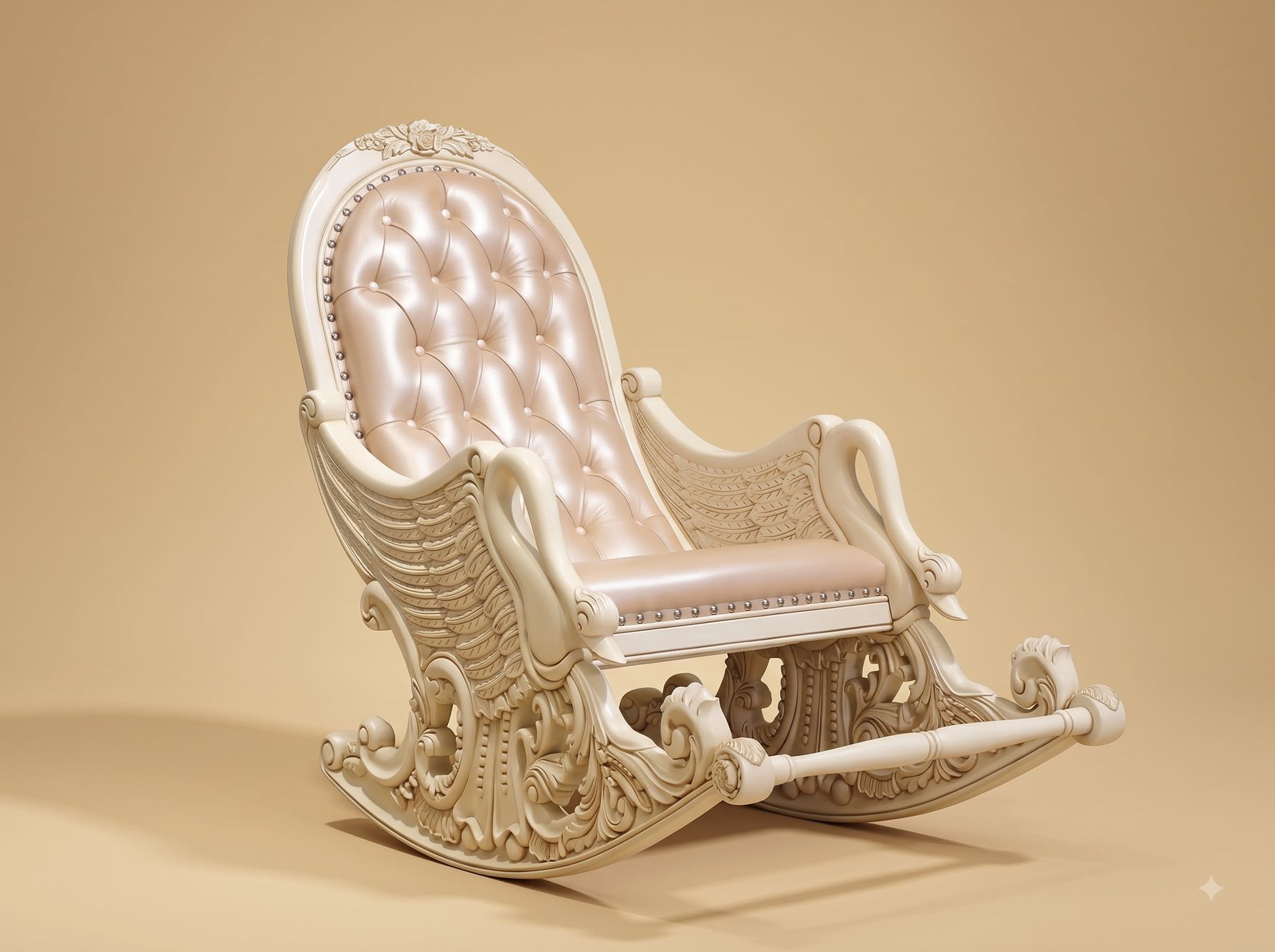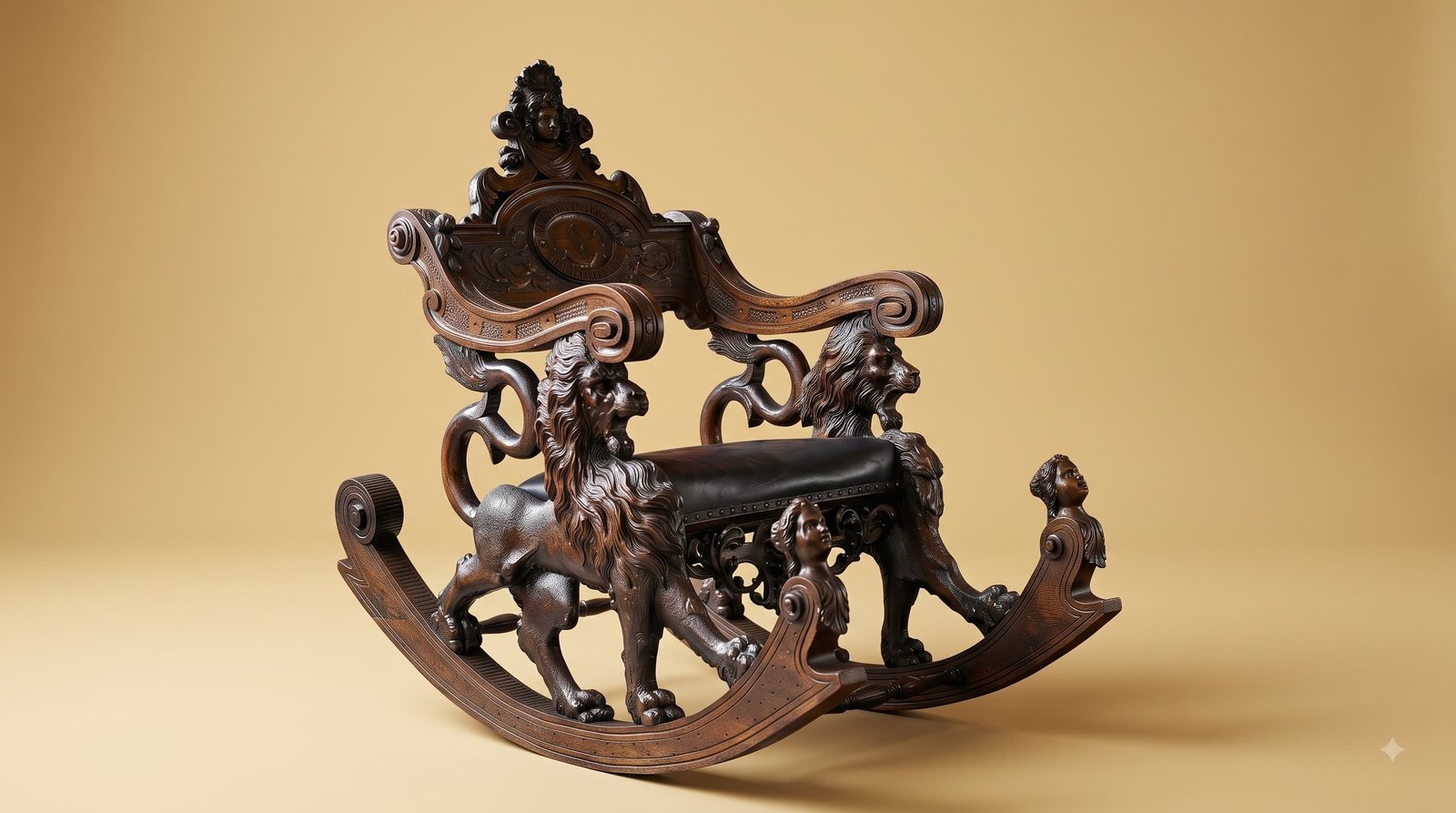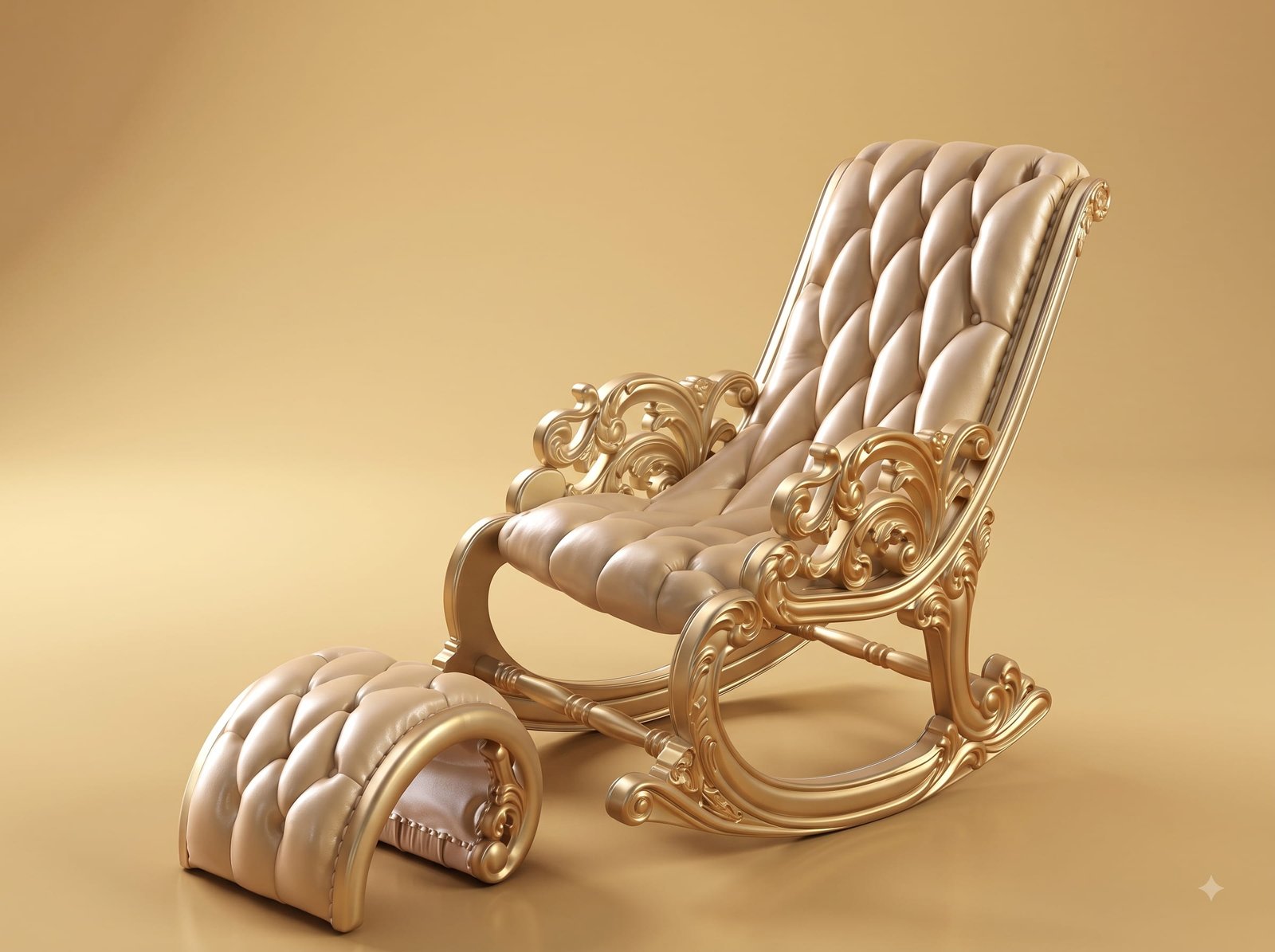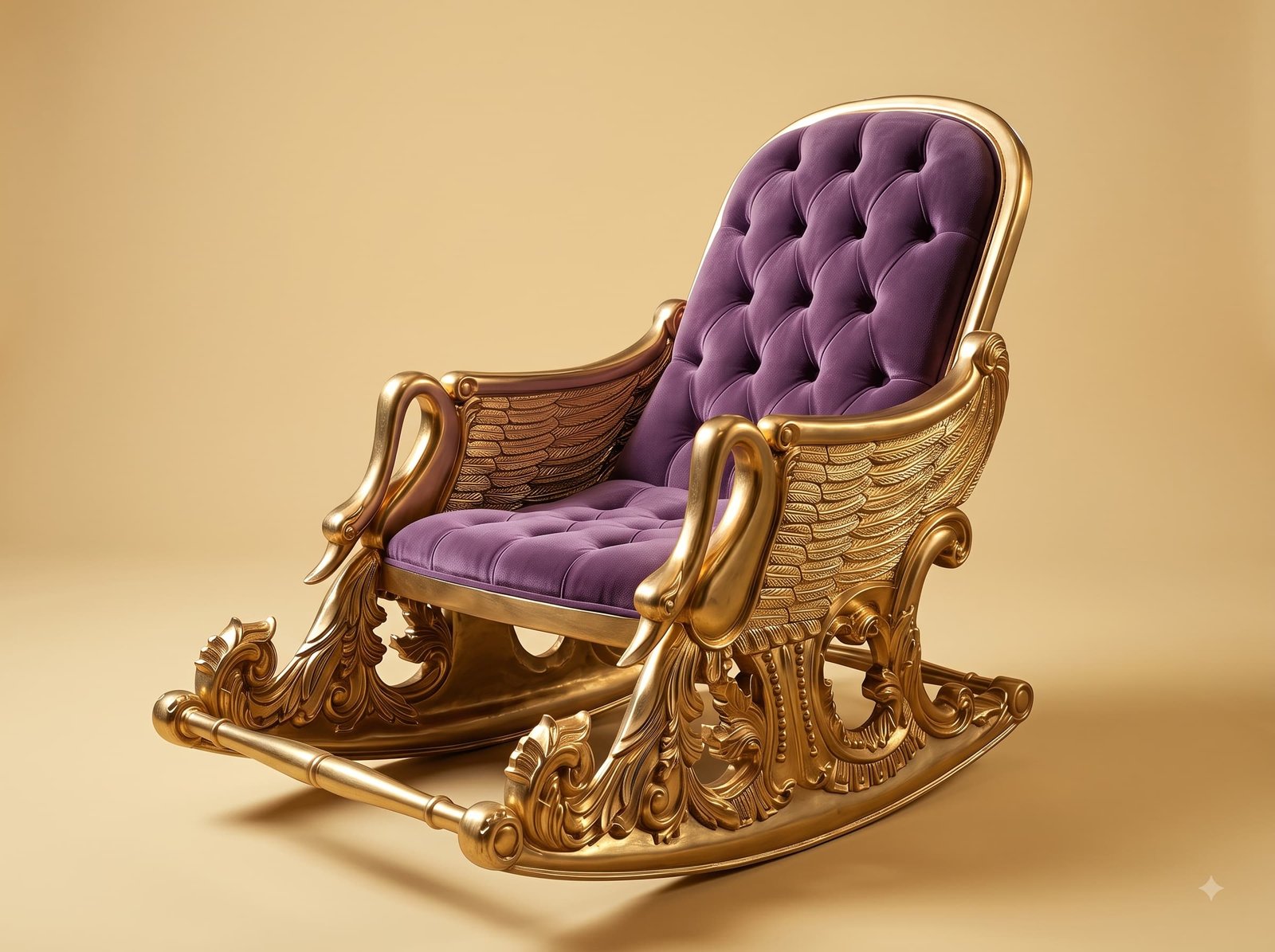
The way a rocking chair feels is decided entirely by two curved pieces of wood on the floor, and by where the chair's weight sits above them.
Make the rockers a tight arc and the chair rocks quickly and shallowly, tipping far for a small push - lively, but it never quite settles. Make the arc long and flat and the motion becomes slow and wide, the kind you fall asleep in, but it takes real effort to start. The pair on this chair sit between the two, and that choice is made before any wood is cut, because the arc governs everything after it.
Both rockers come off a single template. If one is even slightly tighter than the other the chair will steer as it moves, drifting a few degrees across the floor over an evening. Cutting them as a matched pair from one pattern is what keeps the travel straight.
Then the balance. The seat is positioned over the arc so that the chair comes to rest very slightly back rather than upright - so an empty chair stays put and a loaded one wants to return to you instead of tipping away. It is a few millimetres of decision, made by hand, and it is the difference between a chair that rocks and a chair that simply moves.
 Ask Price On WhatsApp