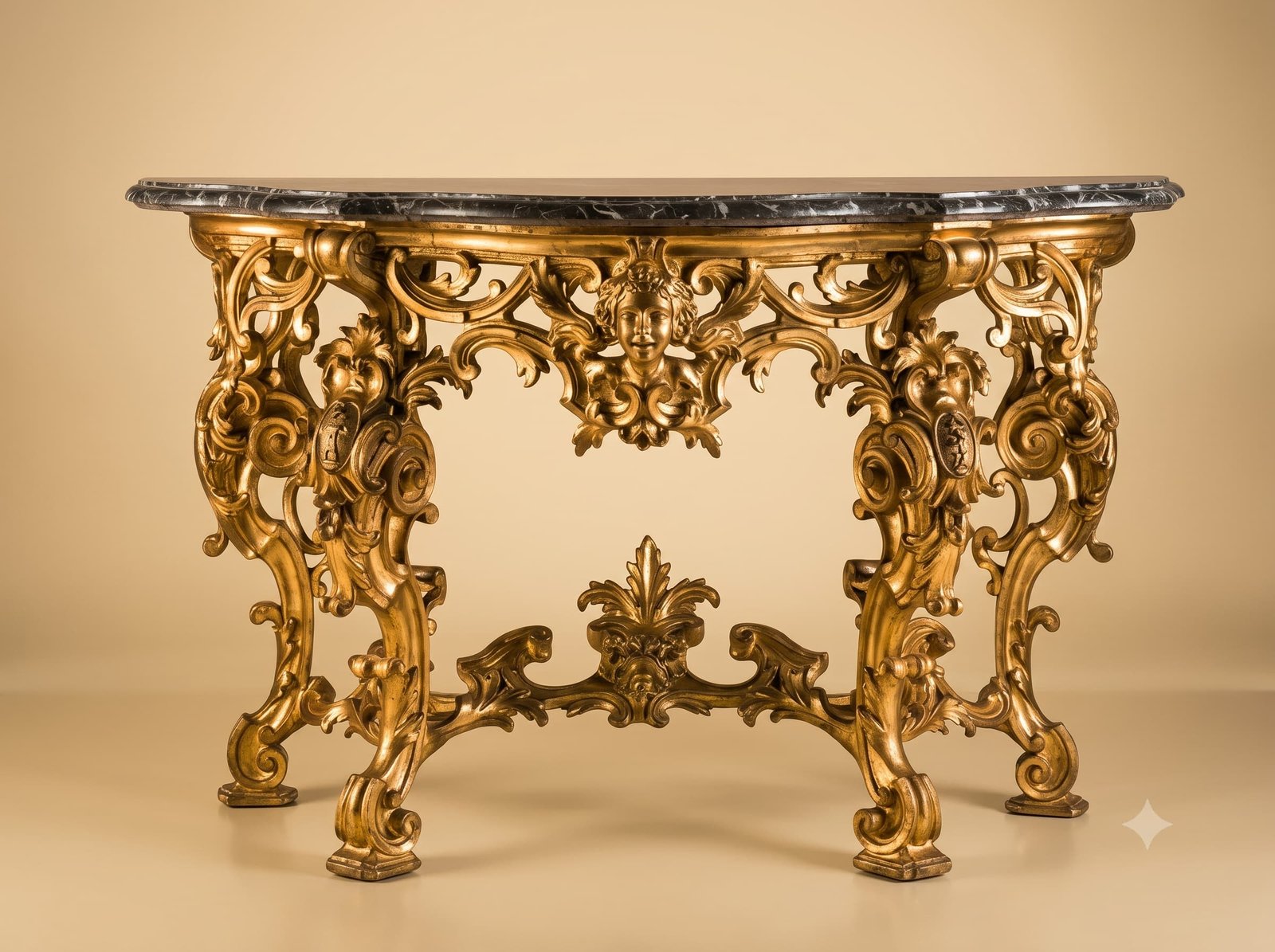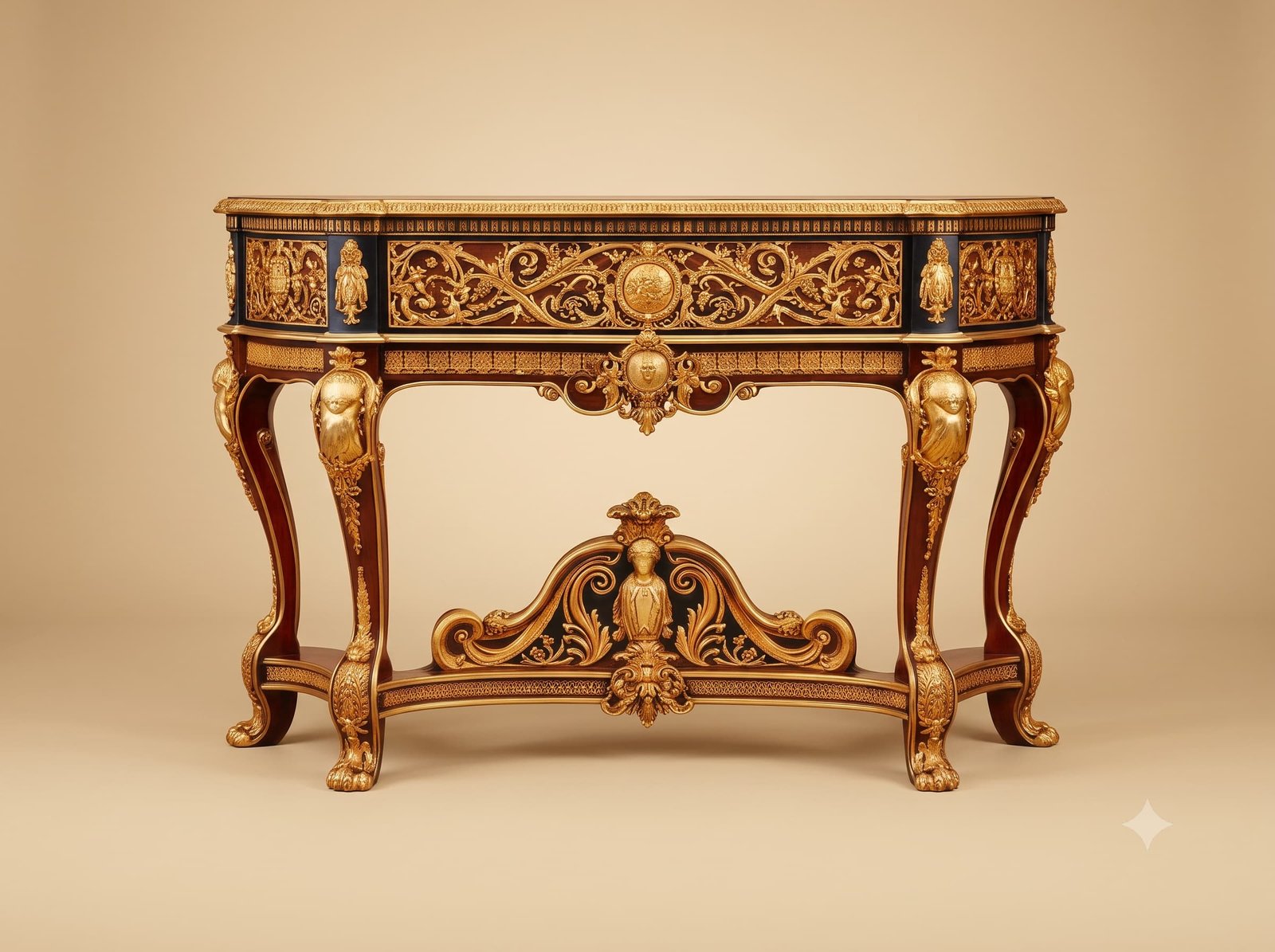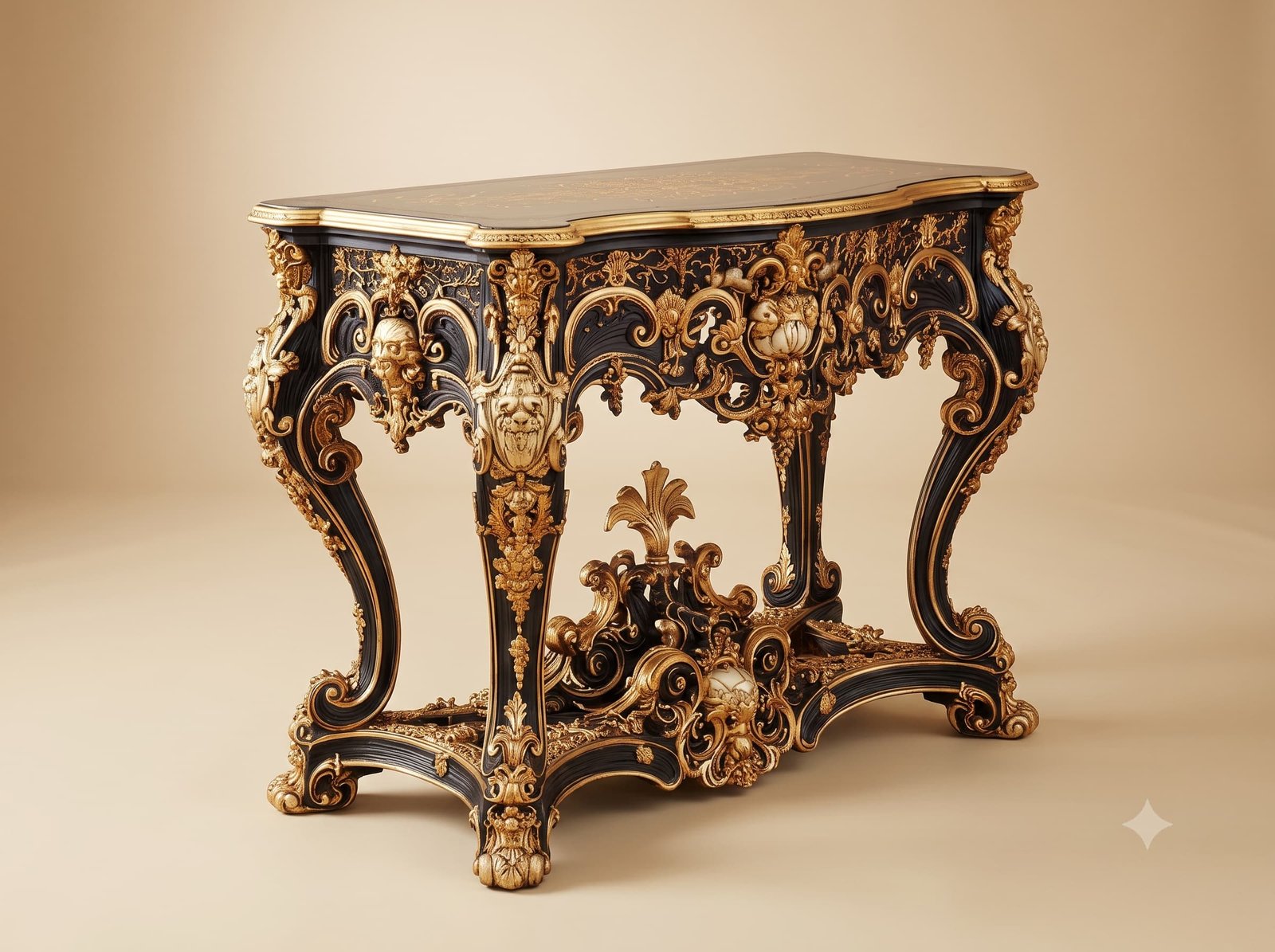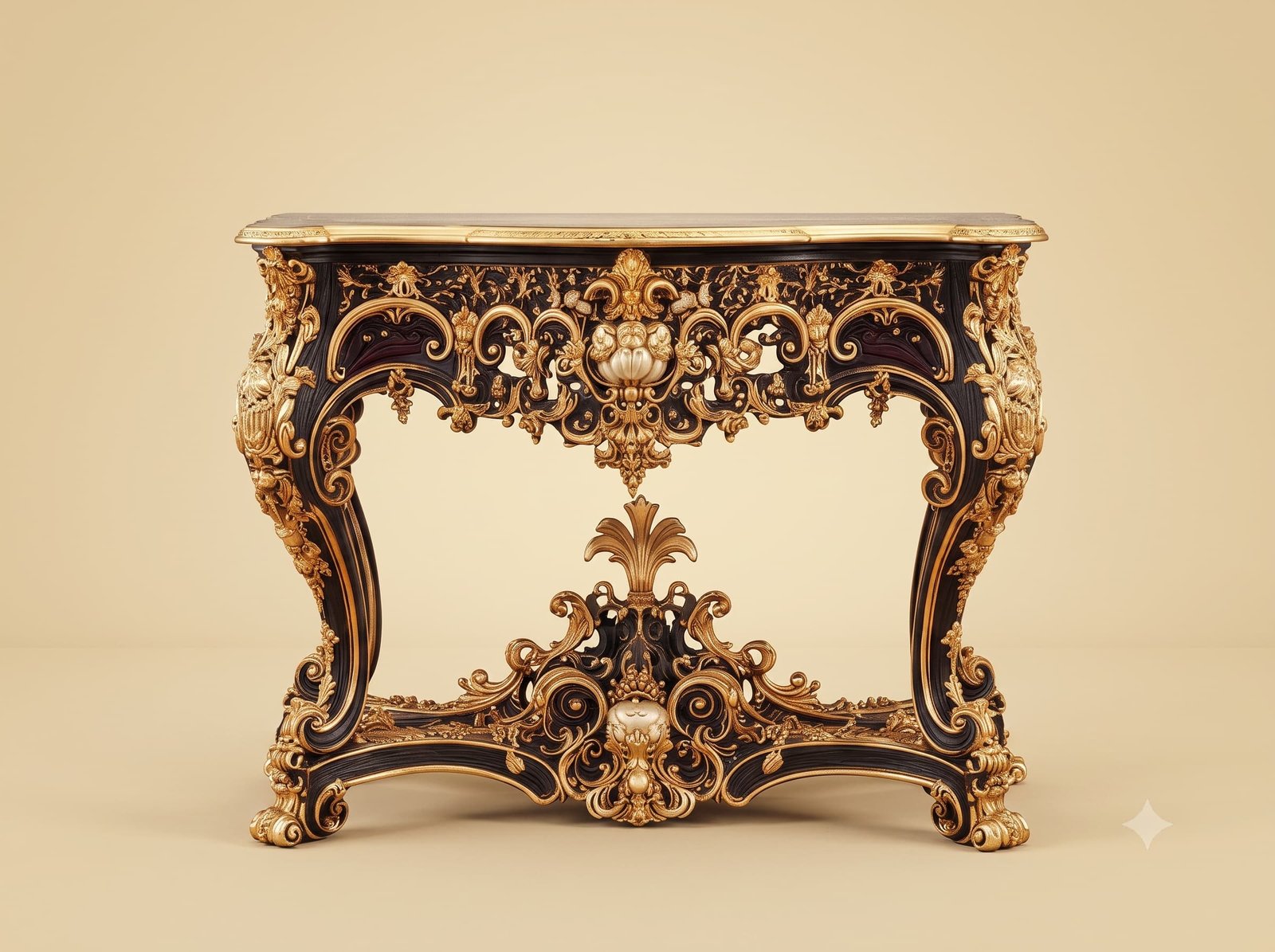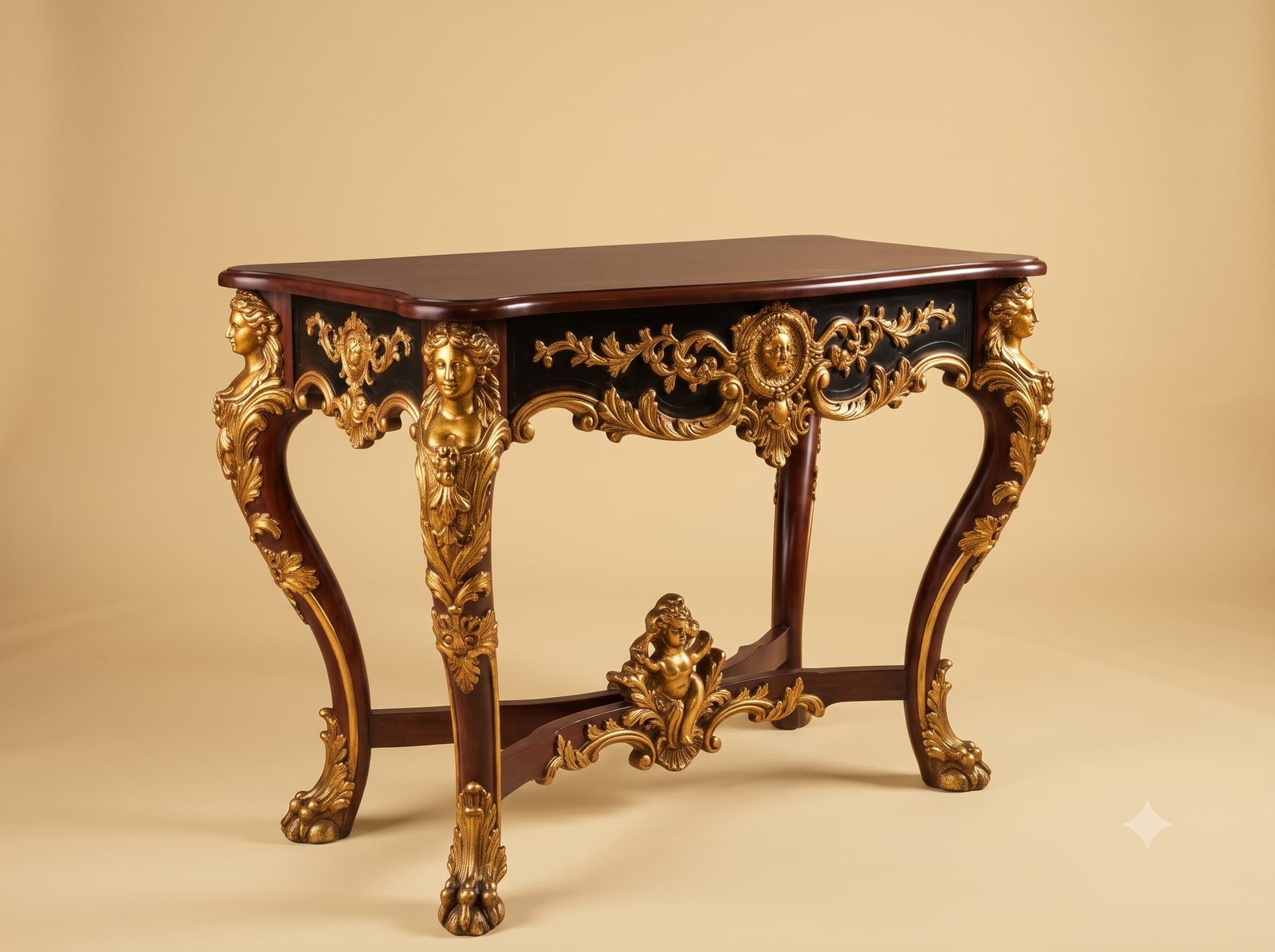
A carved bust at the top of a table leg raises a question the carver has to answer deliberately: where does the person stop and the furniture start?
Left unresolved, the figure simply thins downward and becomes a leg, and the eye reads it as a body dissolving - which is unsettling rather than elegant. The old cabinet-makers knew this and never allowed it. There is always a device at the transition.
Here it is a fall of leaves. The bust finishes at the shoulders and a gilded leaf collar gathers immediately beneath, spilling down the face of the leg. The leaves are carved so their upper edges overlap the bottom of the bust, which is what makes the reading work: the figure is not turning into the leg, it is standing in front of it, with drapery between.
Our master Indian artisans carve the collar after the bust and cut it slightly proud of the leg surface, so it casts a shadow along its lower edge. That shadow is the full-stop. Remove it and the whole leg becomes ambiguous; keep it and the bust is clearly an ornament applied to a support, which is exactly what it should look like.
 Ask Price On WhatsApp