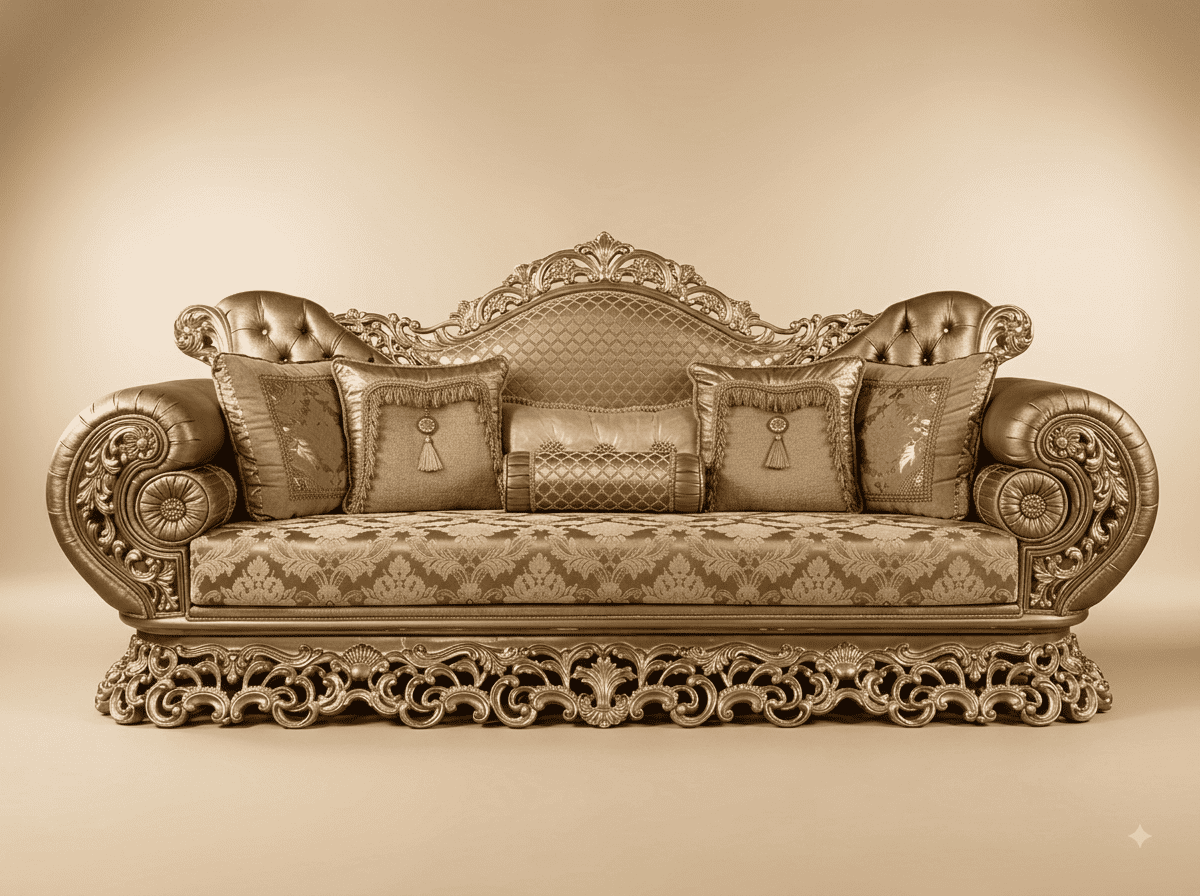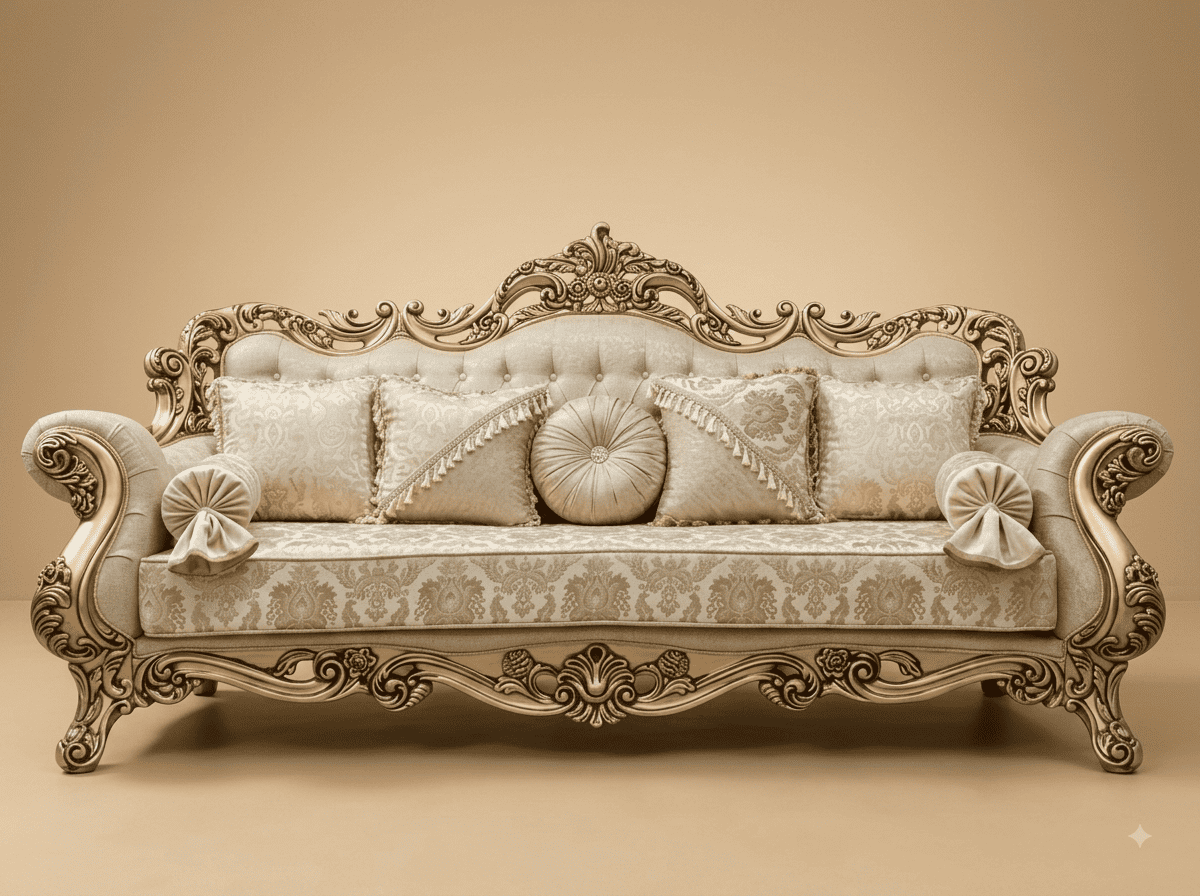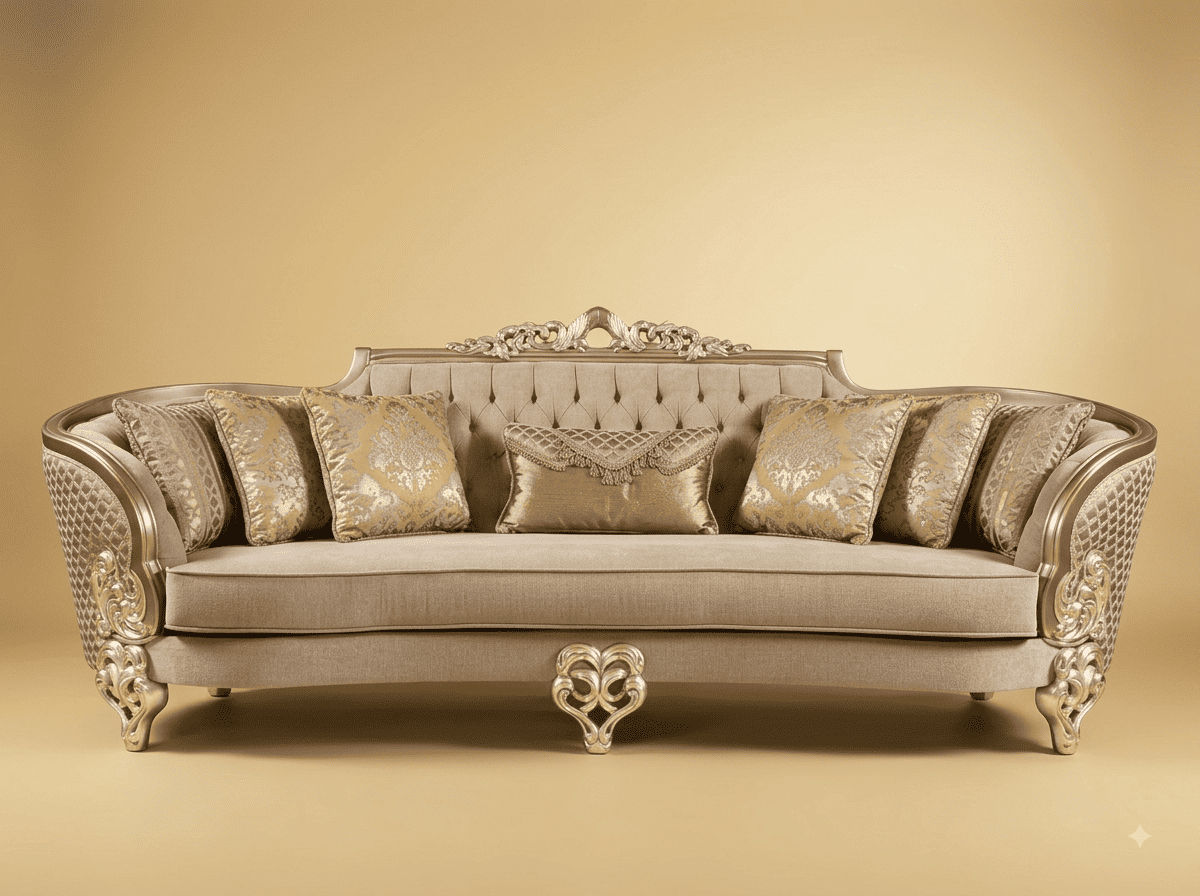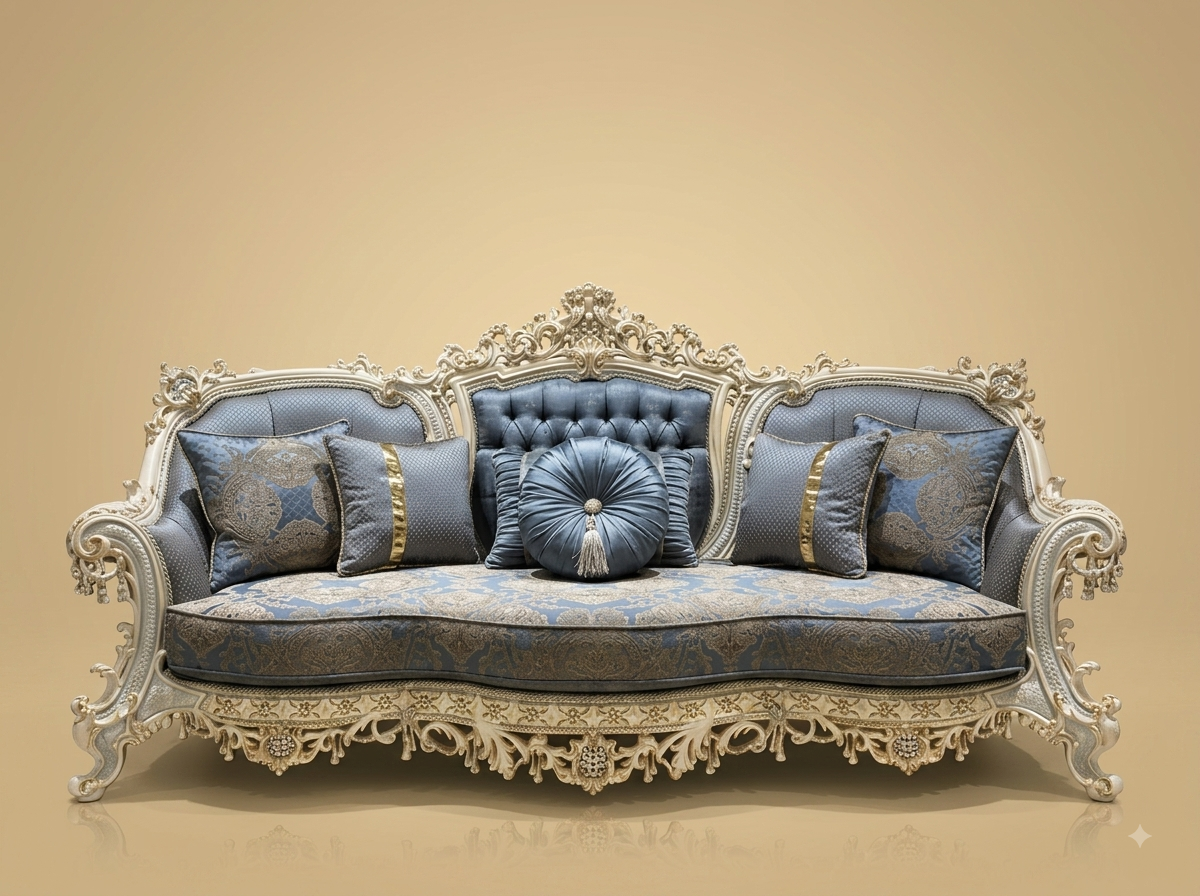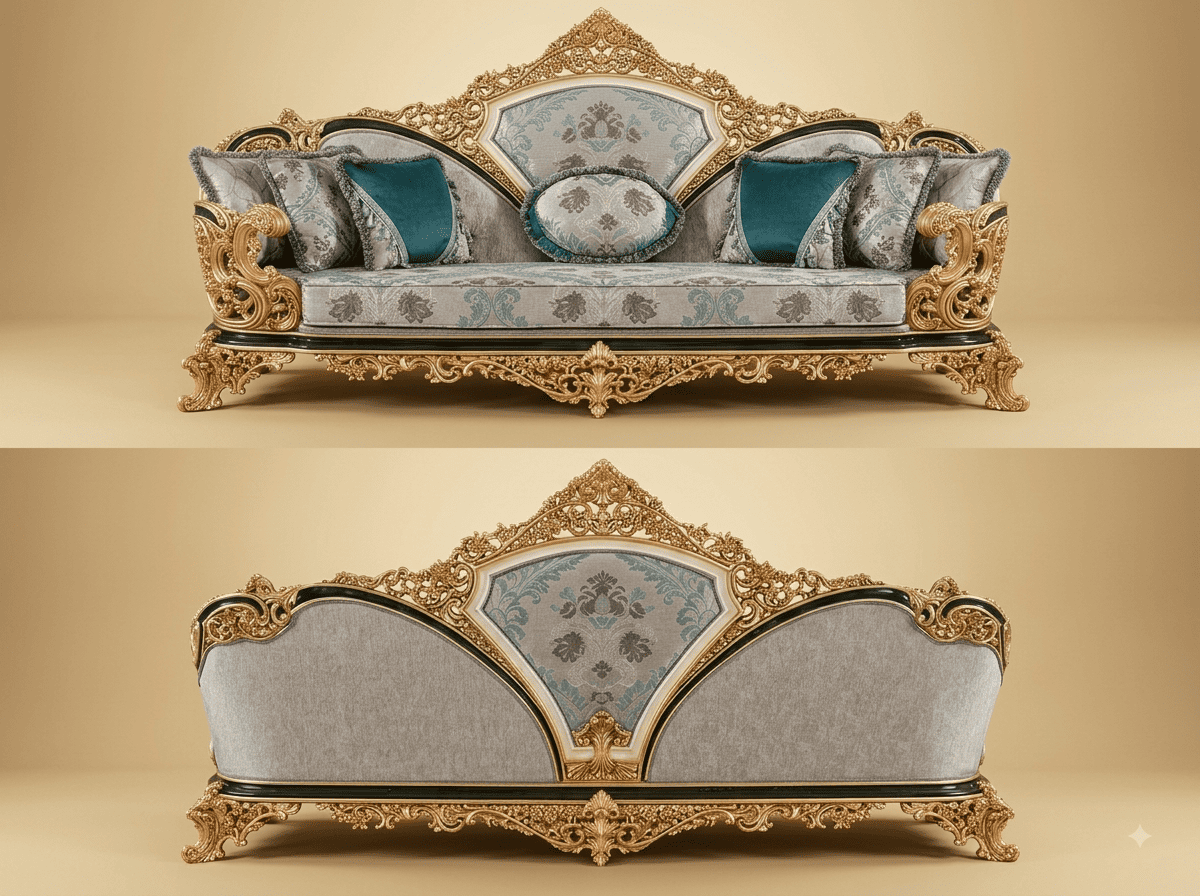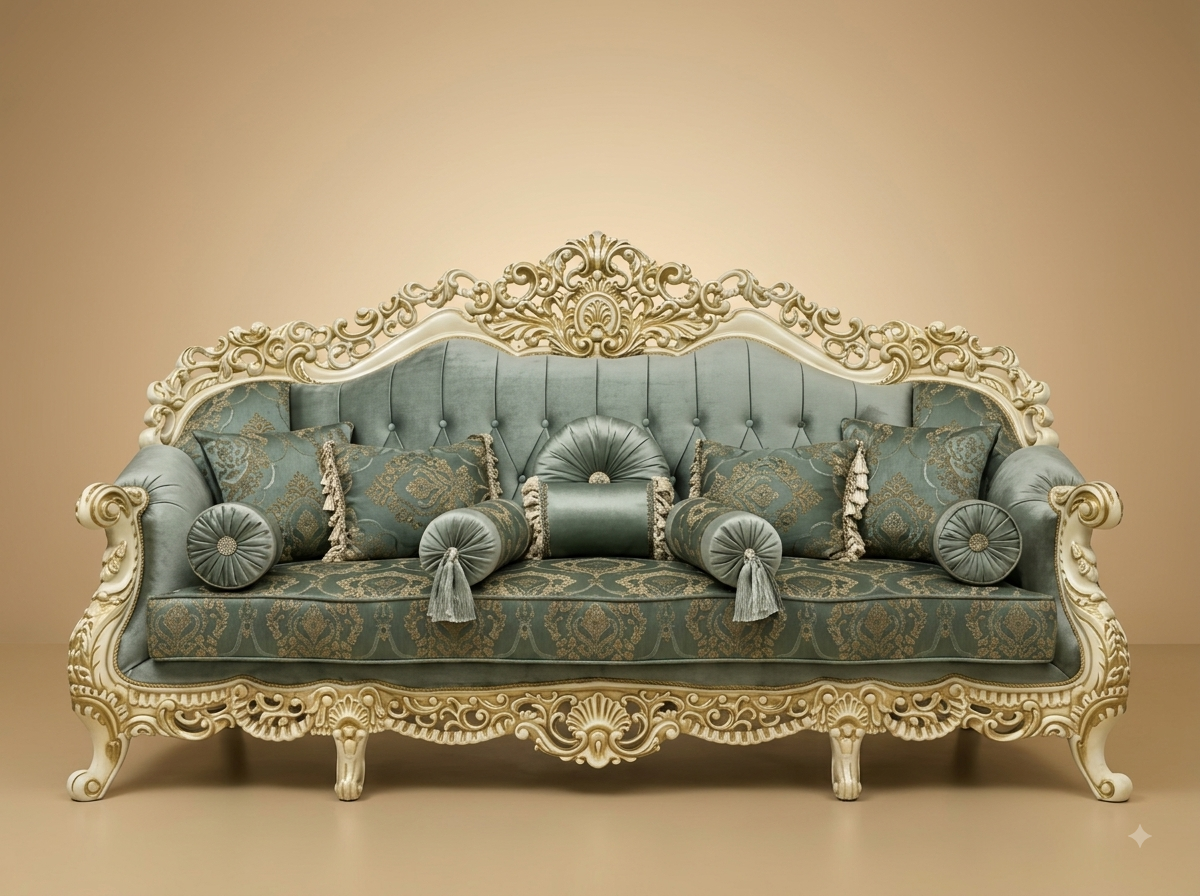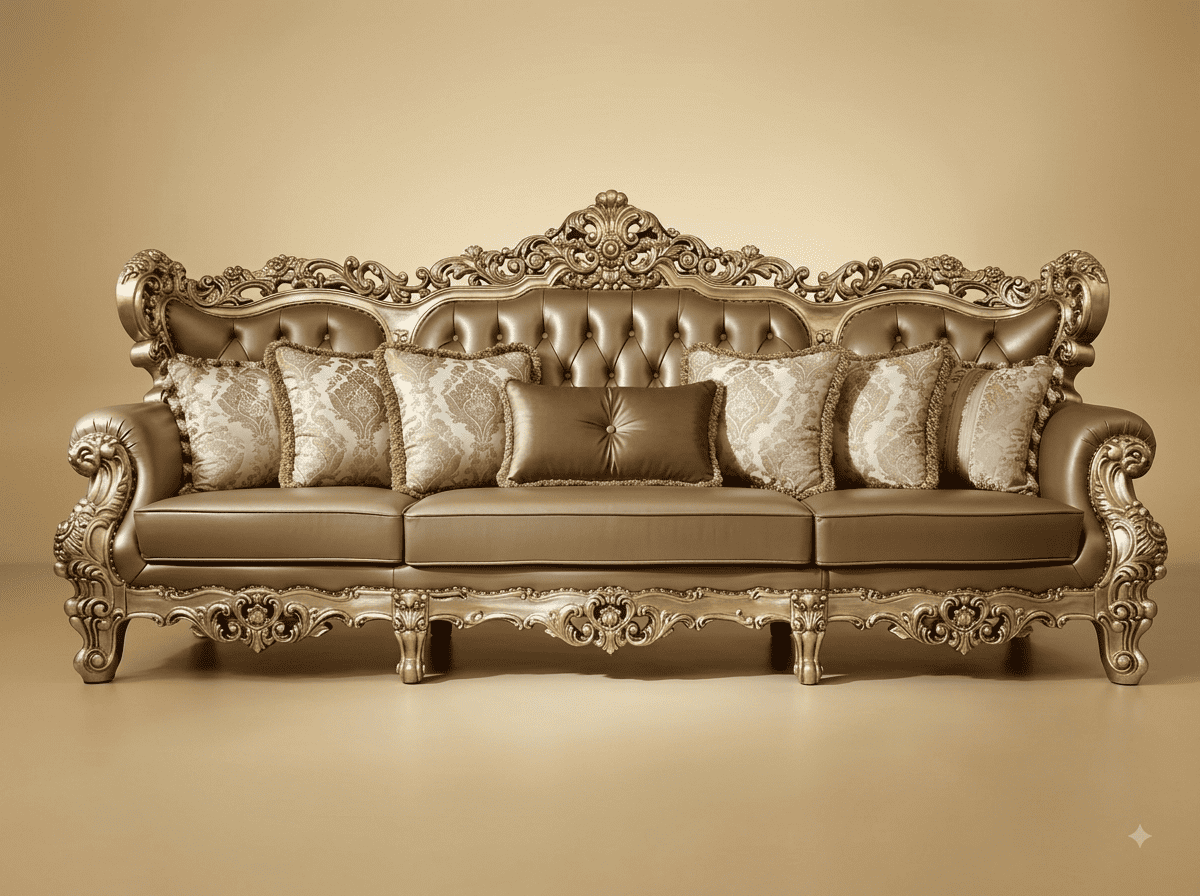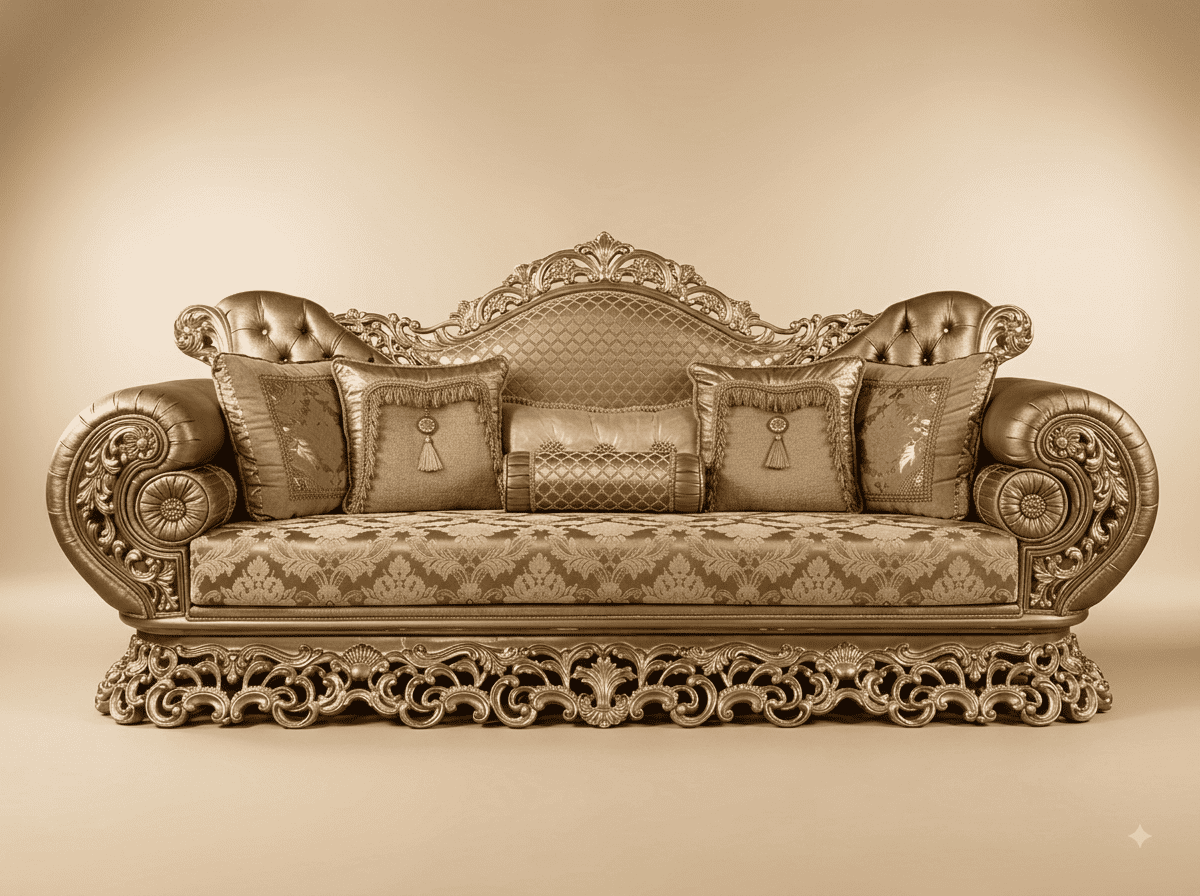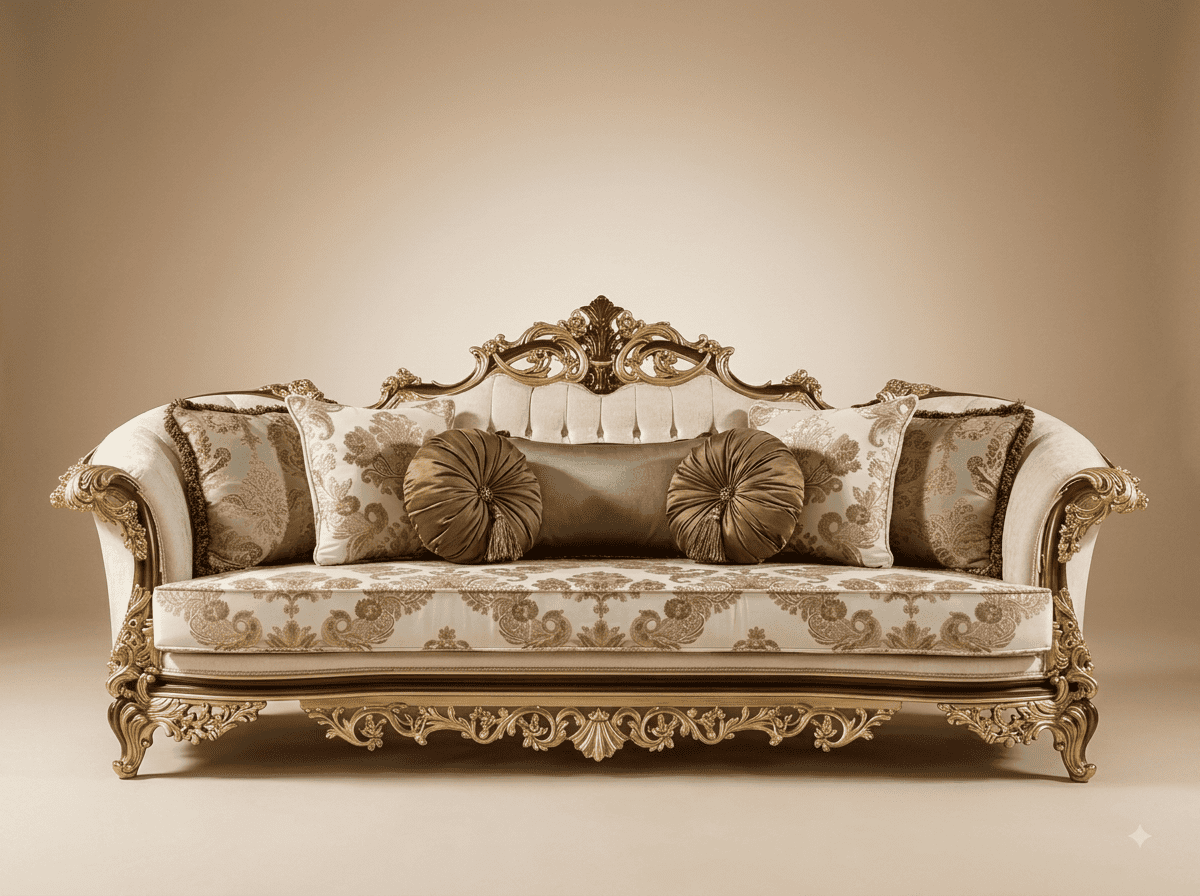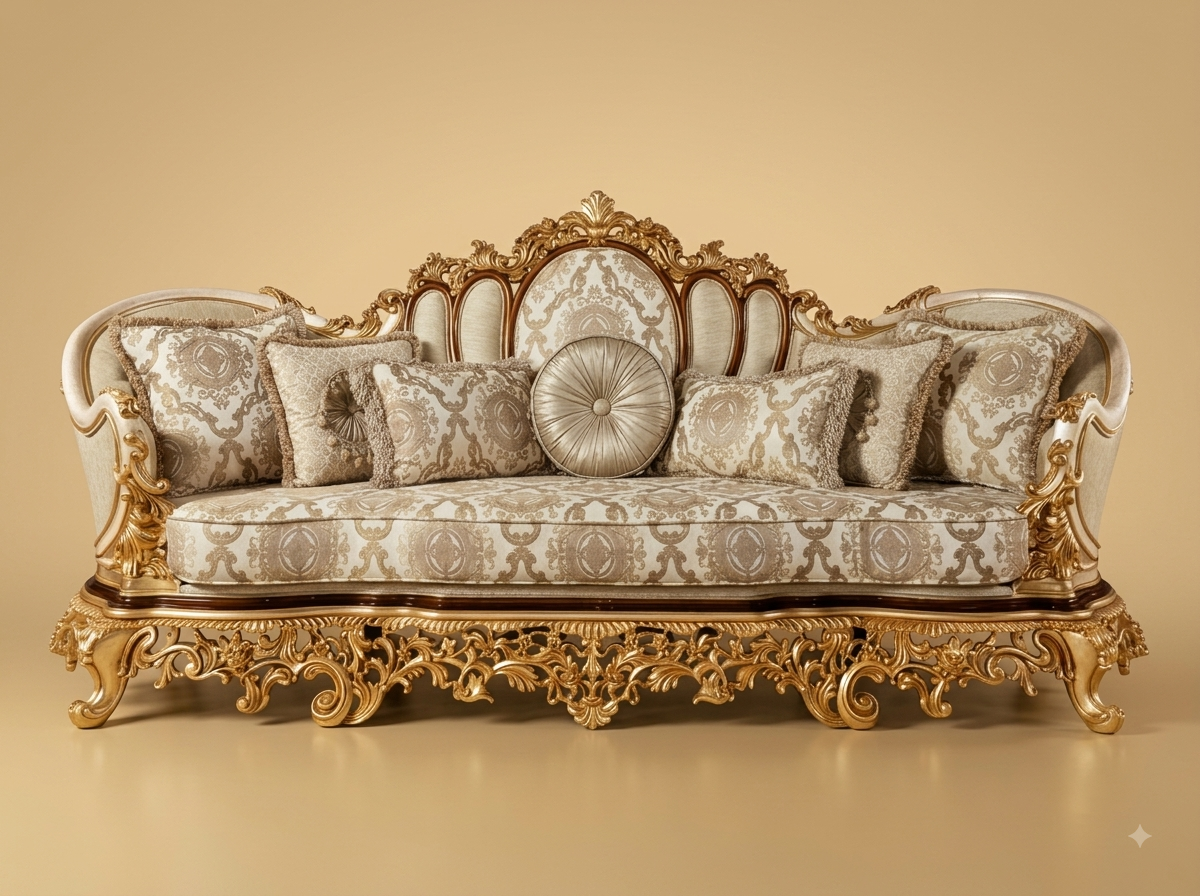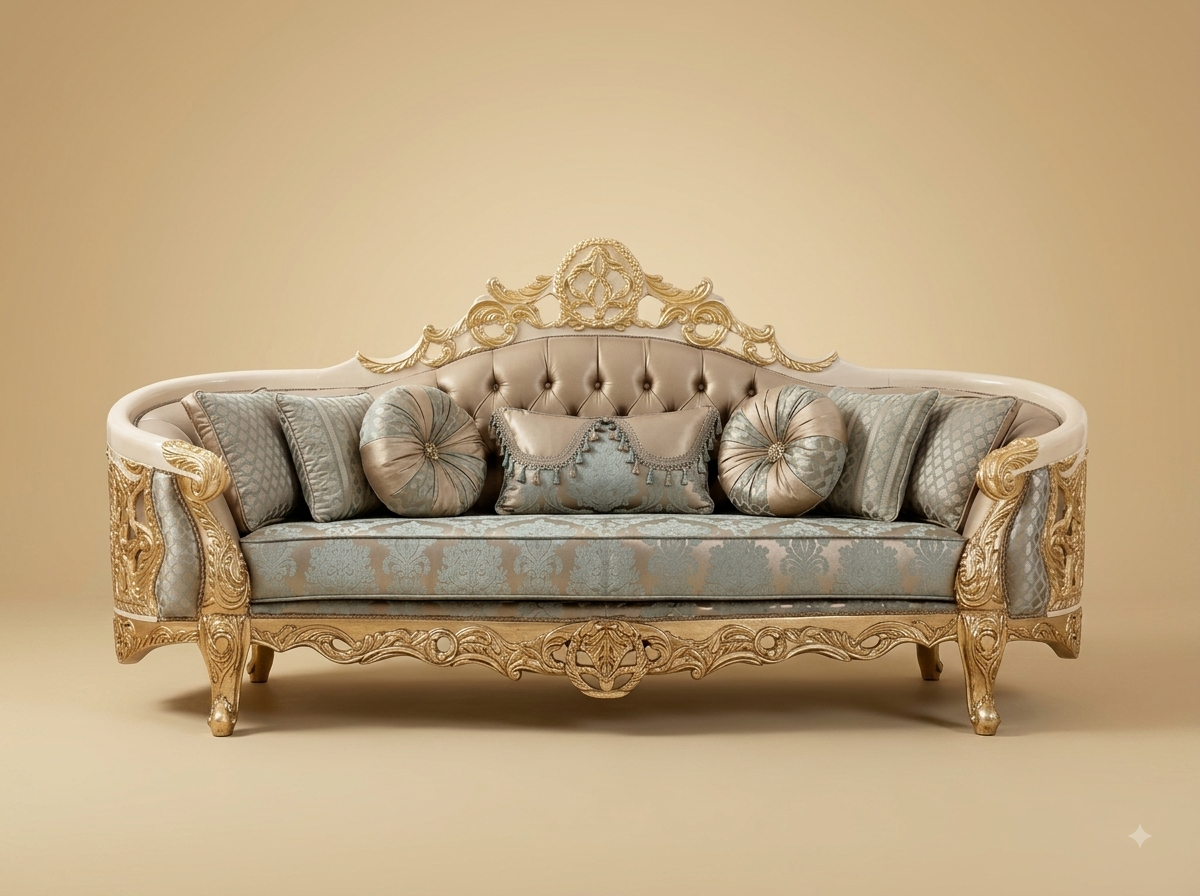
The Story Behind This Sofa
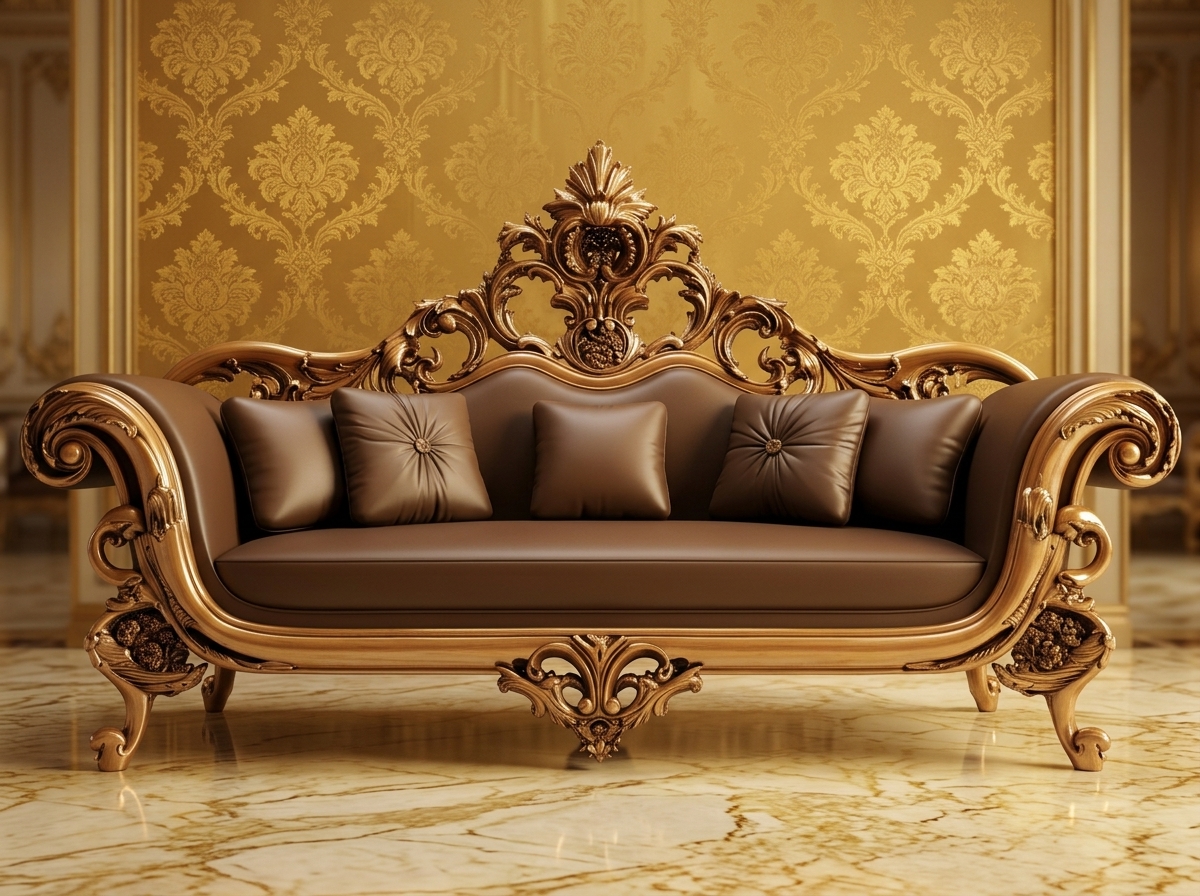
A curved sofa costs more than a straight one for reasons that have nothing to do with decoration.
Every horizontal member - the seat rail, the back rail, the apron - has to follow the arc. They cannot be cut from straight stock, so each is either laminated up in layers around a form or cut from much wider boards with the curve taken out of the solid, which wastes a great deal of timber. Cutting a curve from a straight board also produces short grain at the ends of the arc, the classic weak point where a curved rail snaps, so the layout is planned to keep grain running along the curve.
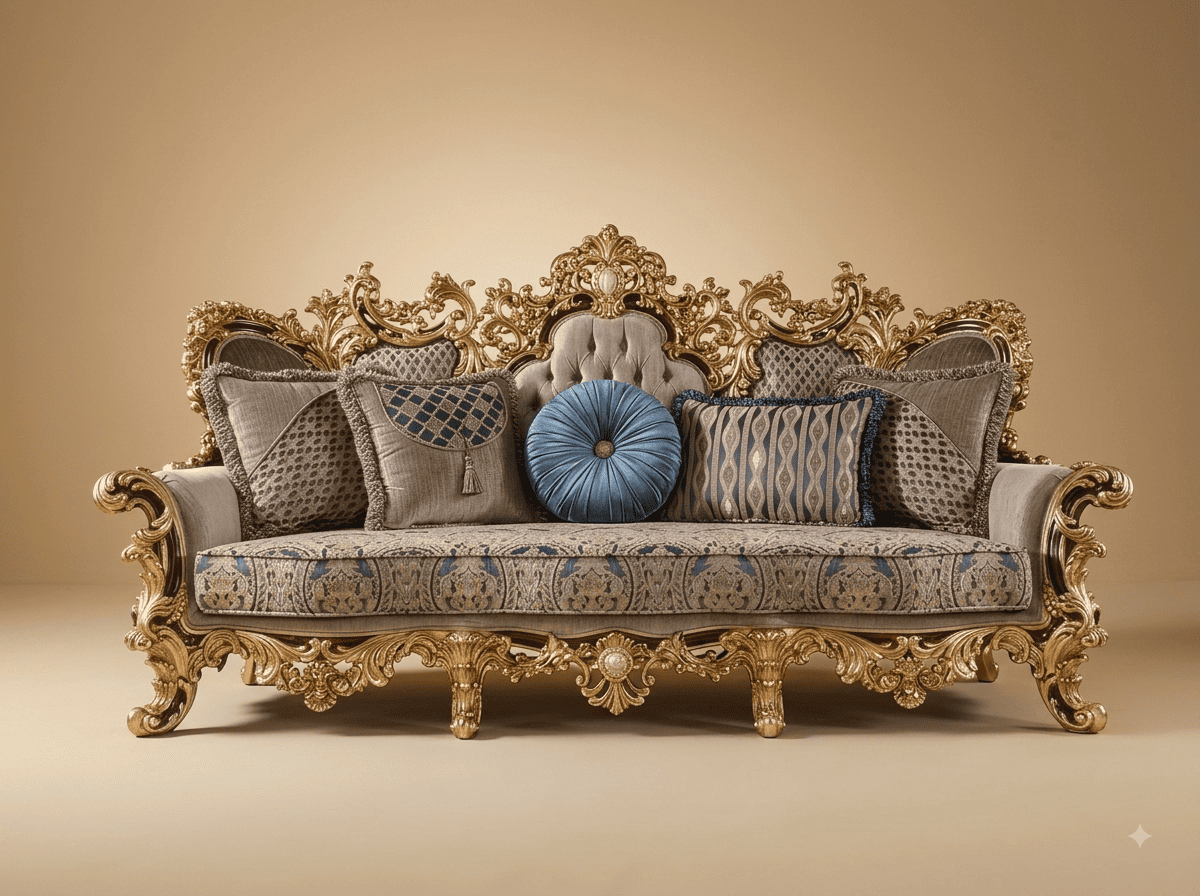
The carved apron then has to follow that arc while its ornament stays correctly proportioned - a cartouche that reads properly on a straight rail looks stretched on a curve, so the setting out is done on the finished shape rather than flat.
Upholstery is harder too. A curved back means every panel is cut on a shaped pattern rather than a rectangle, and the damask motif still has to sit true on the centre line and repeat evenly around the bow.
 Ask Price On WhatsApp