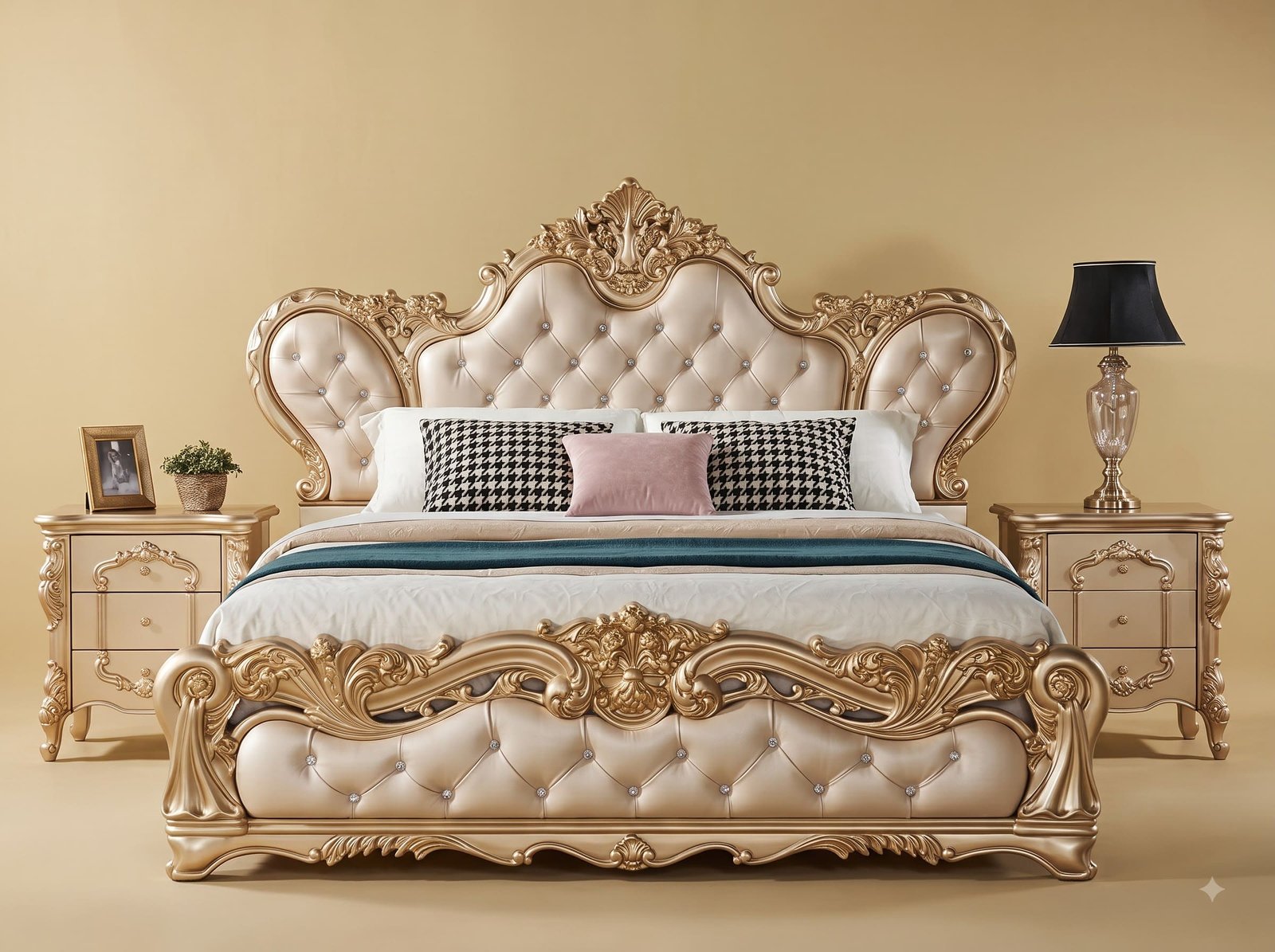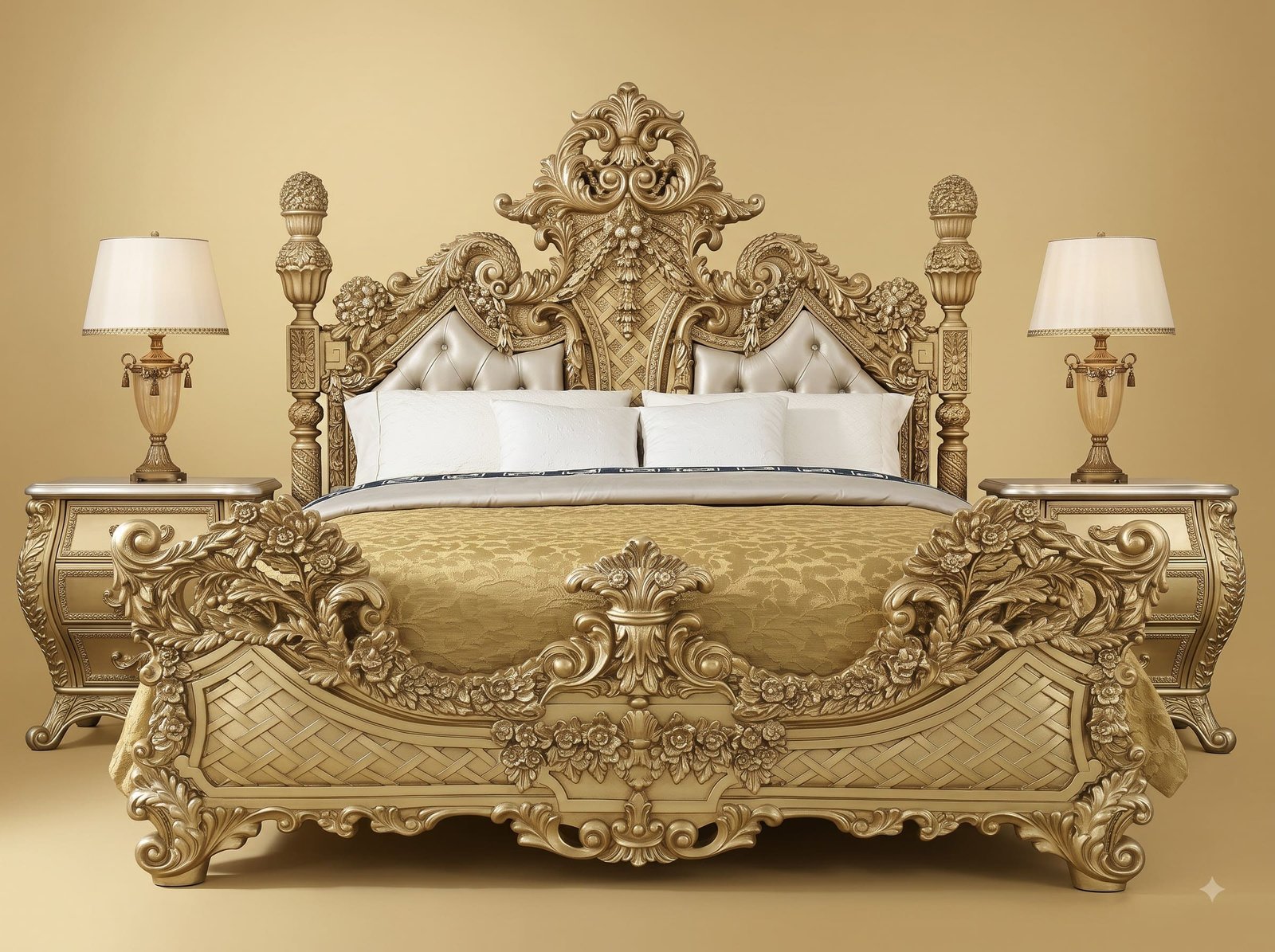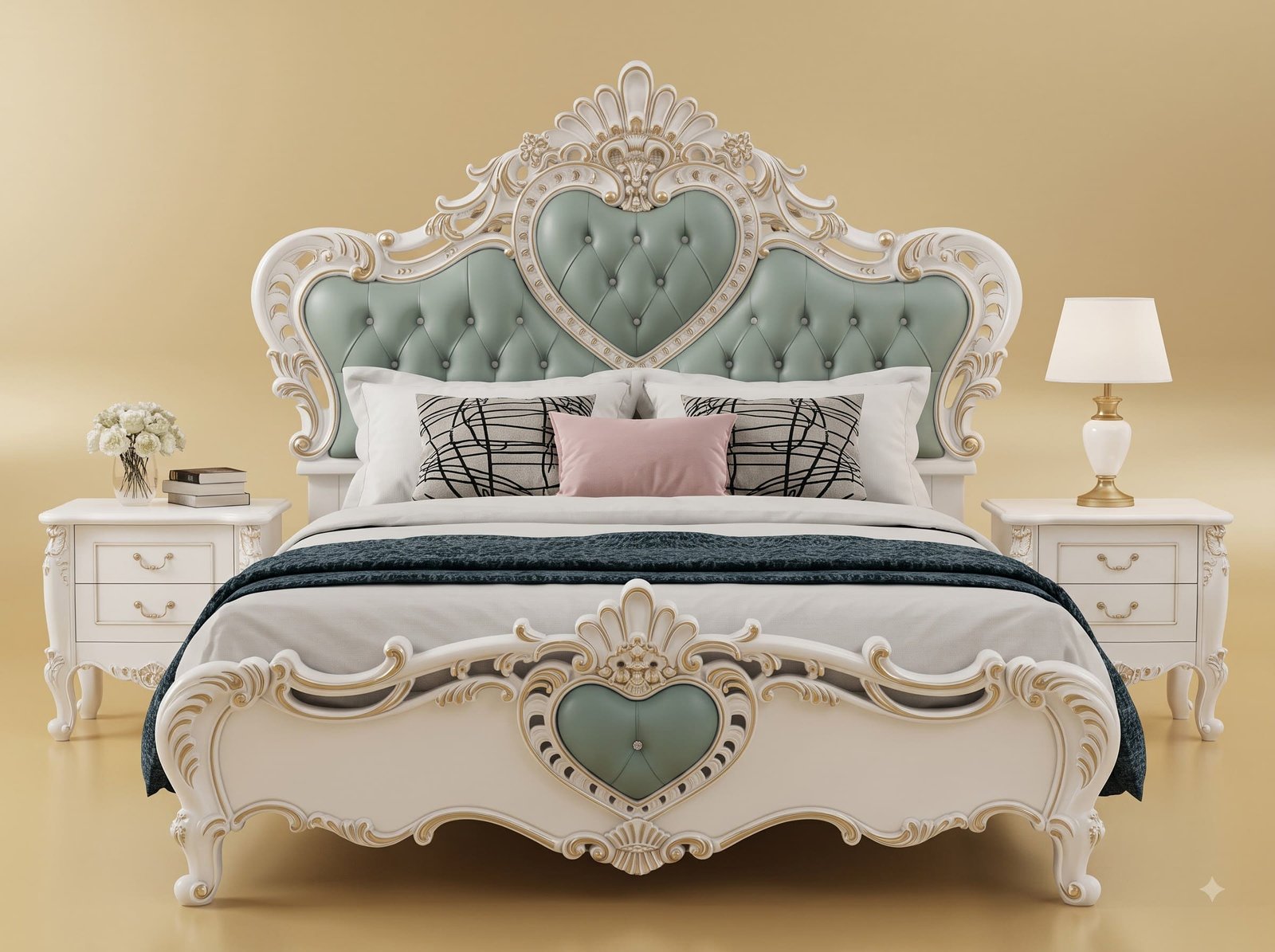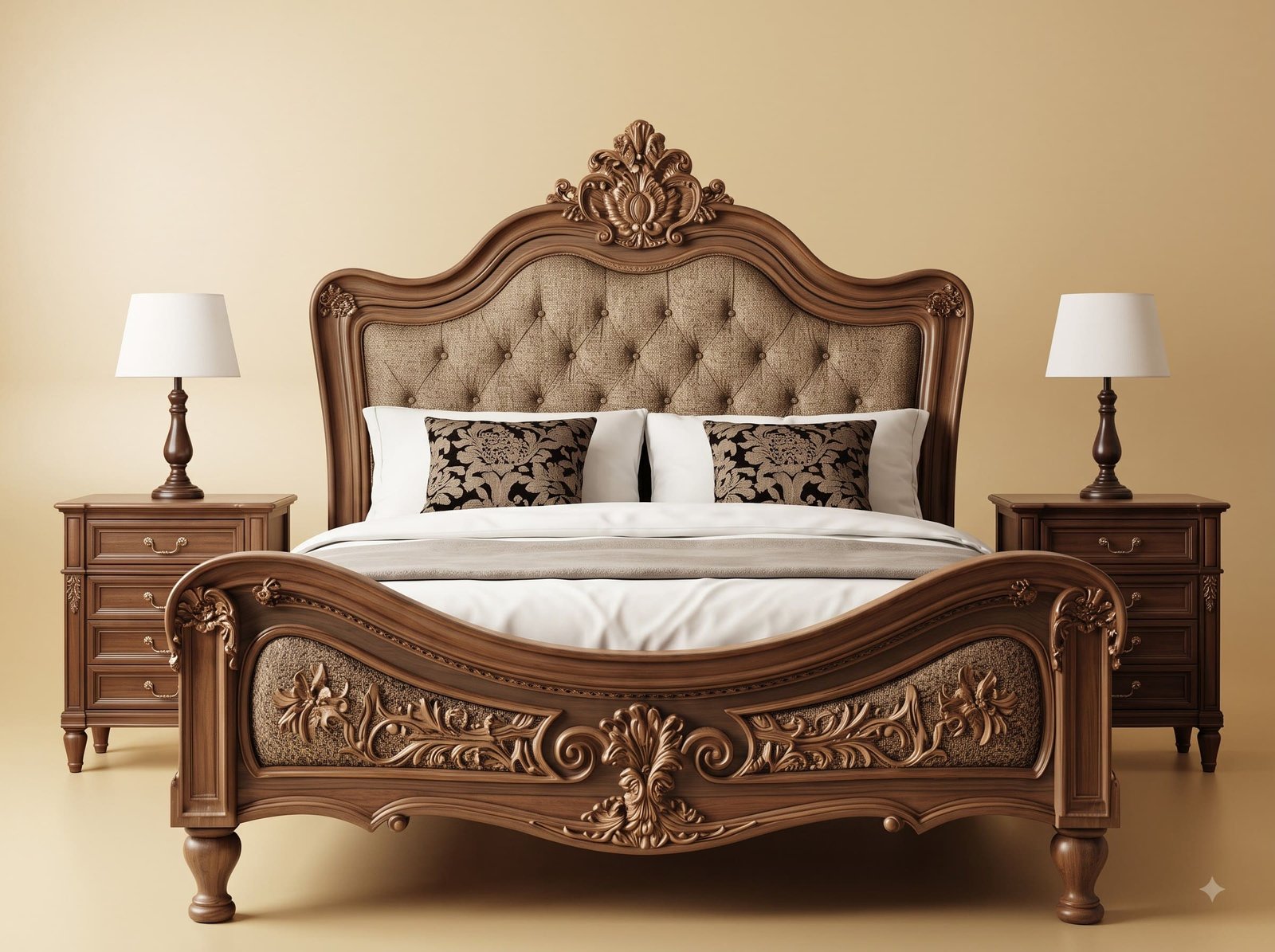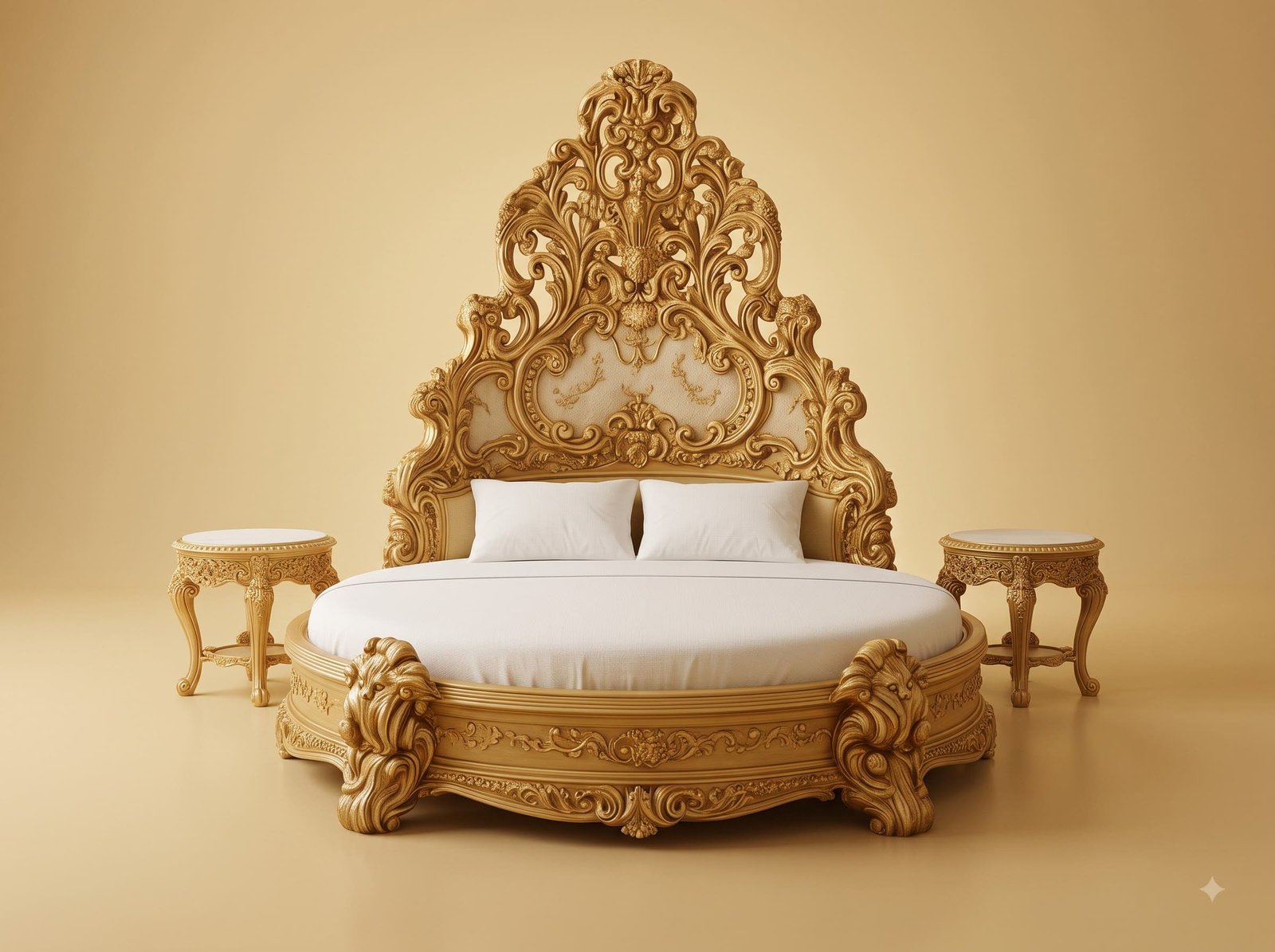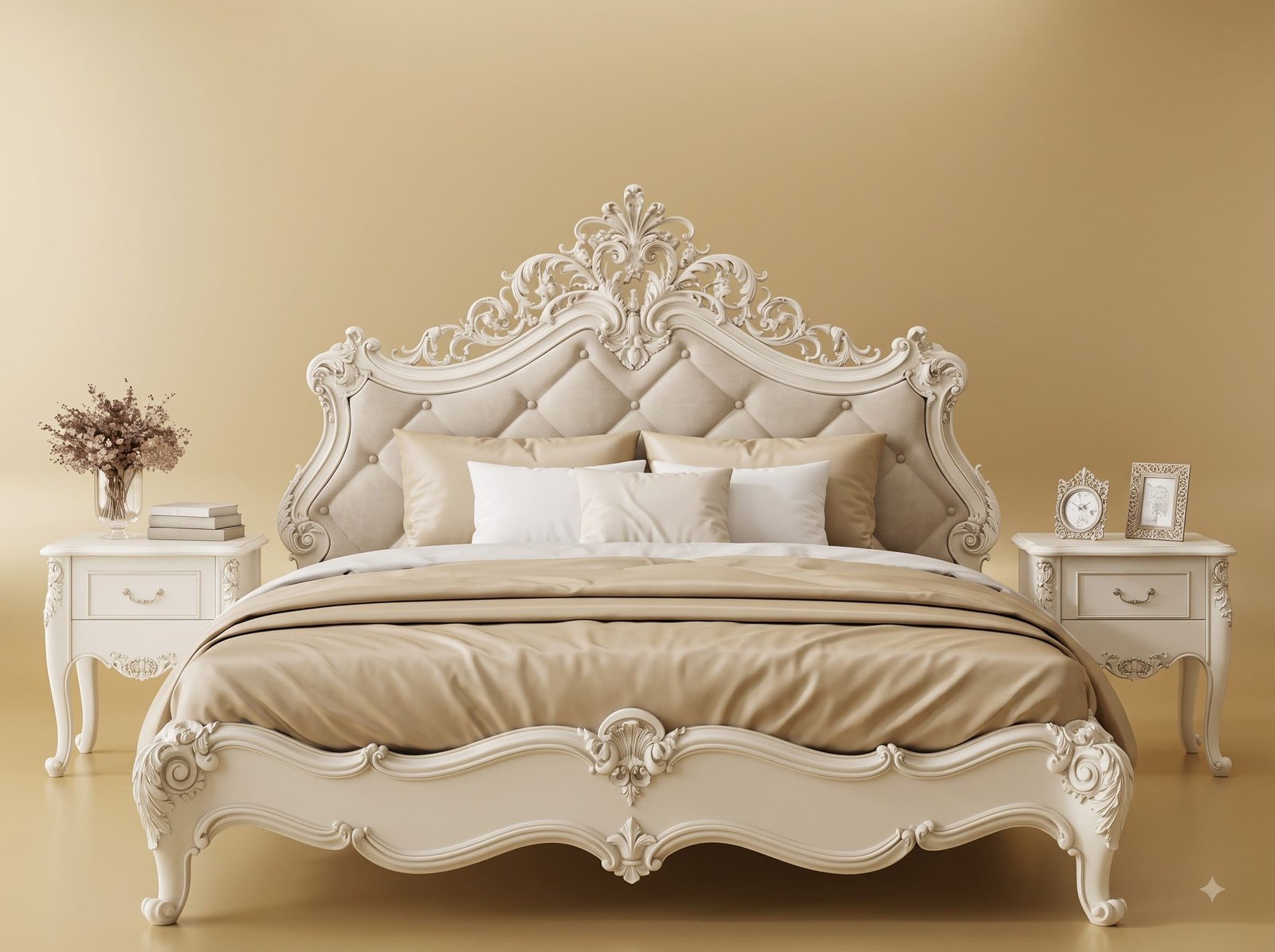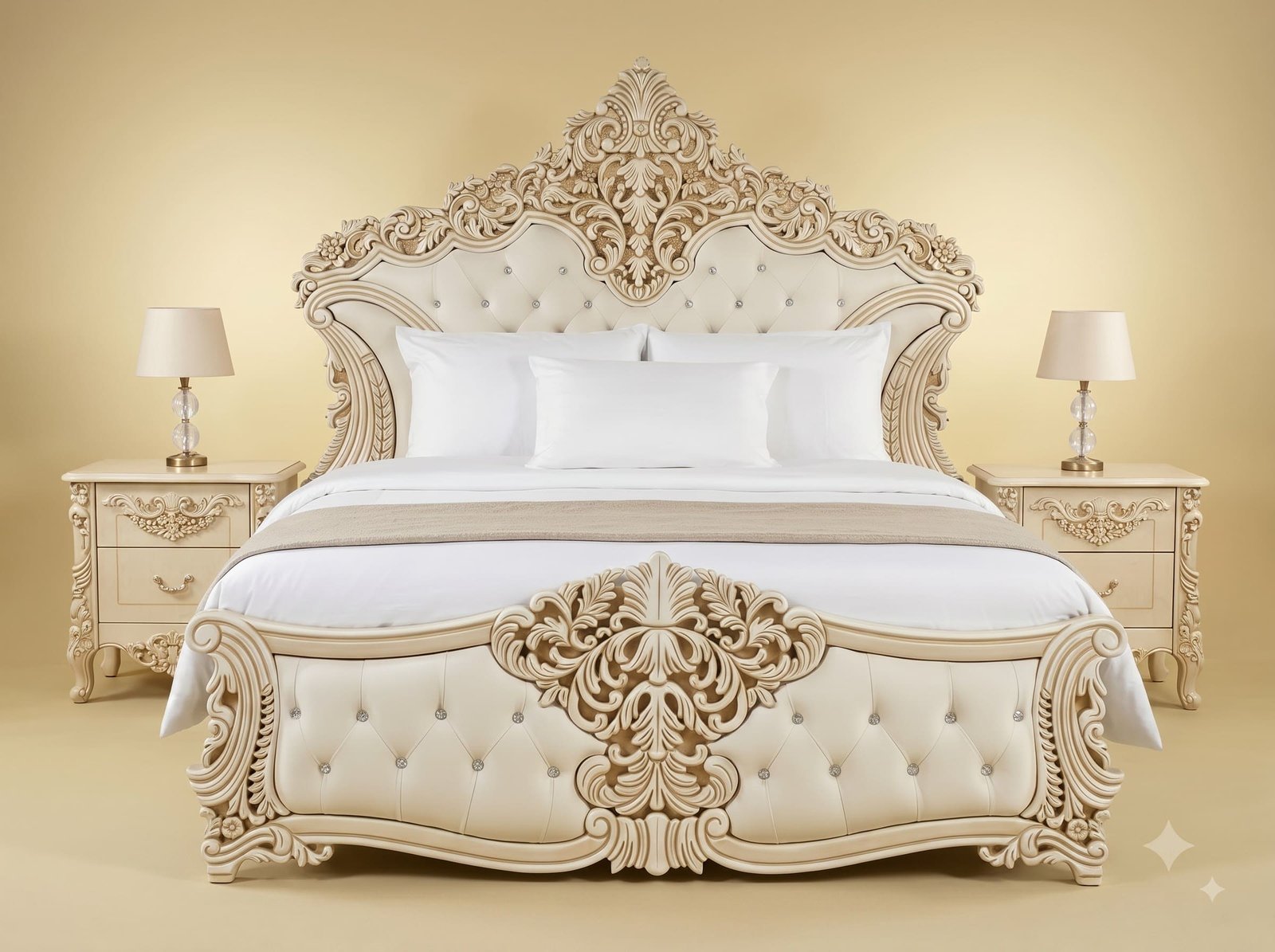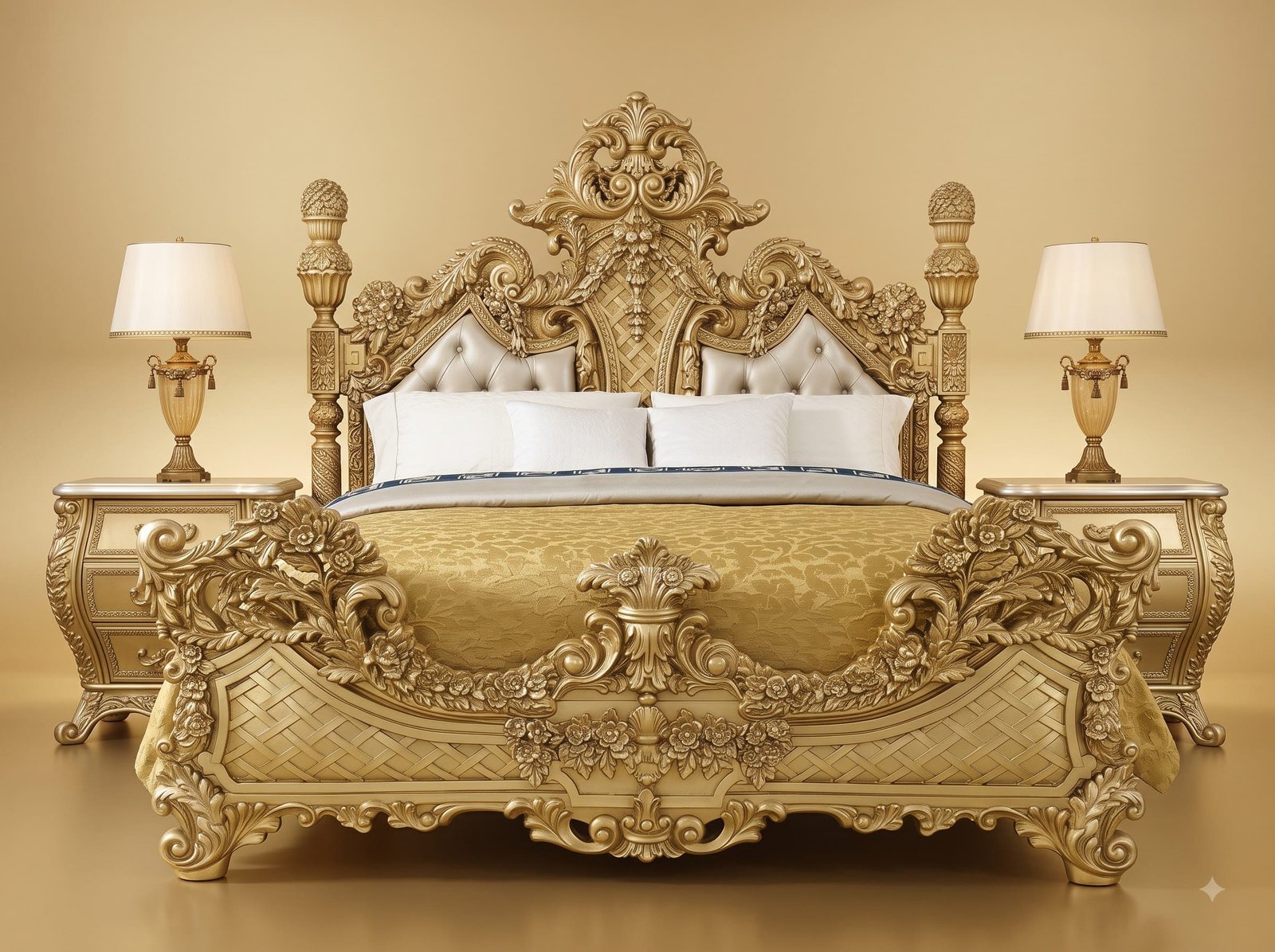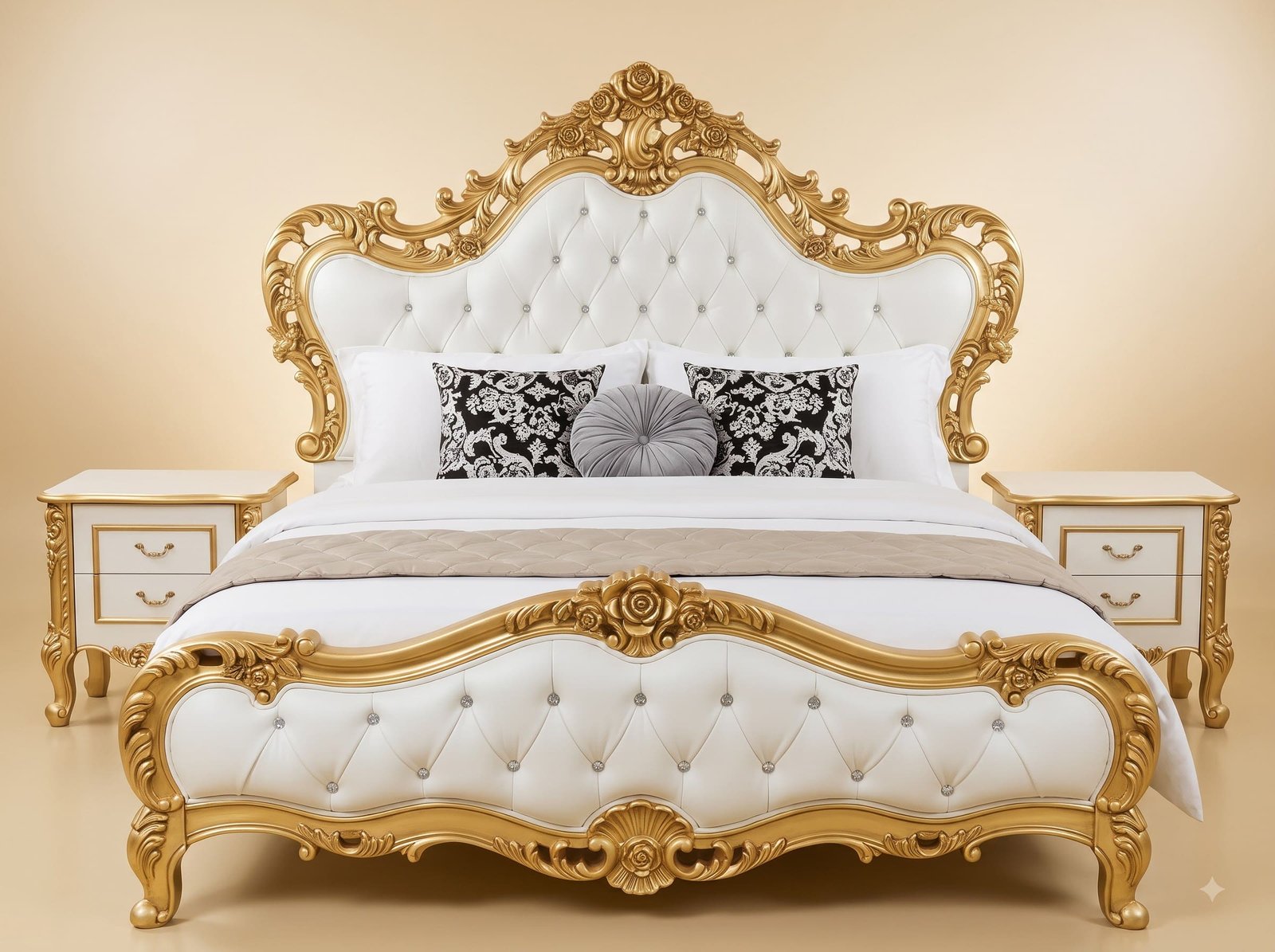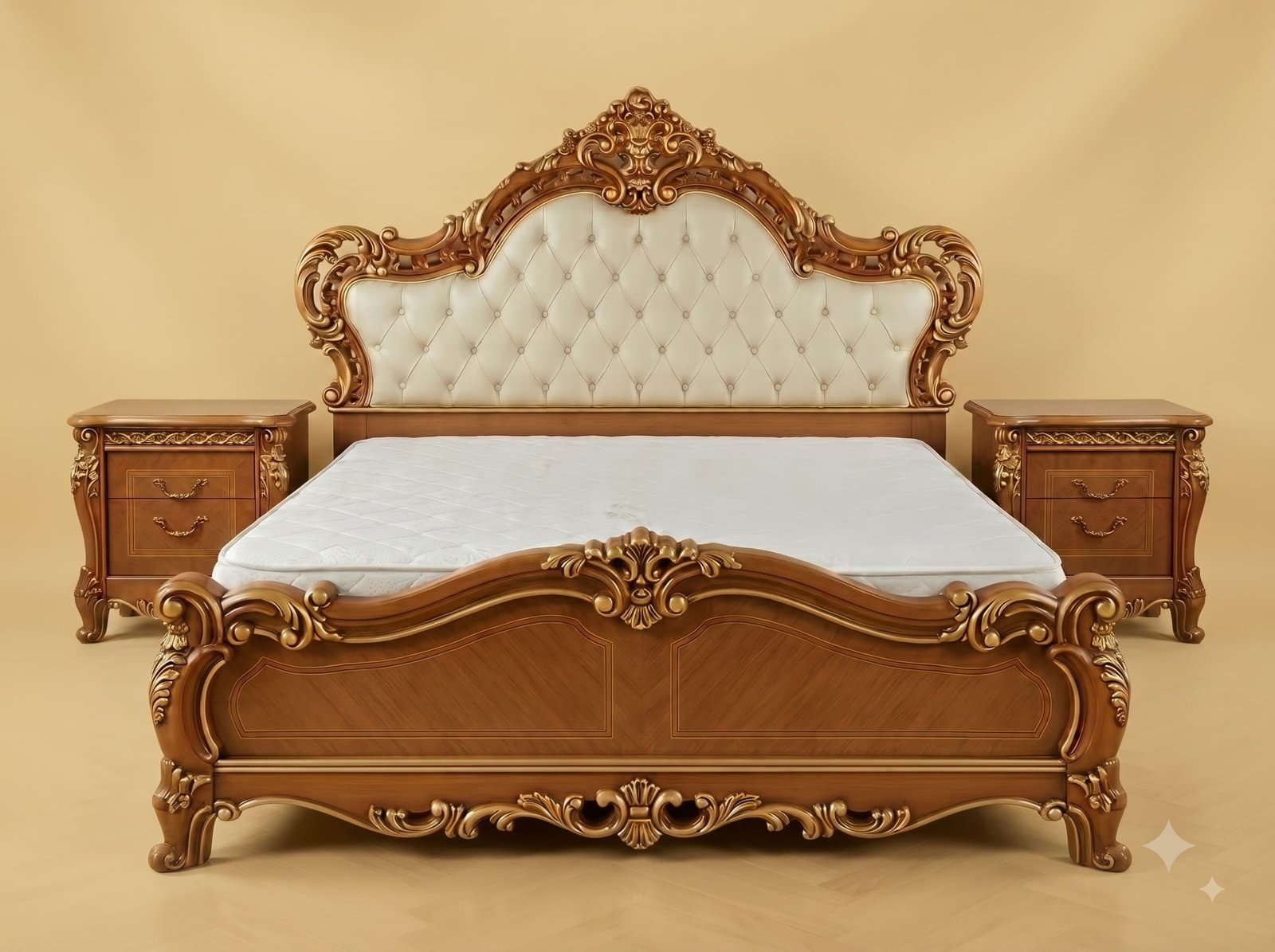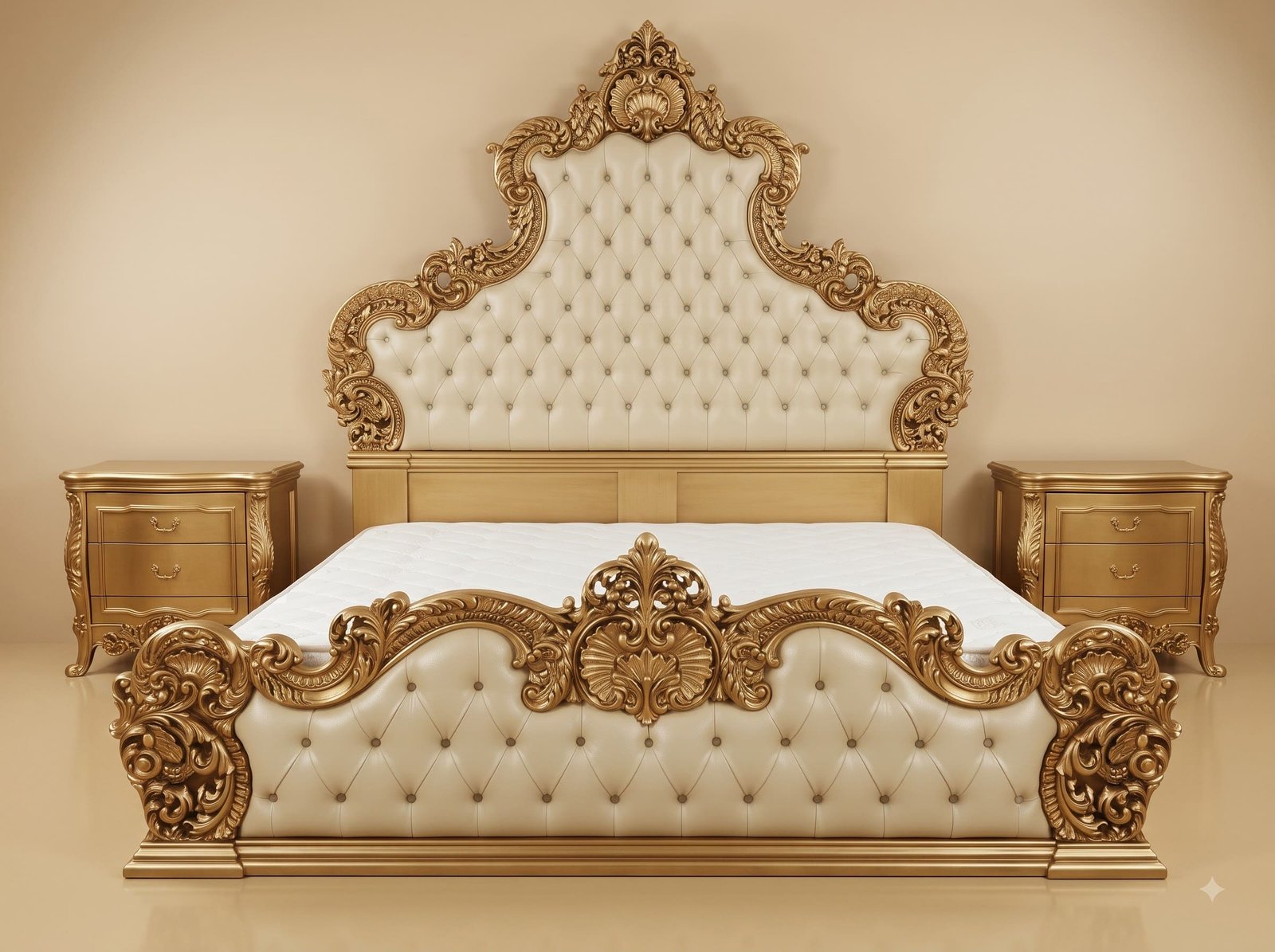
Gilded furniture was never about the metal. Gold on wood is applied thinner than paper, and its whole purpose is optical: it takes whatever light is in the room and throws it back along the edges of the carving, which makes deep relief look deeper and shallow relief look like nothing at all. That is why gilding and high-relief carving grew up together, and why a gilded piece is really a test of the carver rather than the finisher.
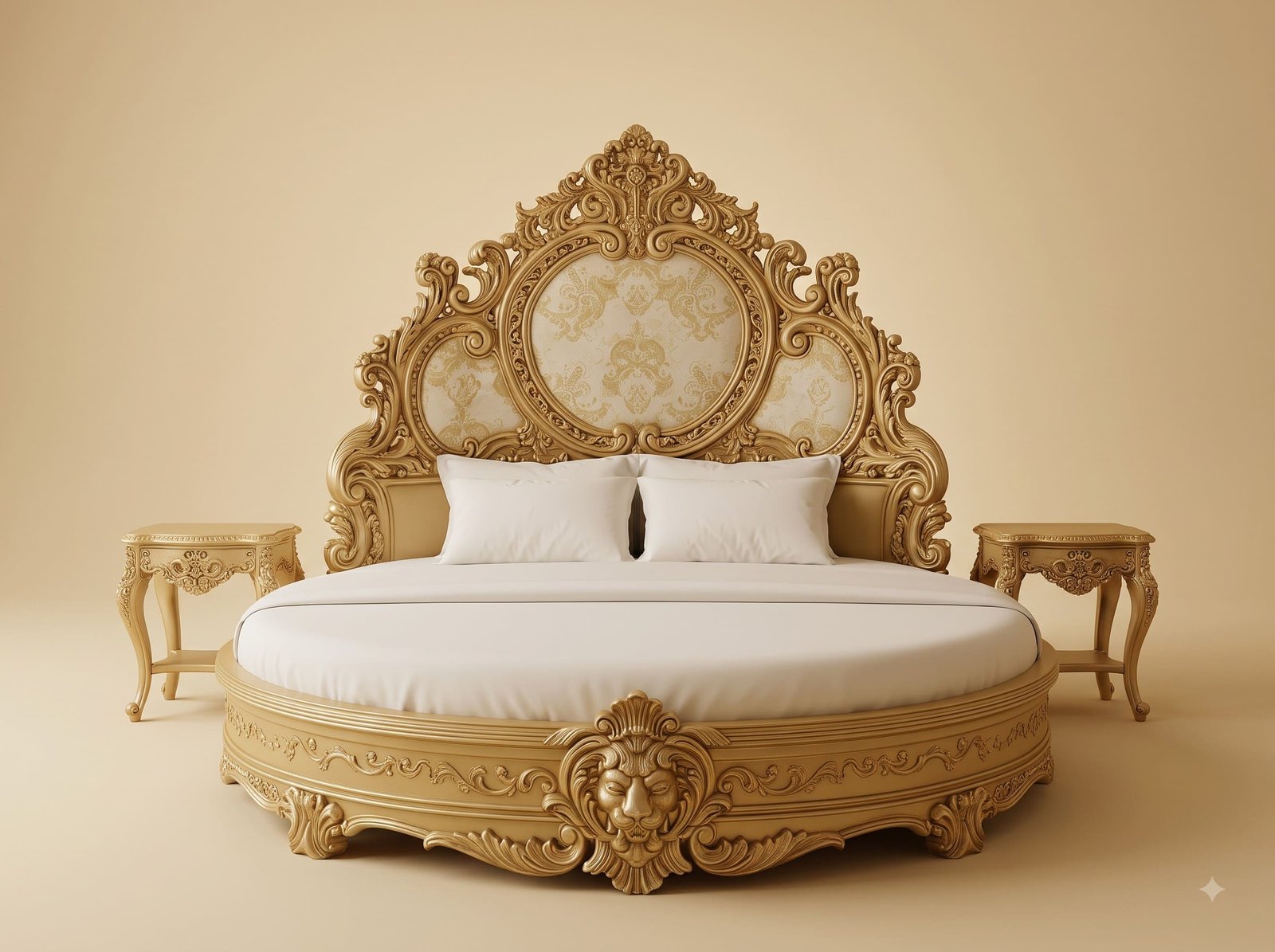
The acanthus leaf that runs around this headboard has been the carver's staple since antiquity, for a practical reason: its lobes and curls give the chisel somewhere to cut deep and somewhere to leave standing, which is exactly what a gilded surface needs.
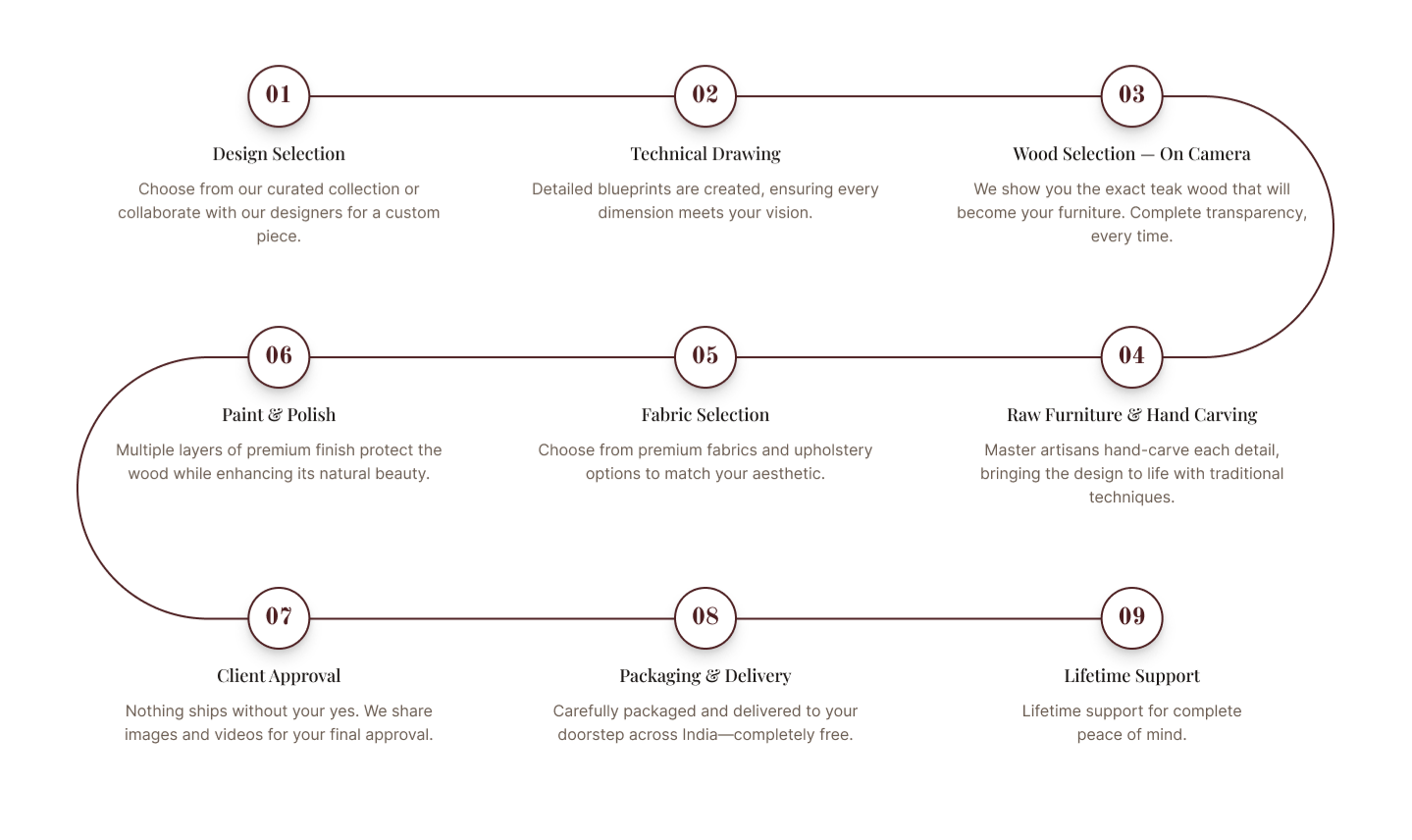
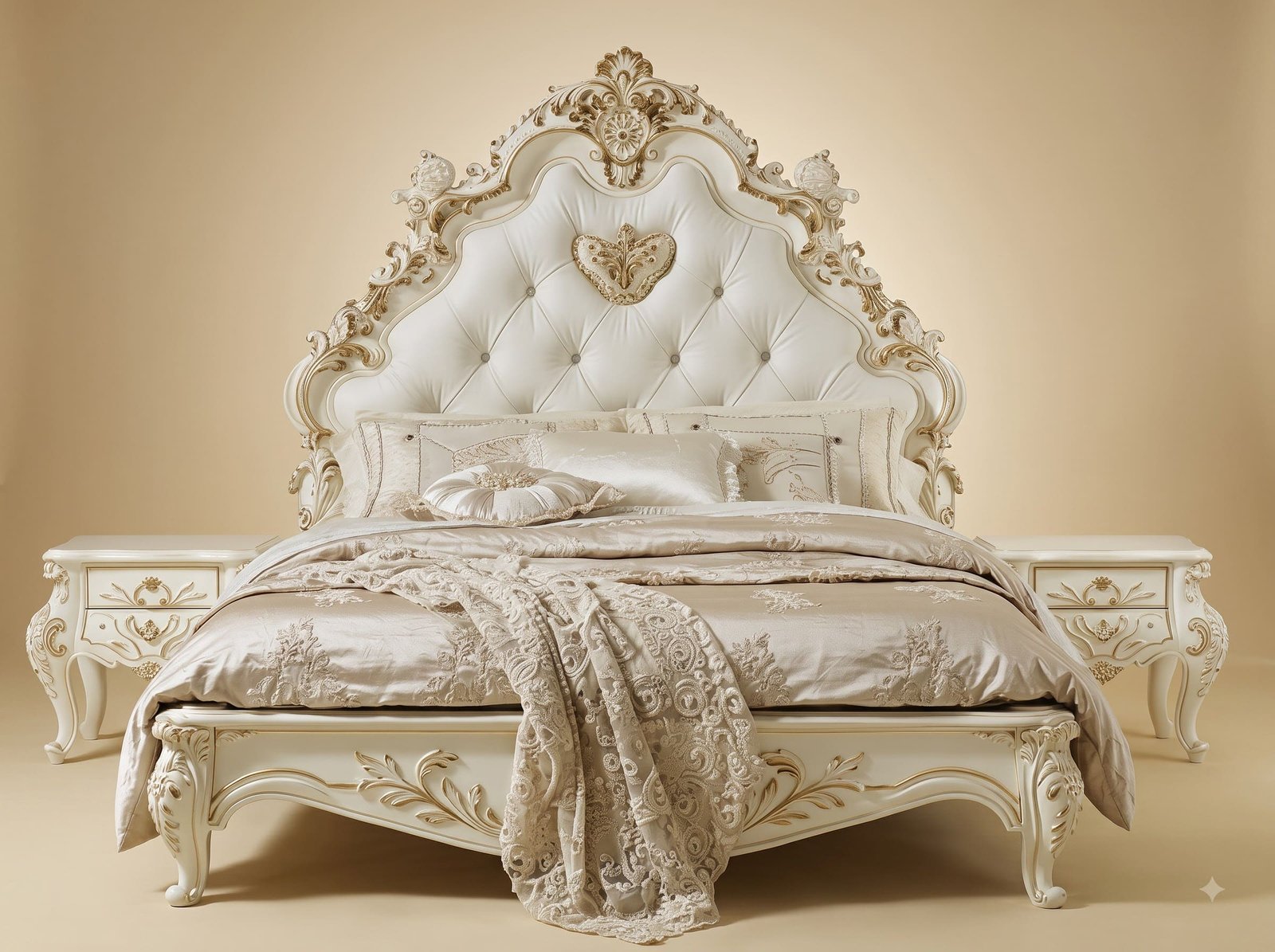
Our master Indian artisans carve the frame first and finish it second, never the other way round, and the depth is set at the drawing stage. The shell crest is carved from a solid block rather than applied, so it holds its projection above the frame permanently and catches the light of a bedside lamp long after the room has gone dark.
 Ask Price On WhatsApp