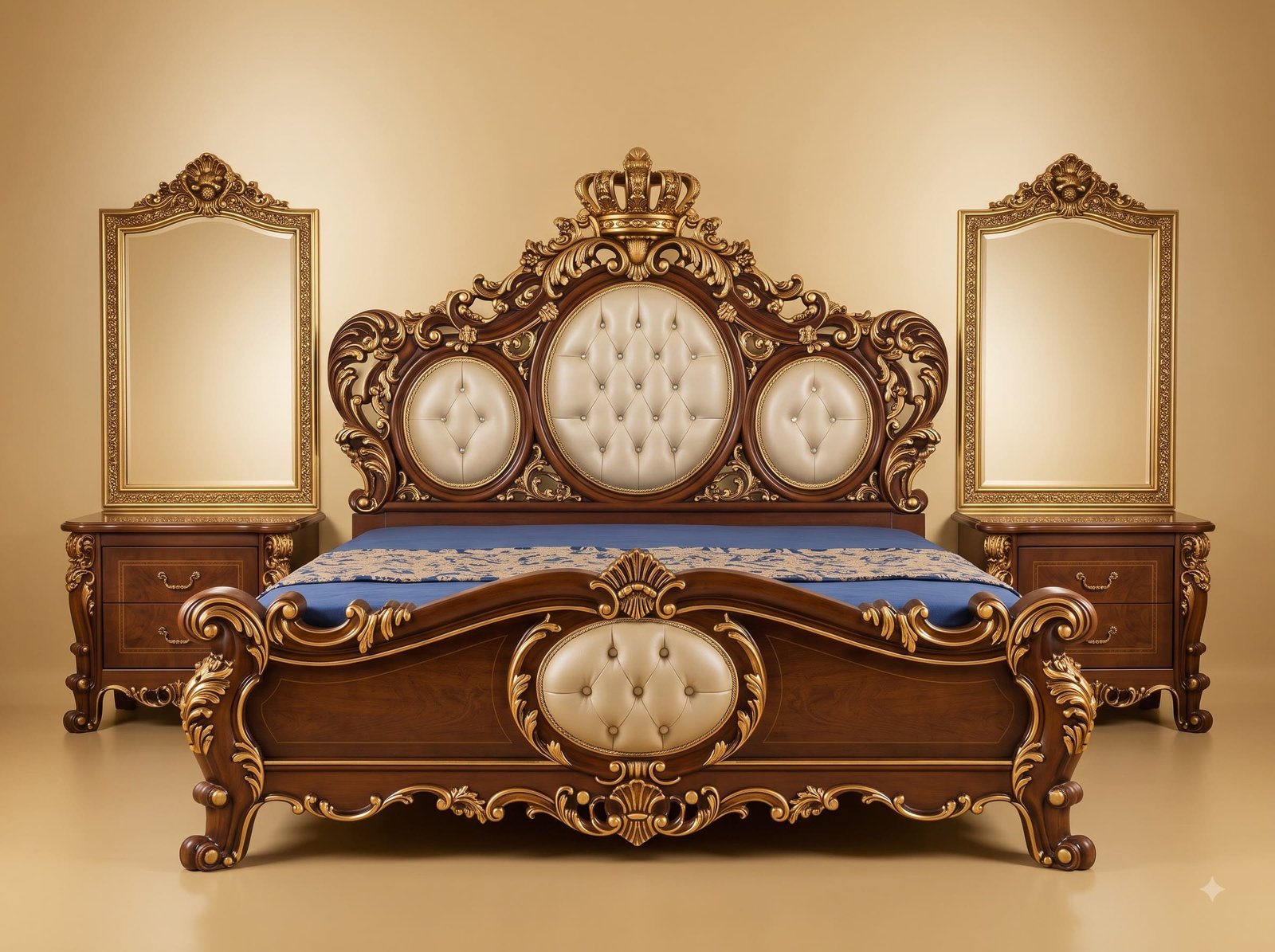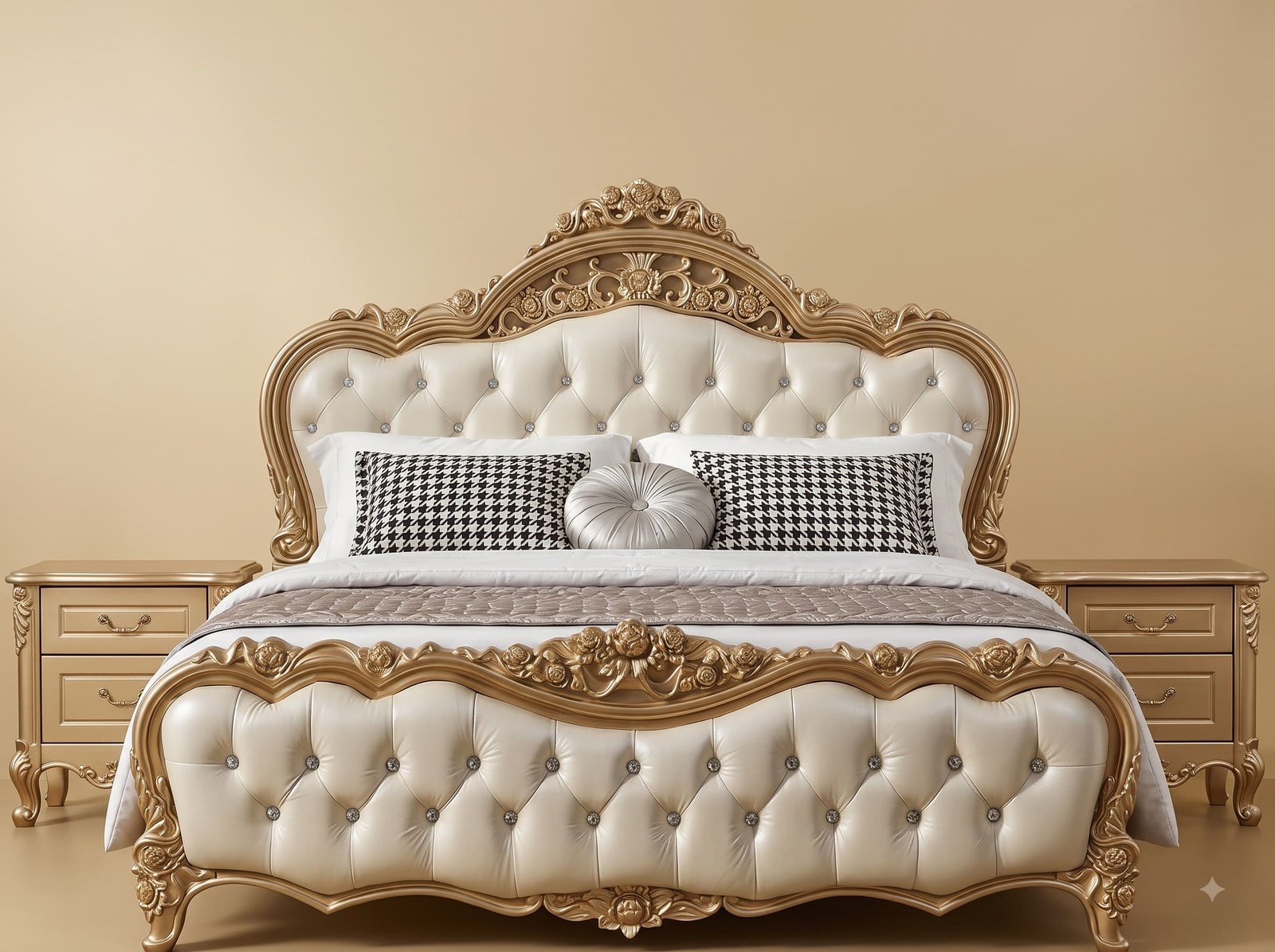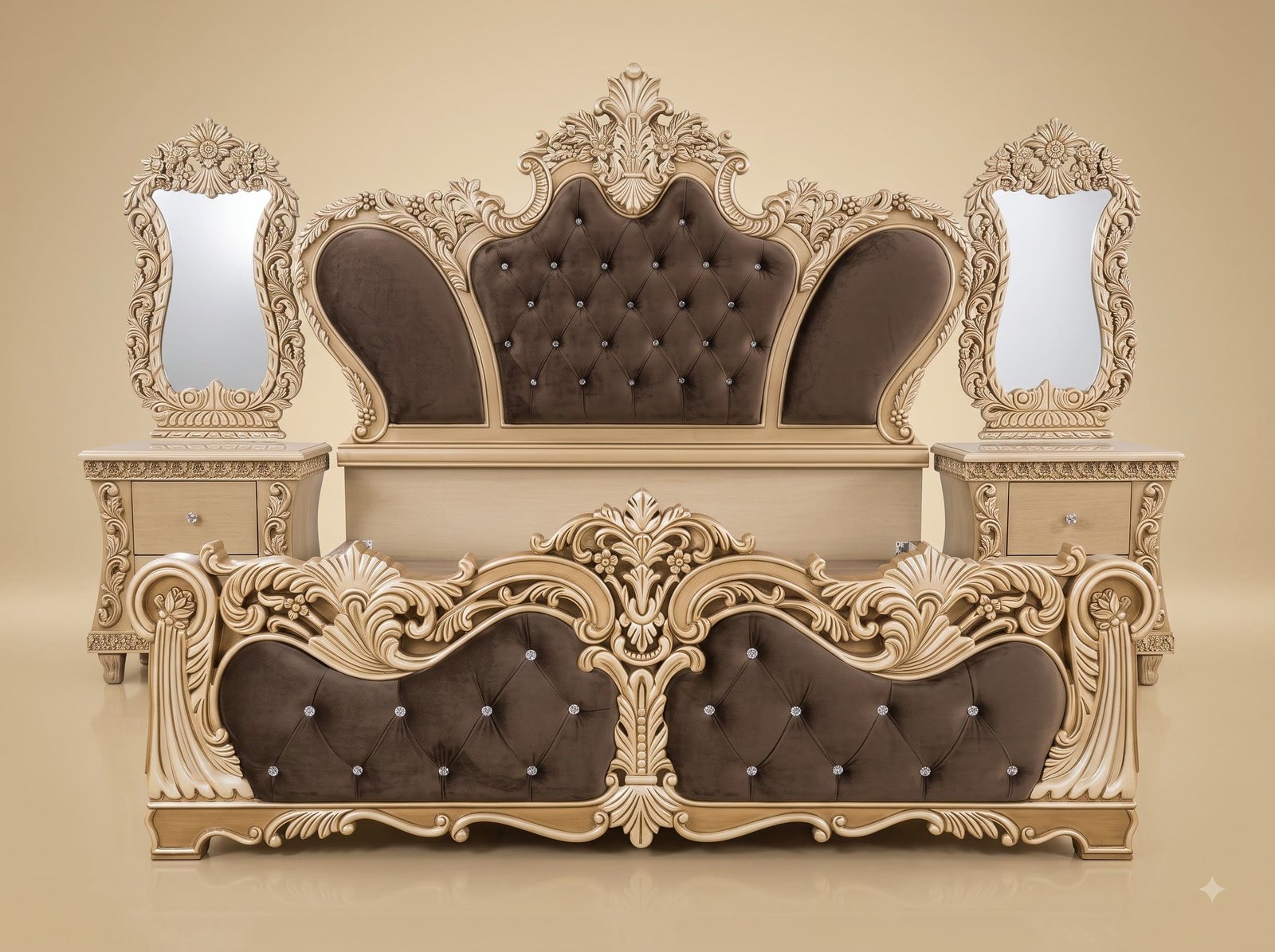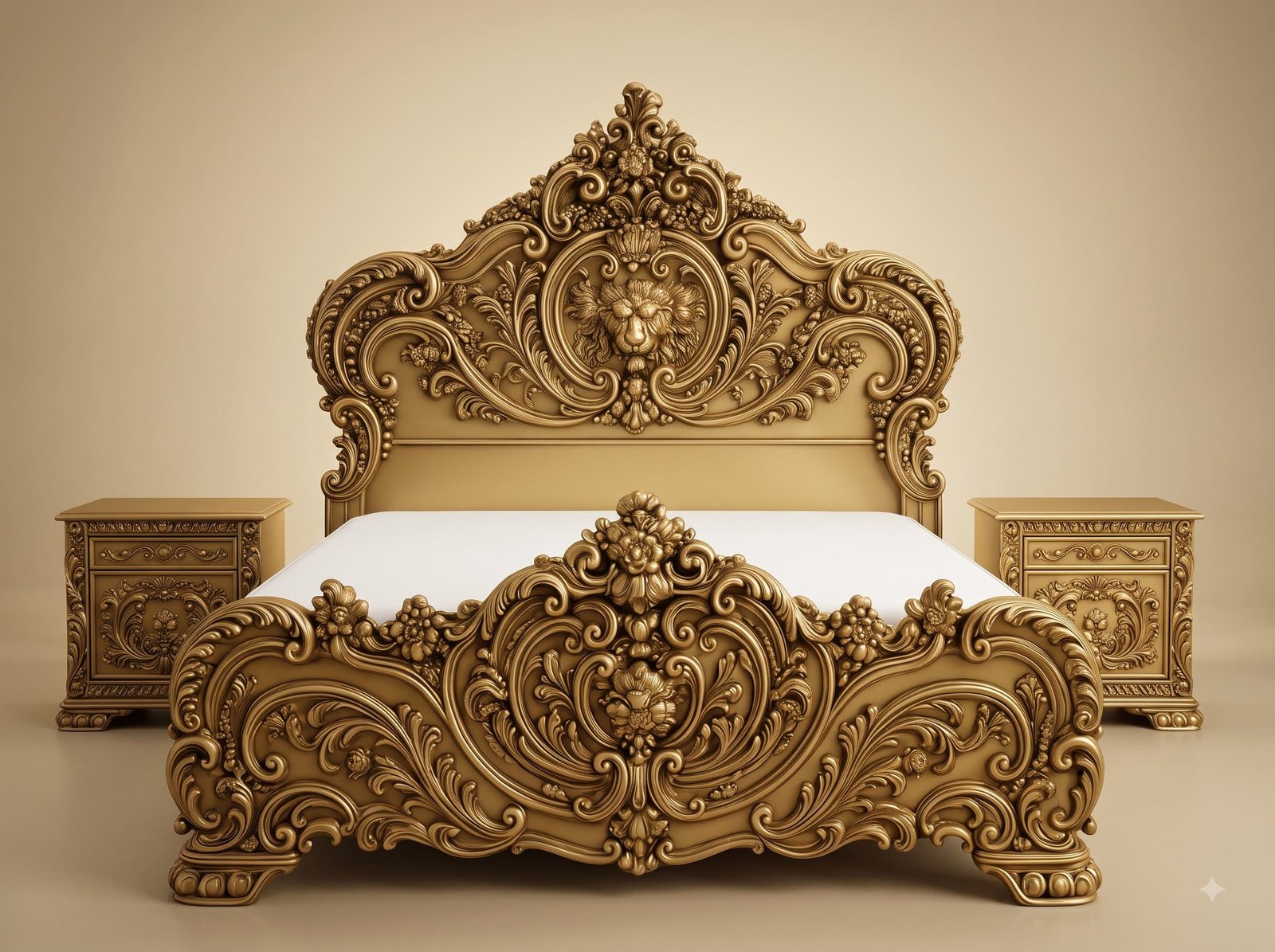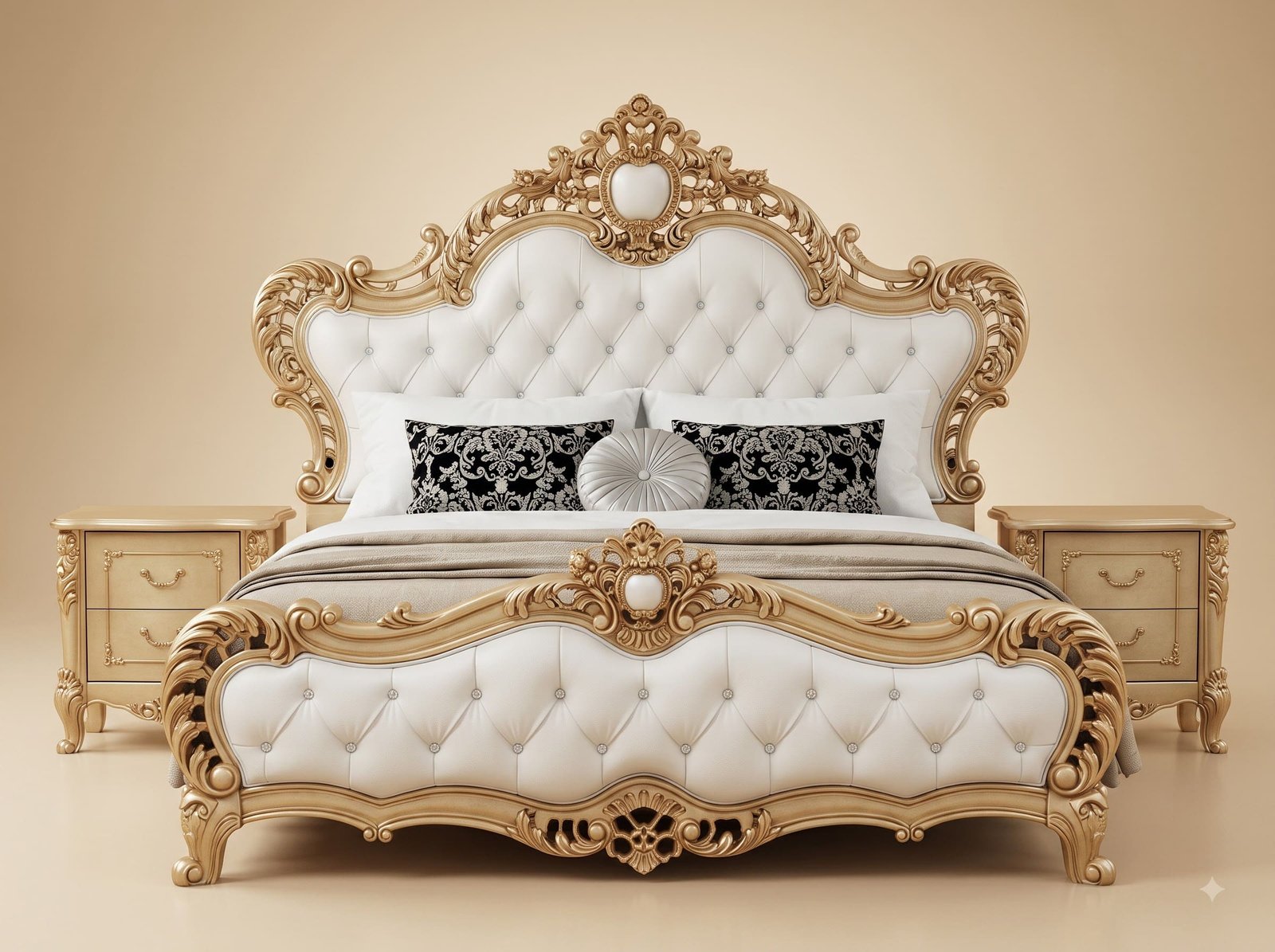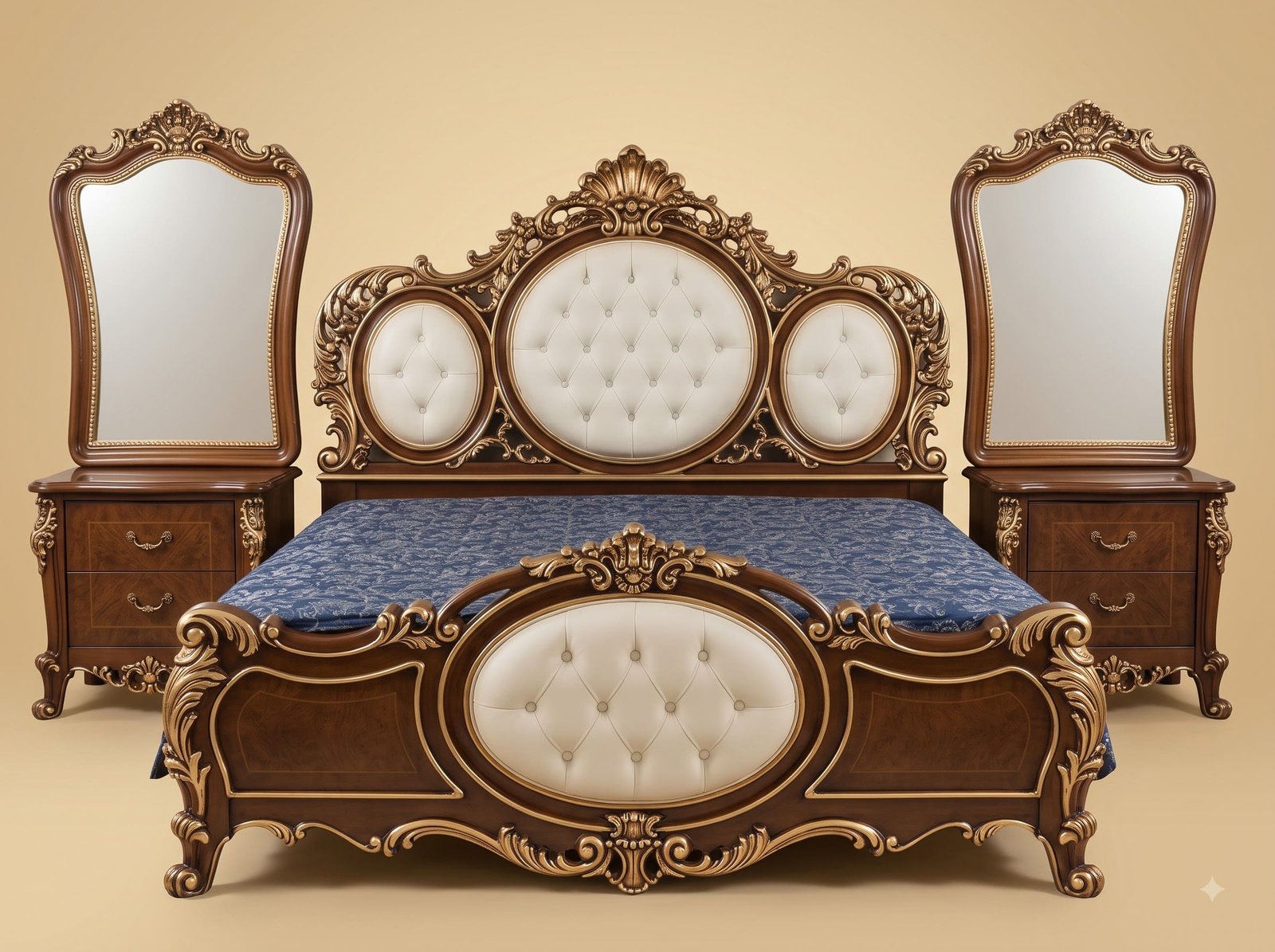
Three panels instead of one is a compositional trick borrowed from painting: a wide centre with two narrower flanks, which is how altarpieces and folding screens have been arranged for centuries. The eye lands in the middle and then travels outward, and a wide piece of furniture stops looking like a wall.
The oval does something similar. A rectangle repeats the shape of the room and disappears into it; an oval interrupts, which is why it has been the frame of choice for anything meant to be looked at, from portraits to mirrors.
Getting three ovals to work at two different sizes is where the craft sits. Each frame is carved to its own curve, the buttoning grid inside it is set out so the diamonds stay square across a curved edge, and the gilding along the raised lip has to run unbroken around each ellipse. Our master Indian artisans lay this out full size before any wood is cut, because on a curve, a millimetre of drift is visible from across the room.
 Ask Price On WhatsApp