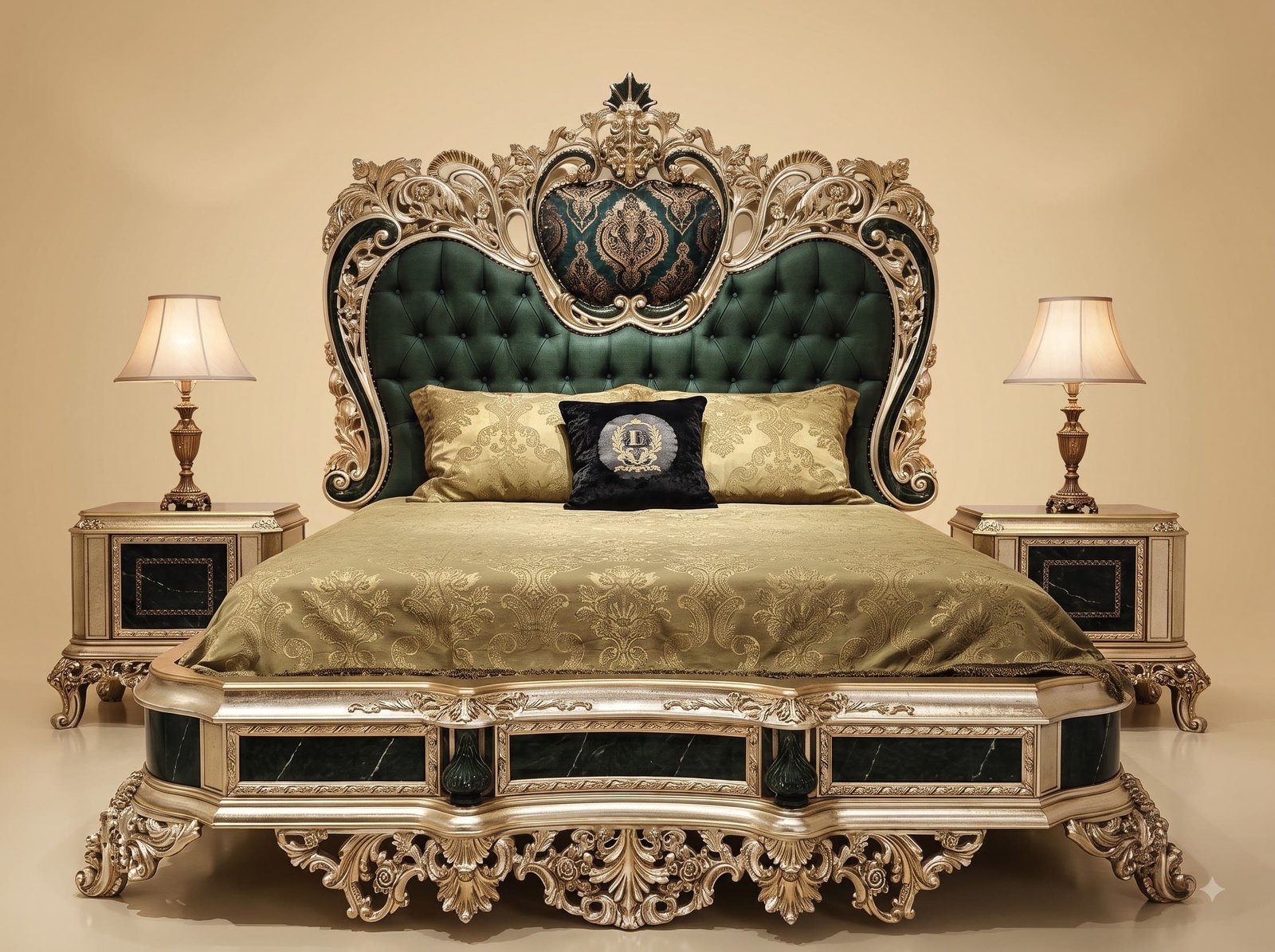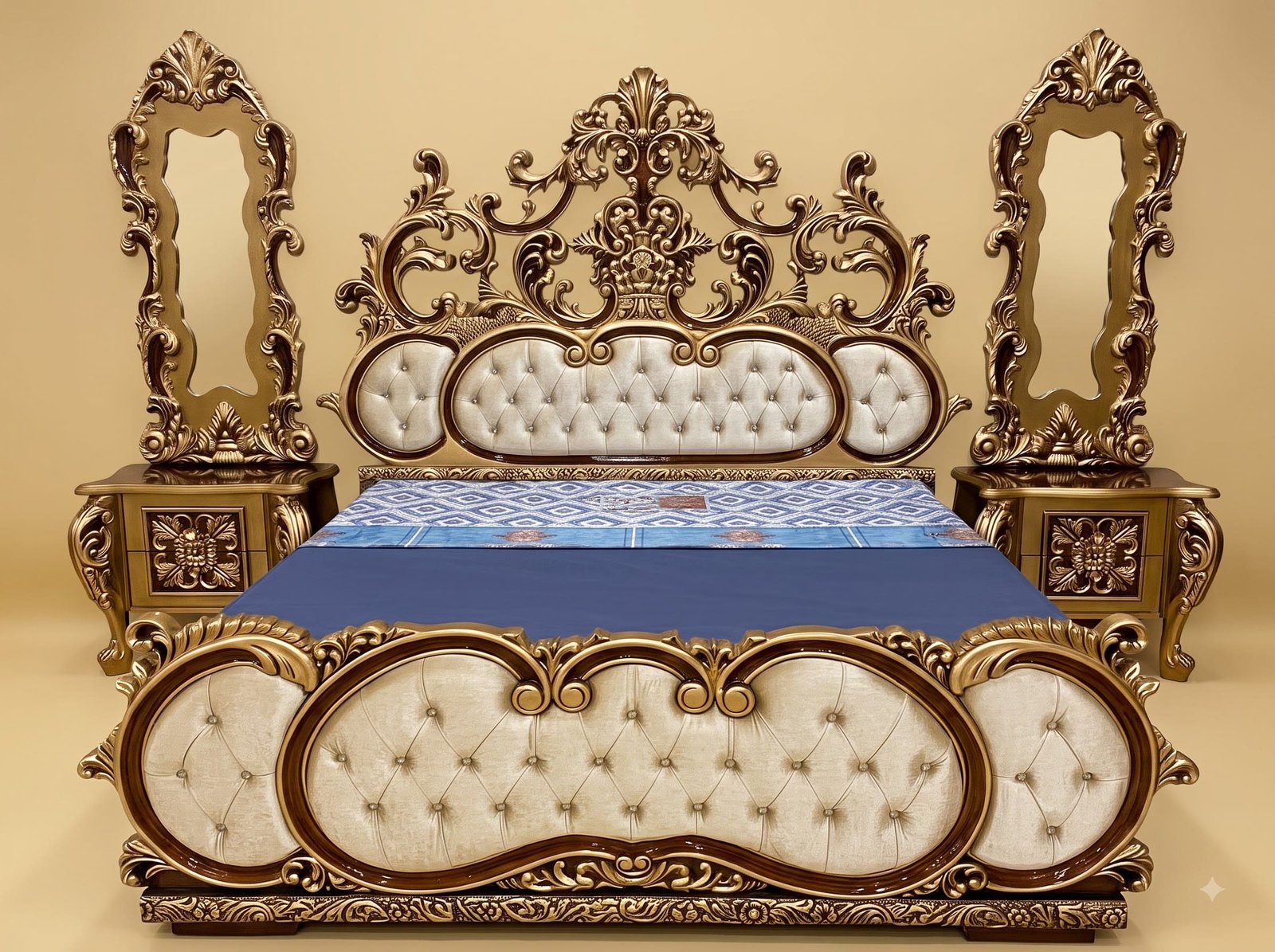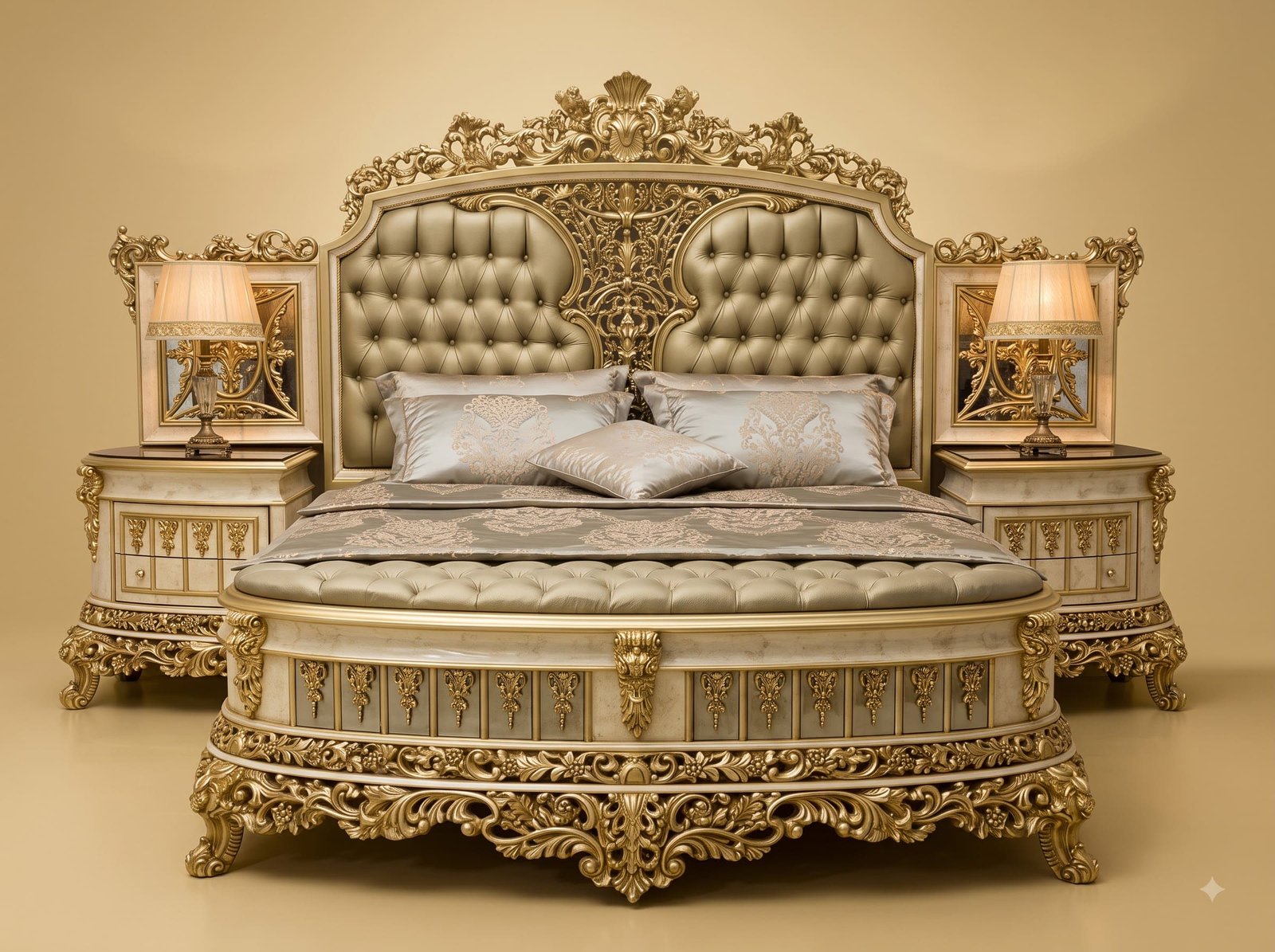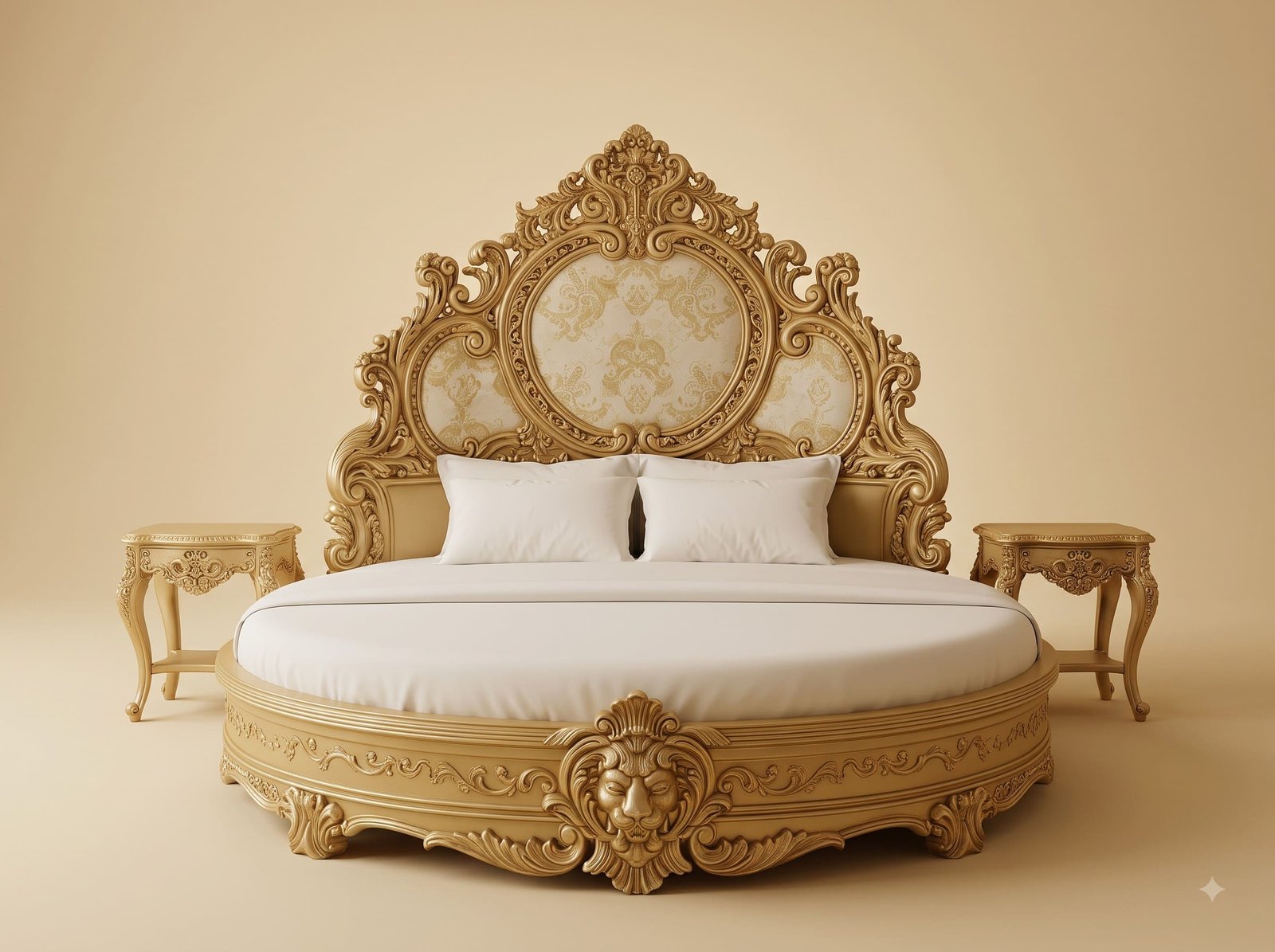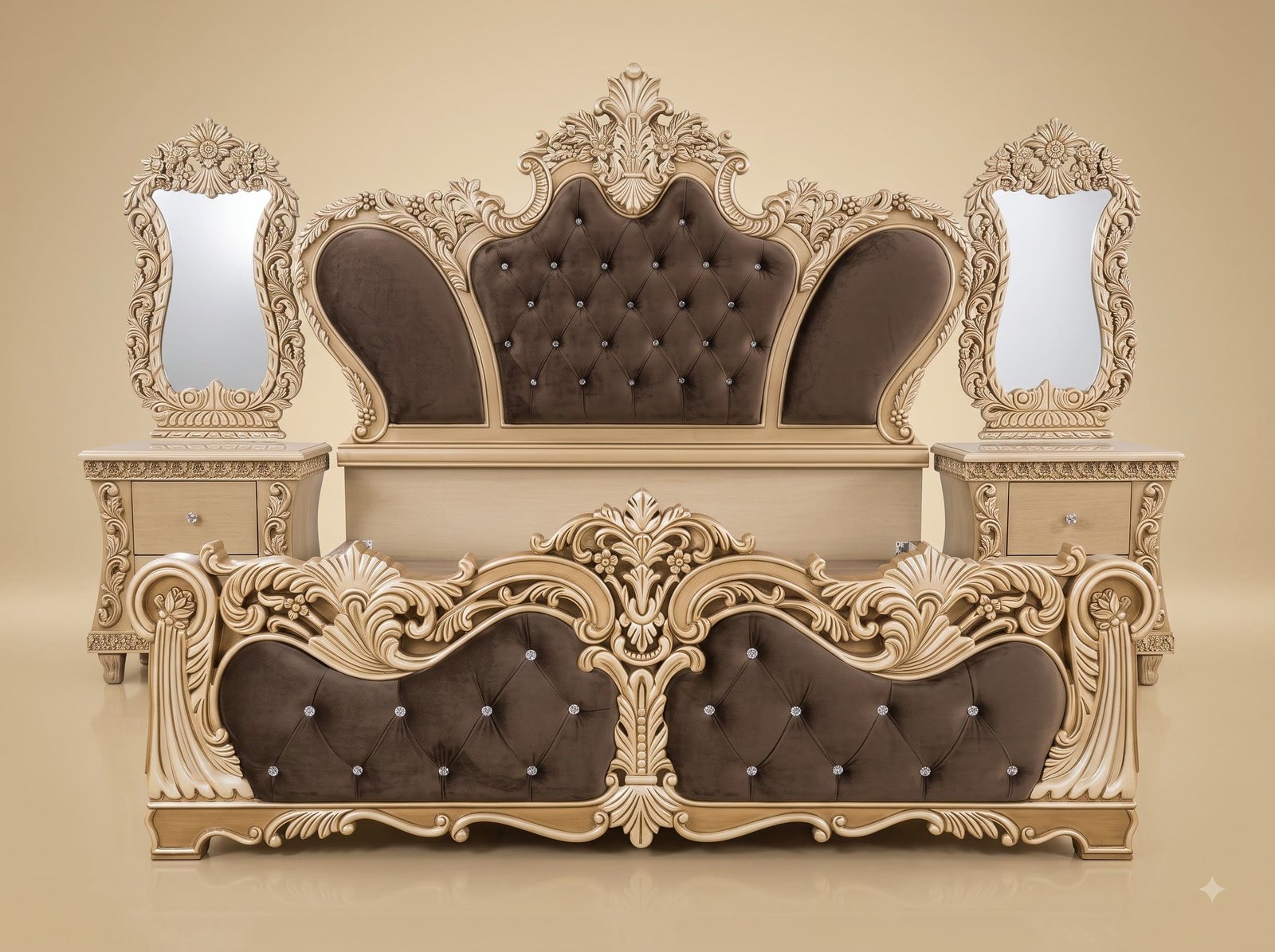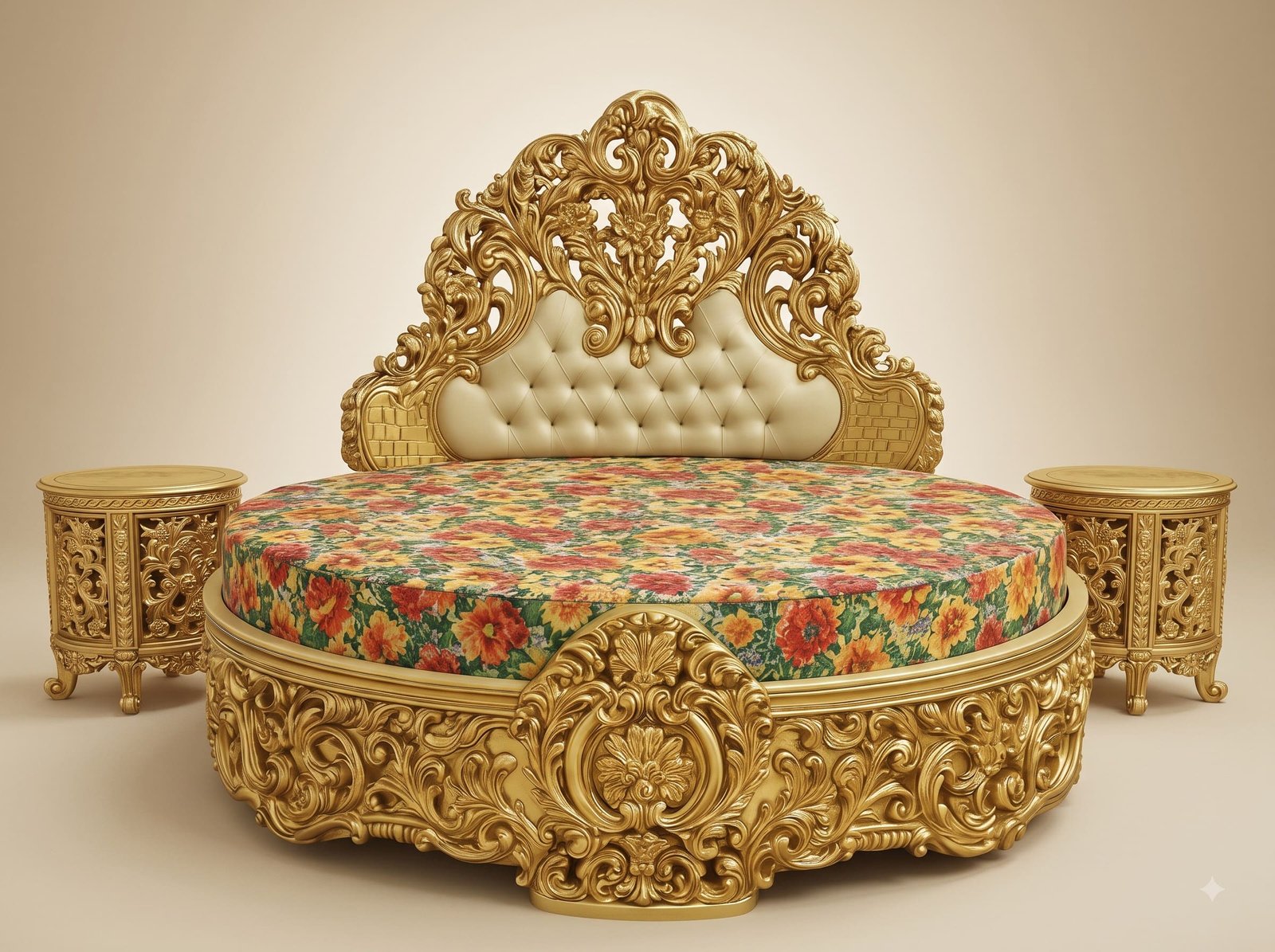
The palmette at the centre of this bed is one of the oldest ornaments still in use - a stylised fan of leaves that appears on Greek buildings, Egyptian columns and Indian temple pillars alike, in versions so similar that historians still argue about who took it from whom. It survived because it does something useful: it is symmetrical, it fills a circle or an oval naturally, and it reads clearly from a distance even when cut shallow.
Here it is not cut shallow. On a piece finished this dark, shallow carving disappears entirely - there is no colour contrast to reveal it and very little reflected light. So every form is cut deep and undercut hard, which is what lets the palmette read across a room on a bed that is almost black.
Our master Indian artisans work dark pieces in bright side lighting for exactly this reason. Under flat light a dark carved surface tells you almost nothing about how deep the cuts are, and it is possible to carve for a week and discover the piece looks flat once it is polished.
 Ask Price On WhatsApp