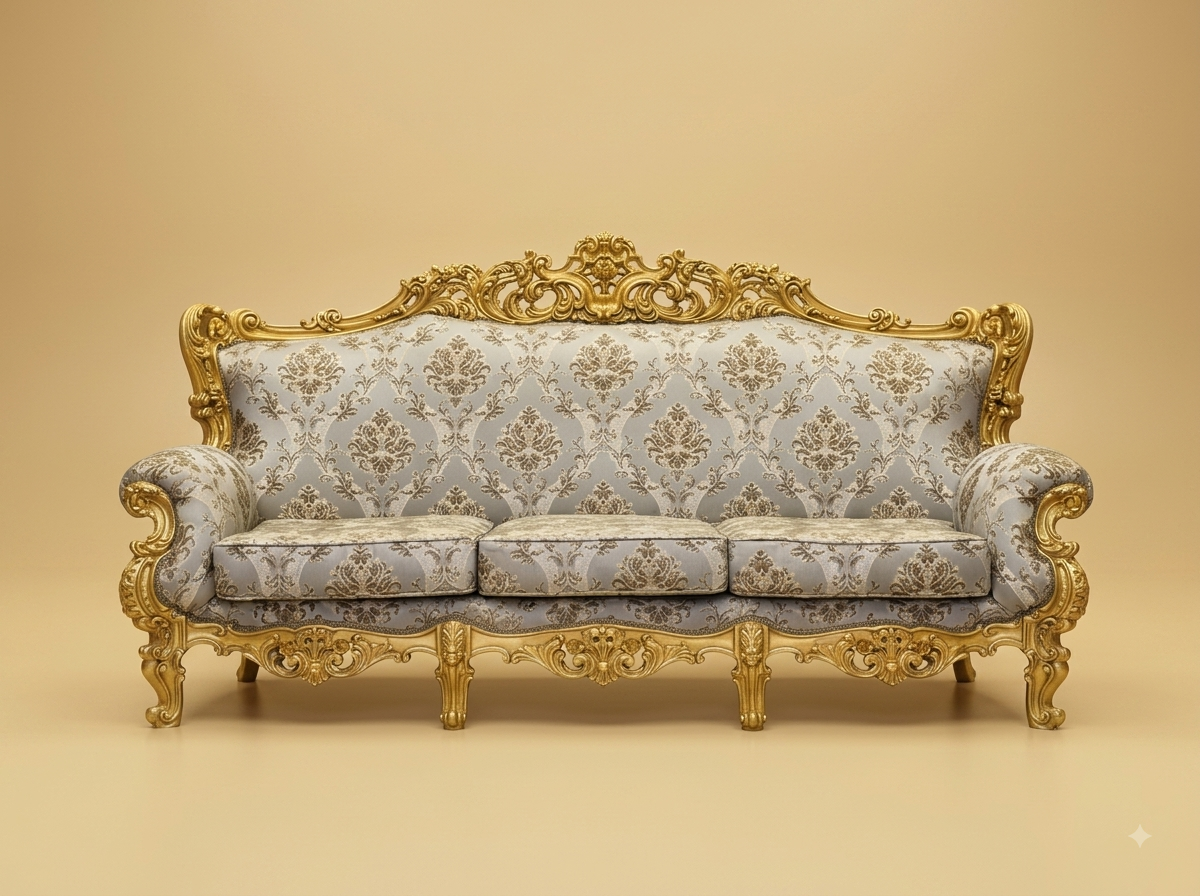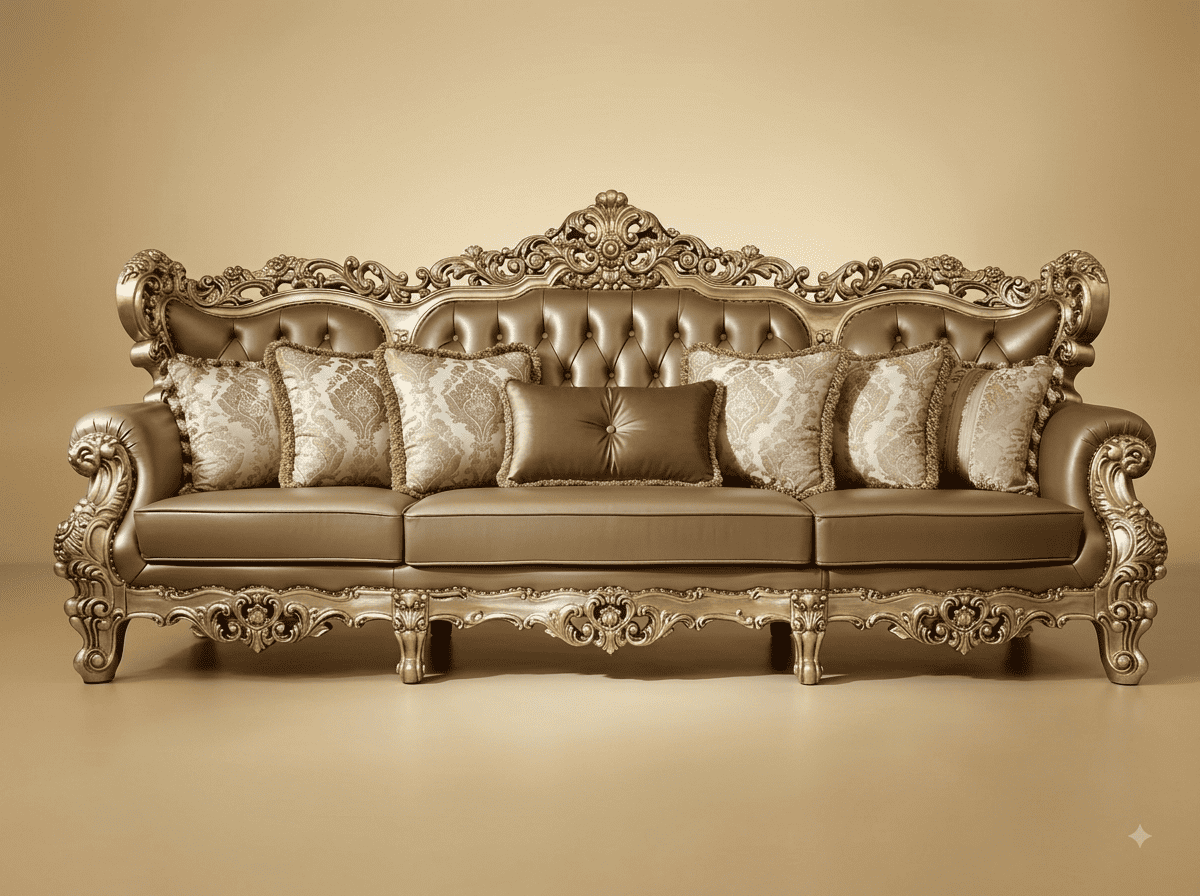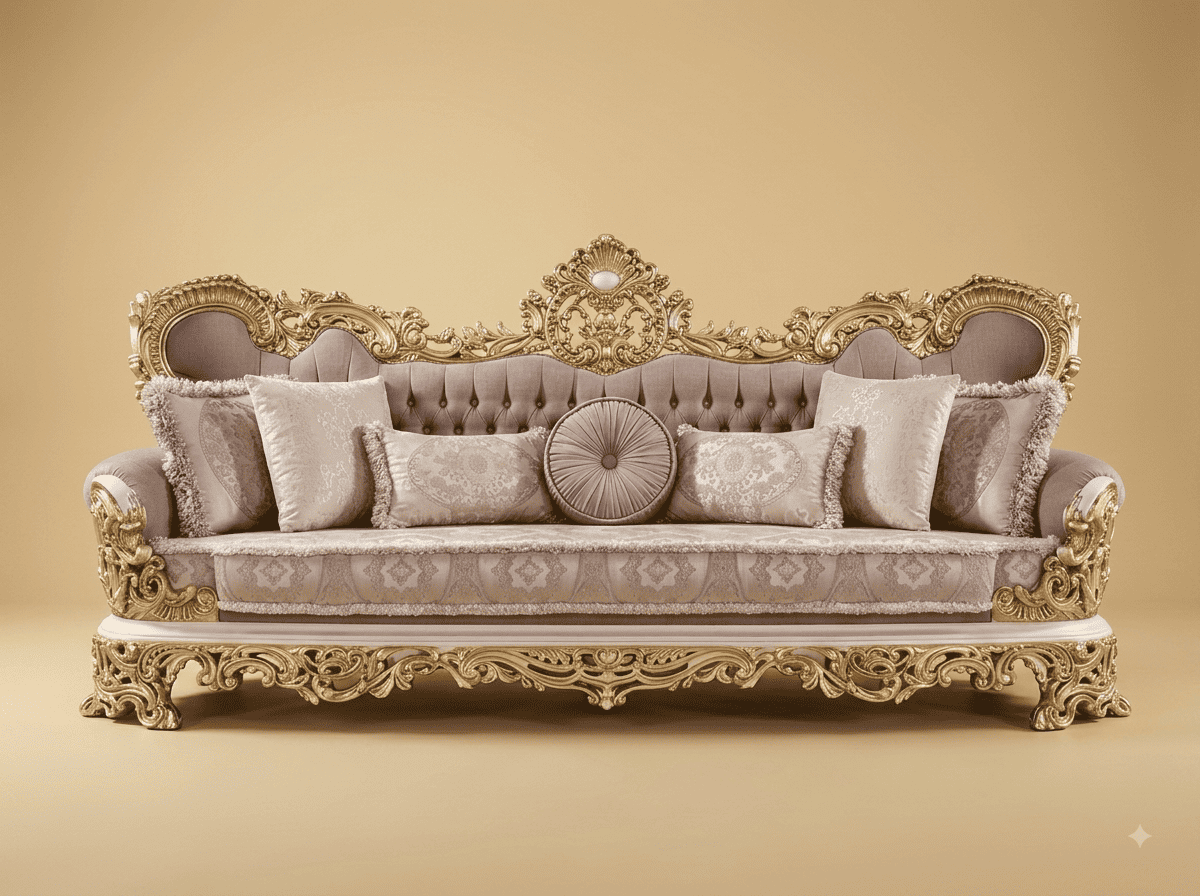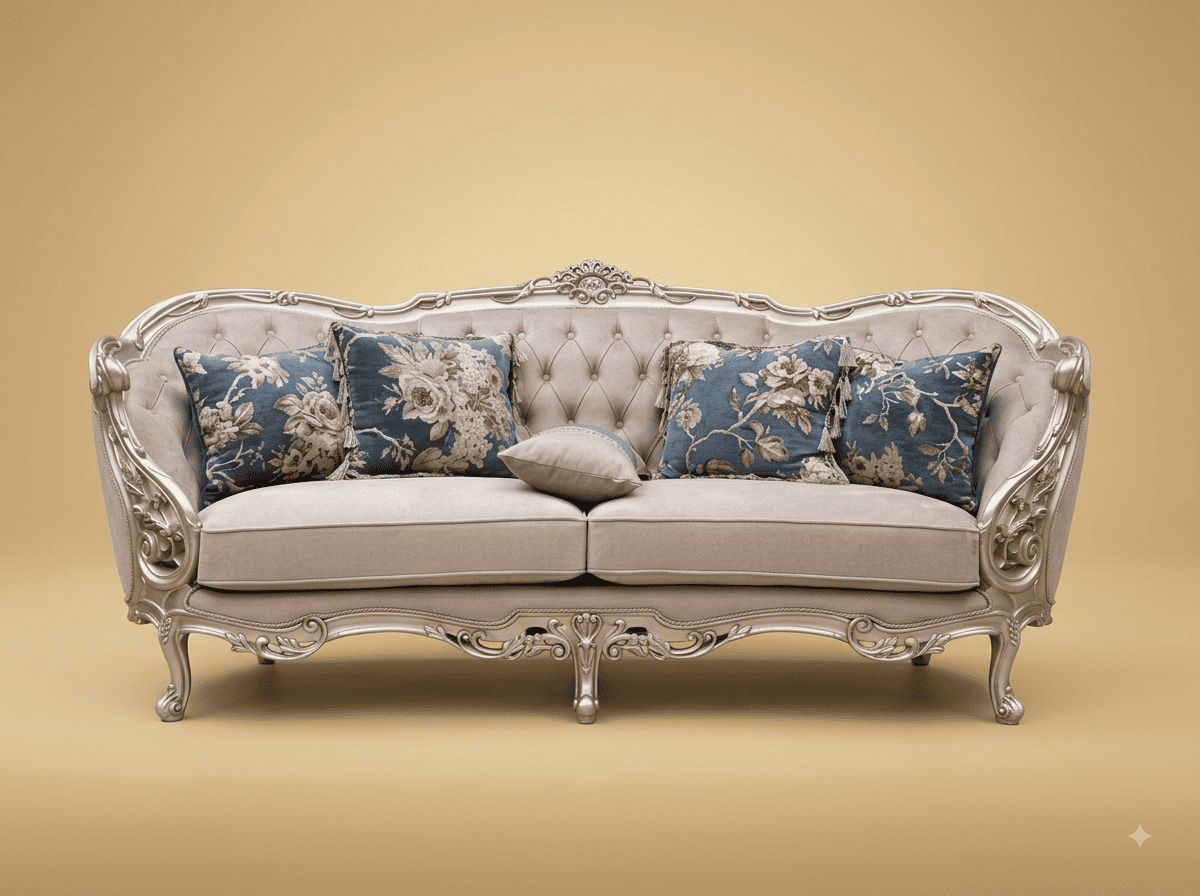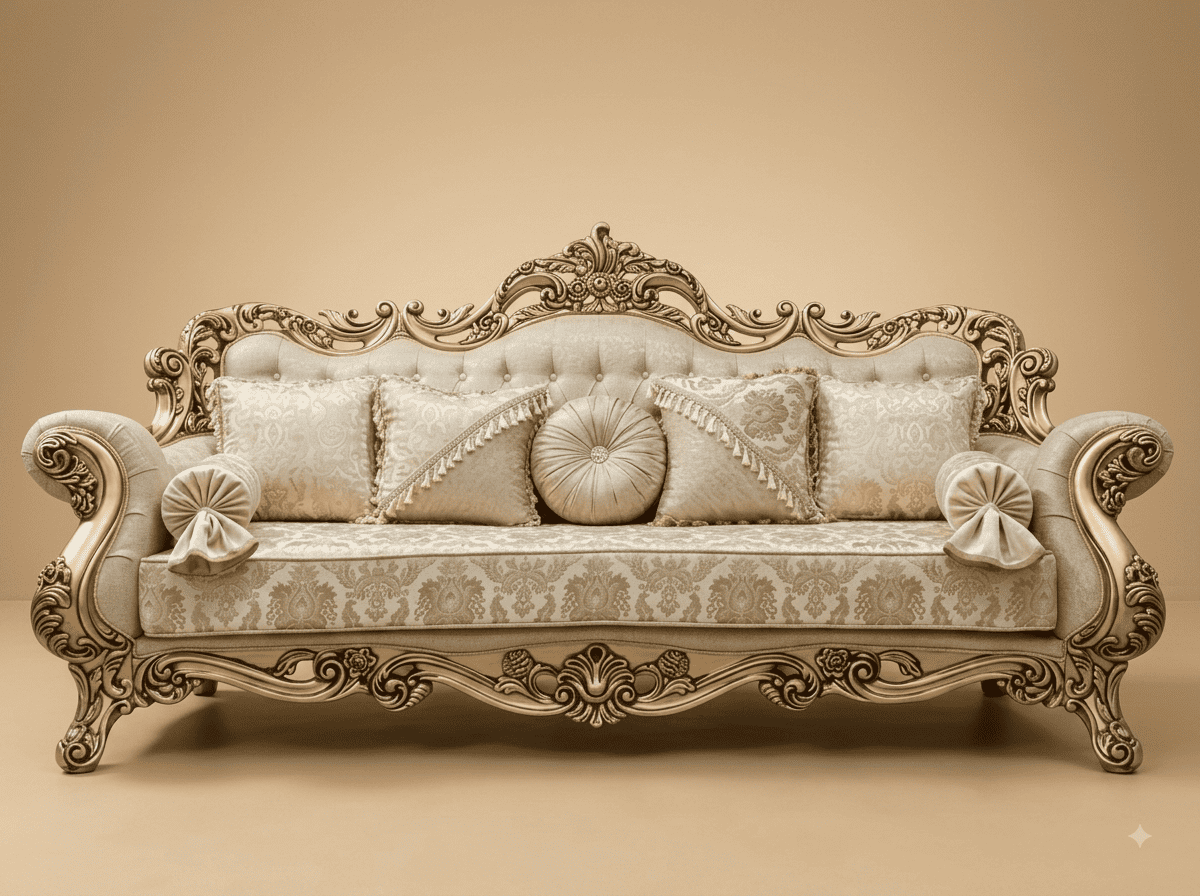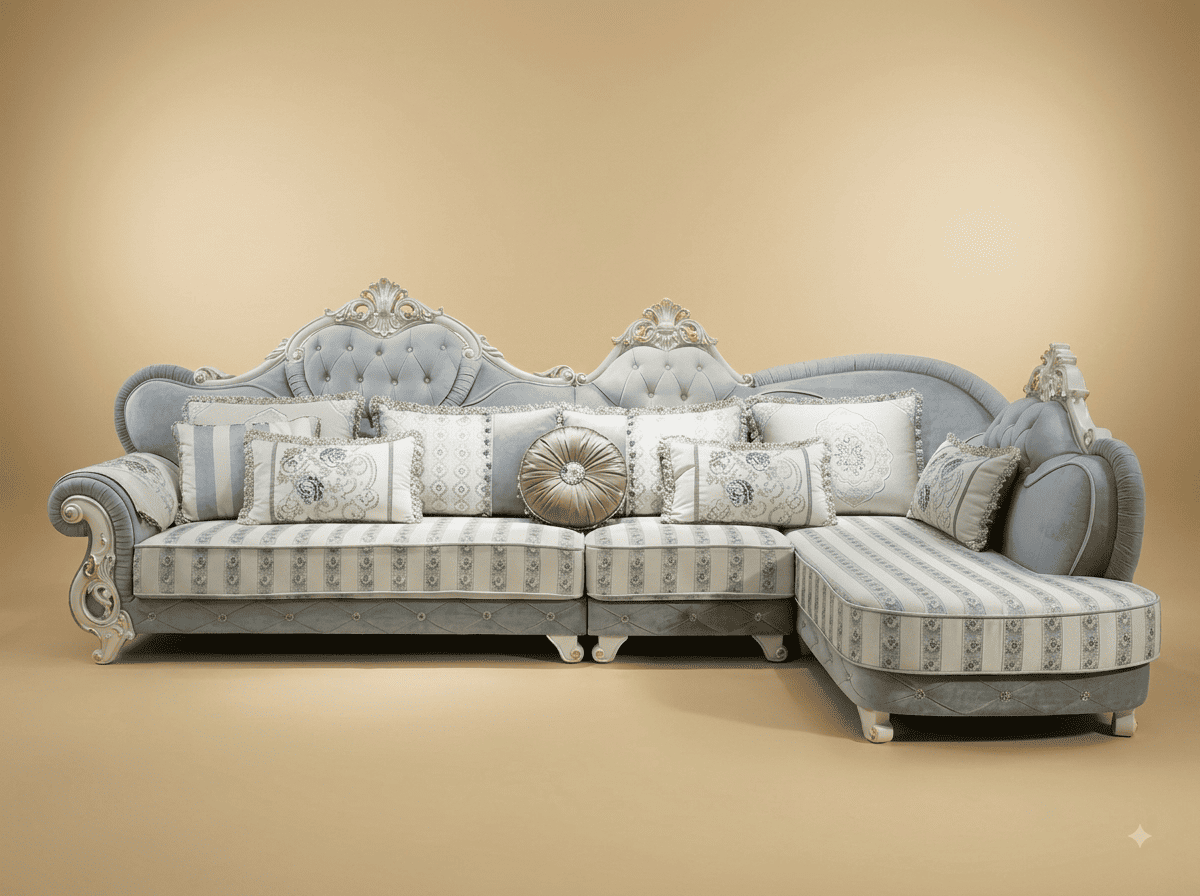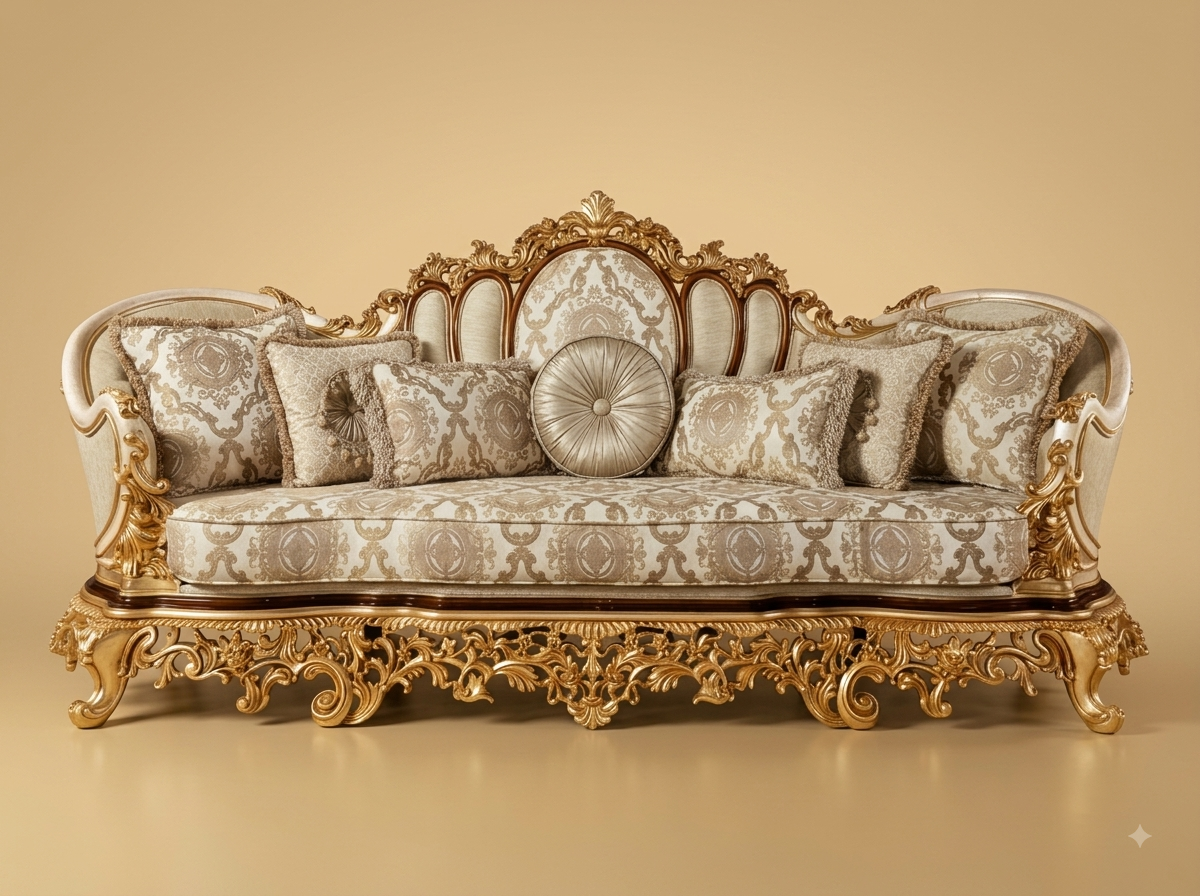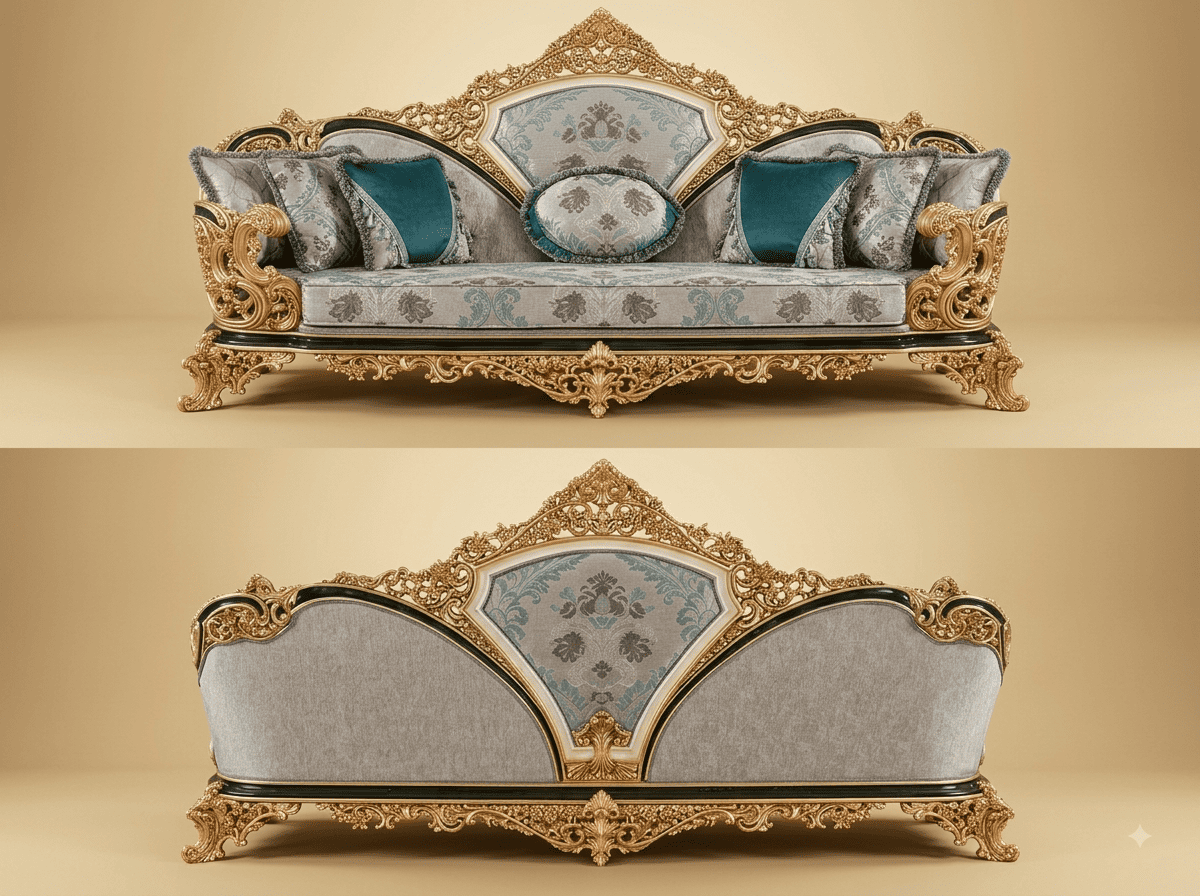
The top rail of this sofa is not straight and it is not level. It dips at the arms, sweeps up through two shoulders and peaks at the centre - and every joint along it has to be cut to an angle that changes at each point.
A square frame is simple: every tenon meets its mortise at ninety degrees, and one setting on the marking gauge does the whole job. Here nothing meets at ninety degrees. Where the serpentine rail runs into the arm post, the rail is already climbing, so the shoulder must be cut to that exact rising angle or the joint will show a wedge of daylight at the top or the bottom.
The angles are not calculated. They are lifted off the full-size drawing with a bevel gauge - the tool is set against the drawn line, locked, carried to the bench and used to mark the shoulder directly. One gauge setting per joint, and the gauge is reset between them, because no two joints on the rail share an angle.
Get one wrong and the whole rail sits a few millimetres out of line, which on a curve as long as this reads as a sag. Get them all right and the sweep looks like it was drawn in a single stroke.
 Ask Price On WhatsApp