Leather and Polished Teak, Not Leather and Paint
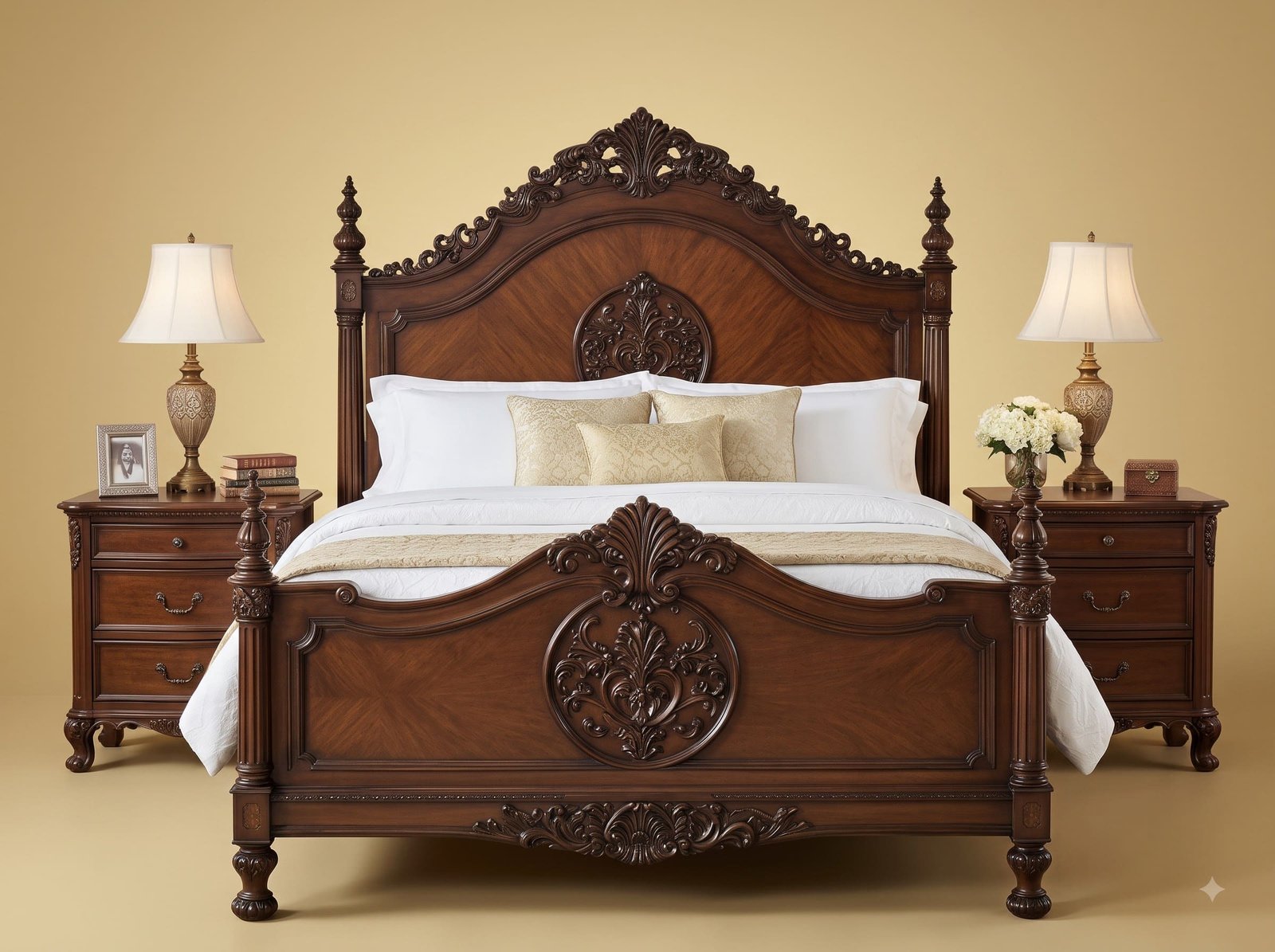
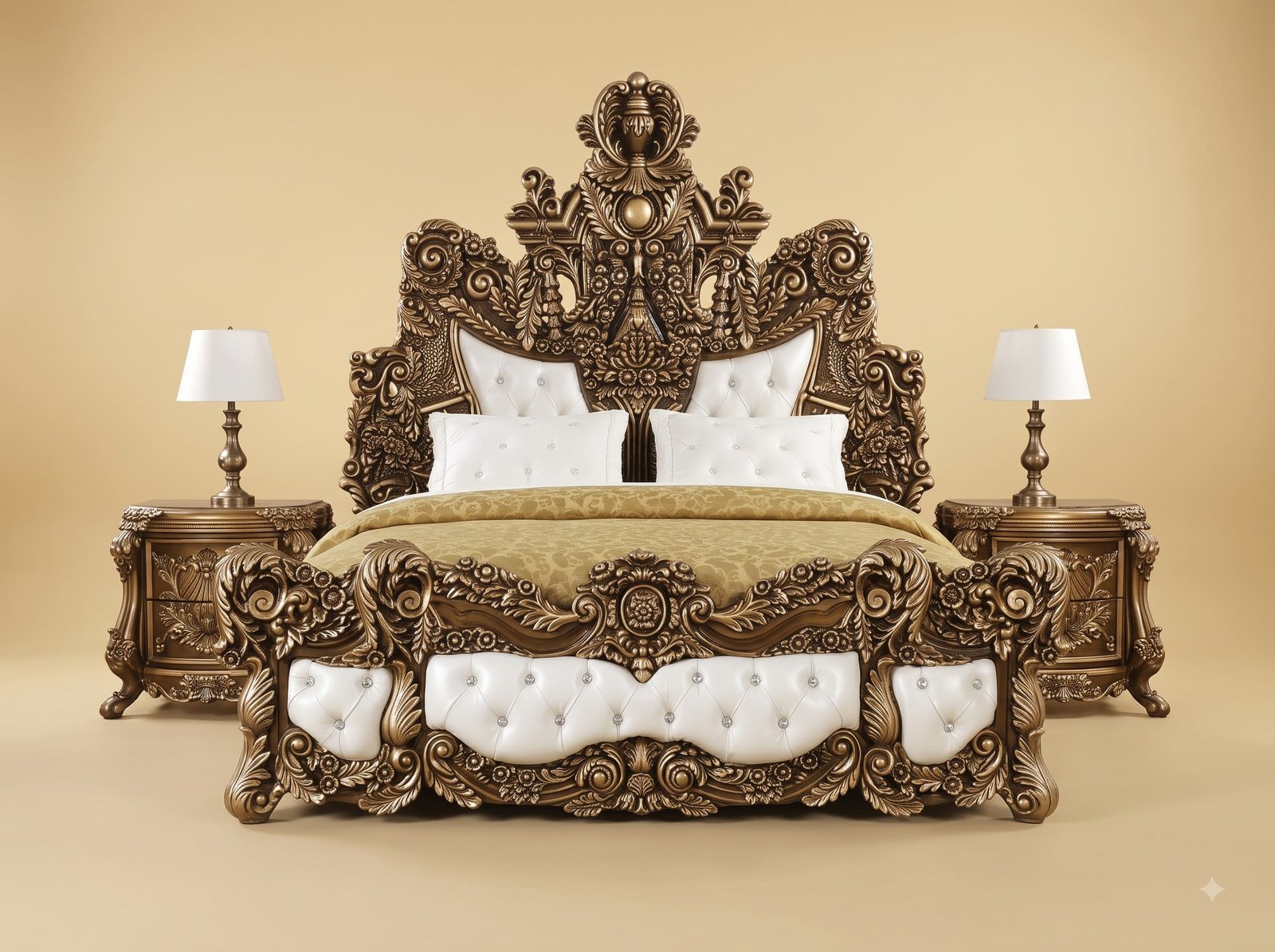
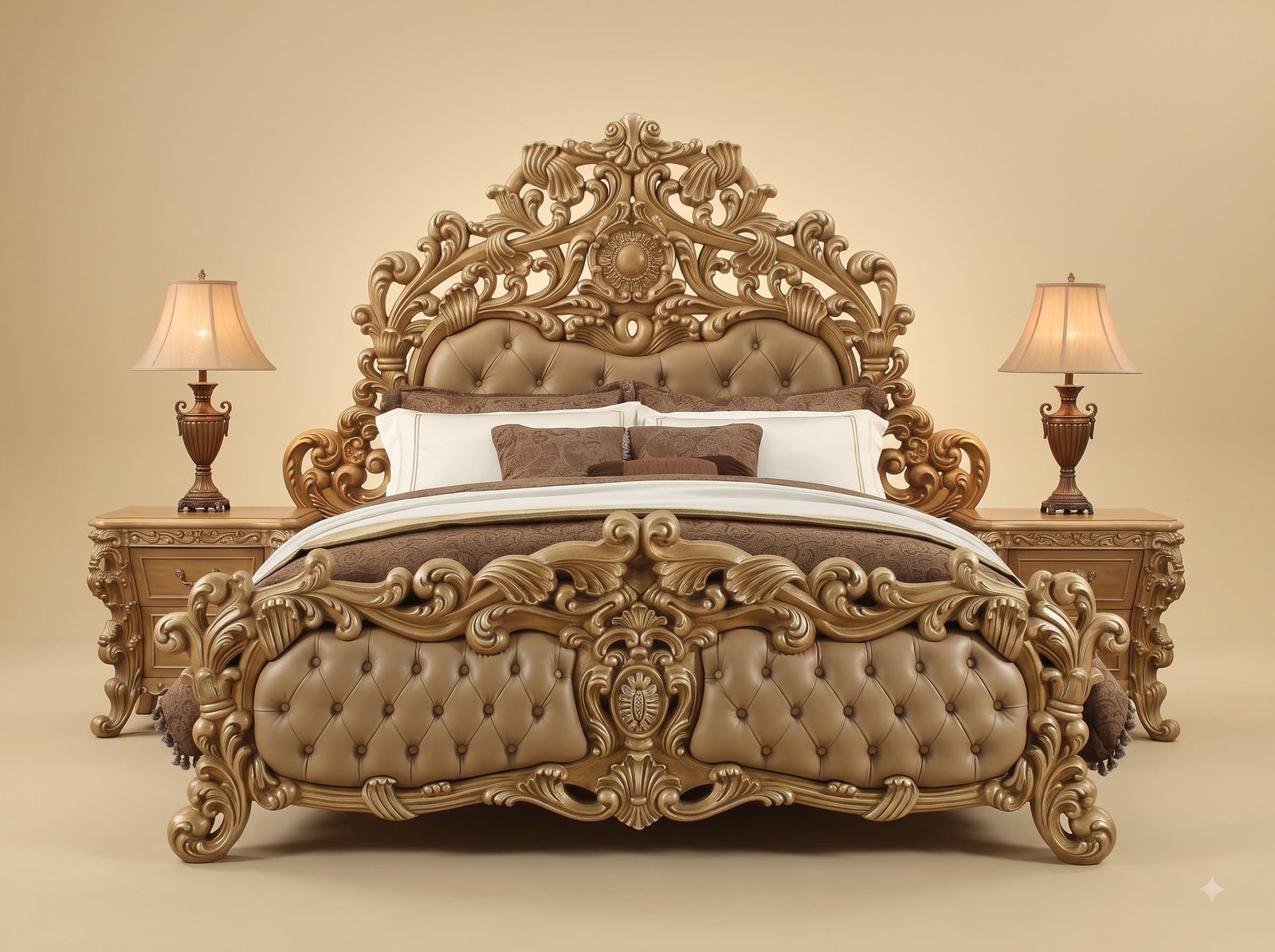
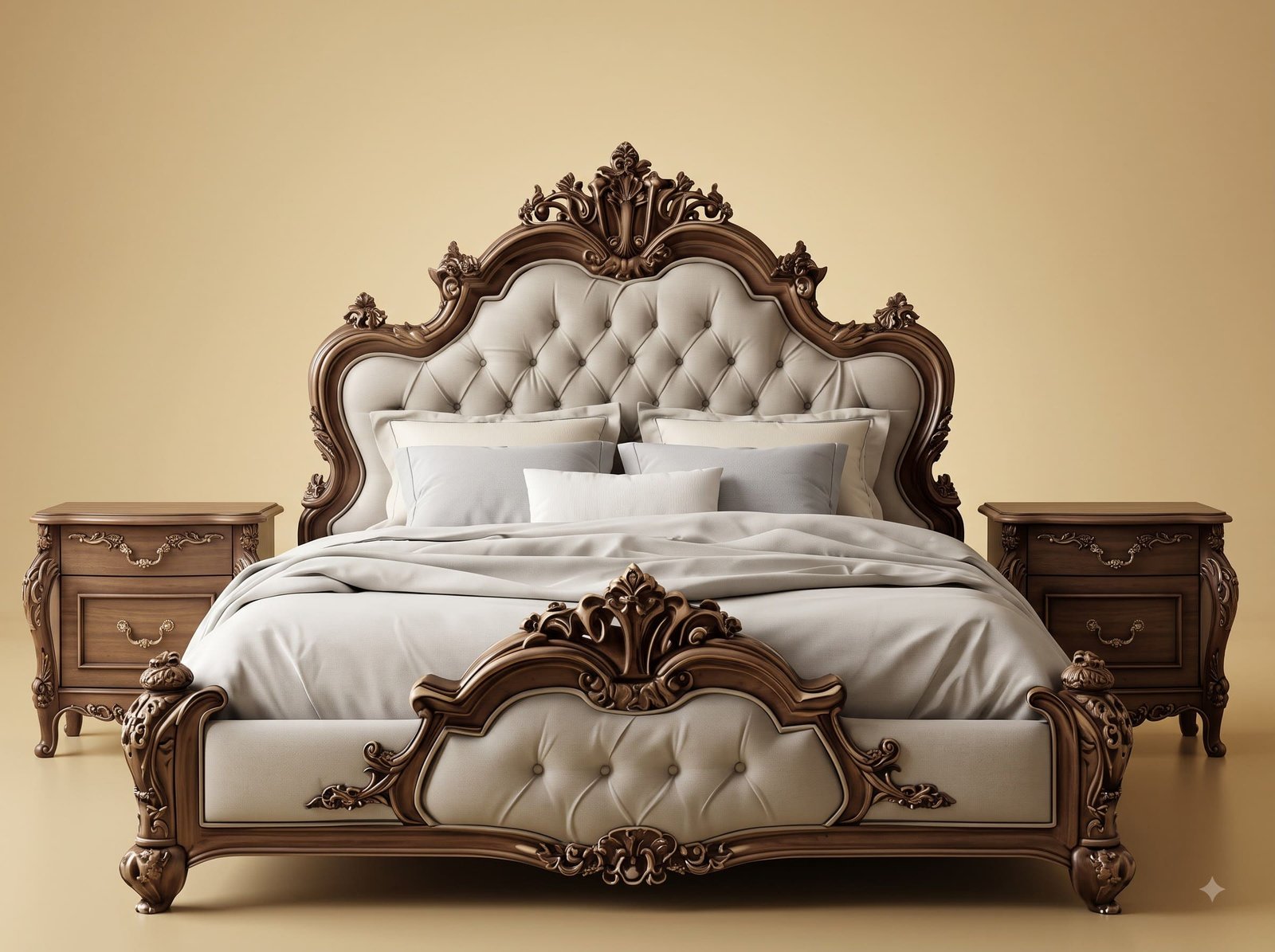
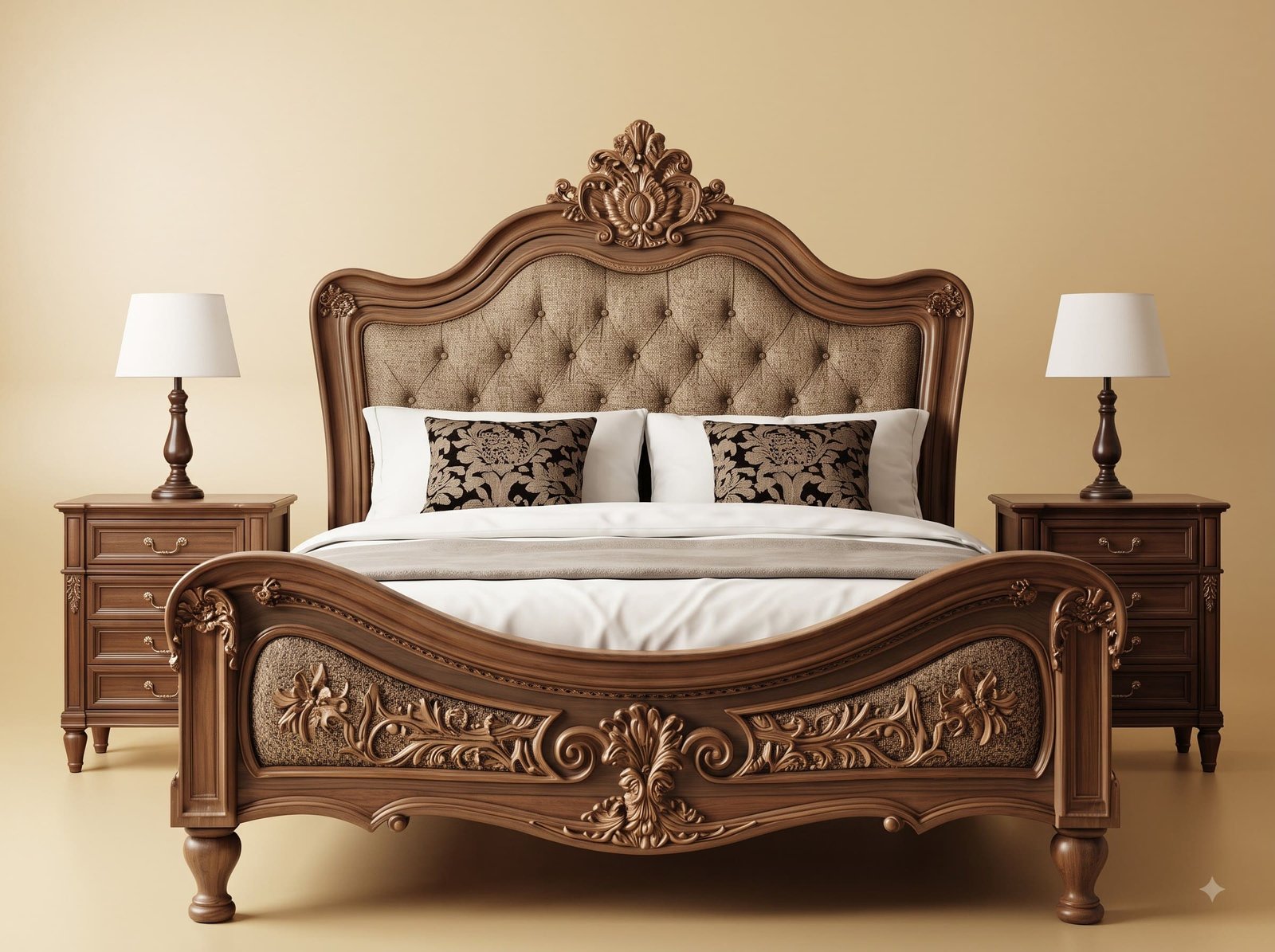
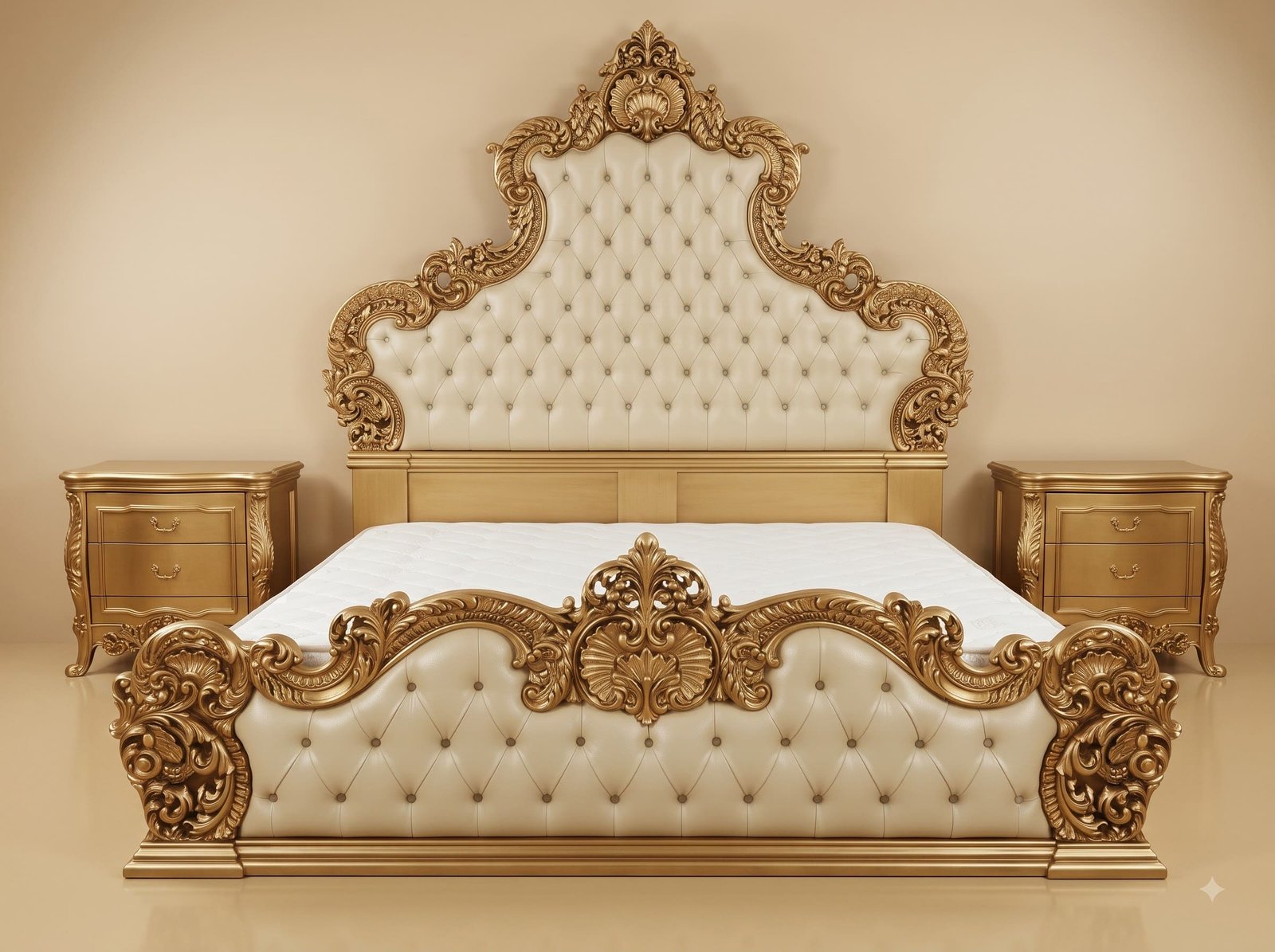
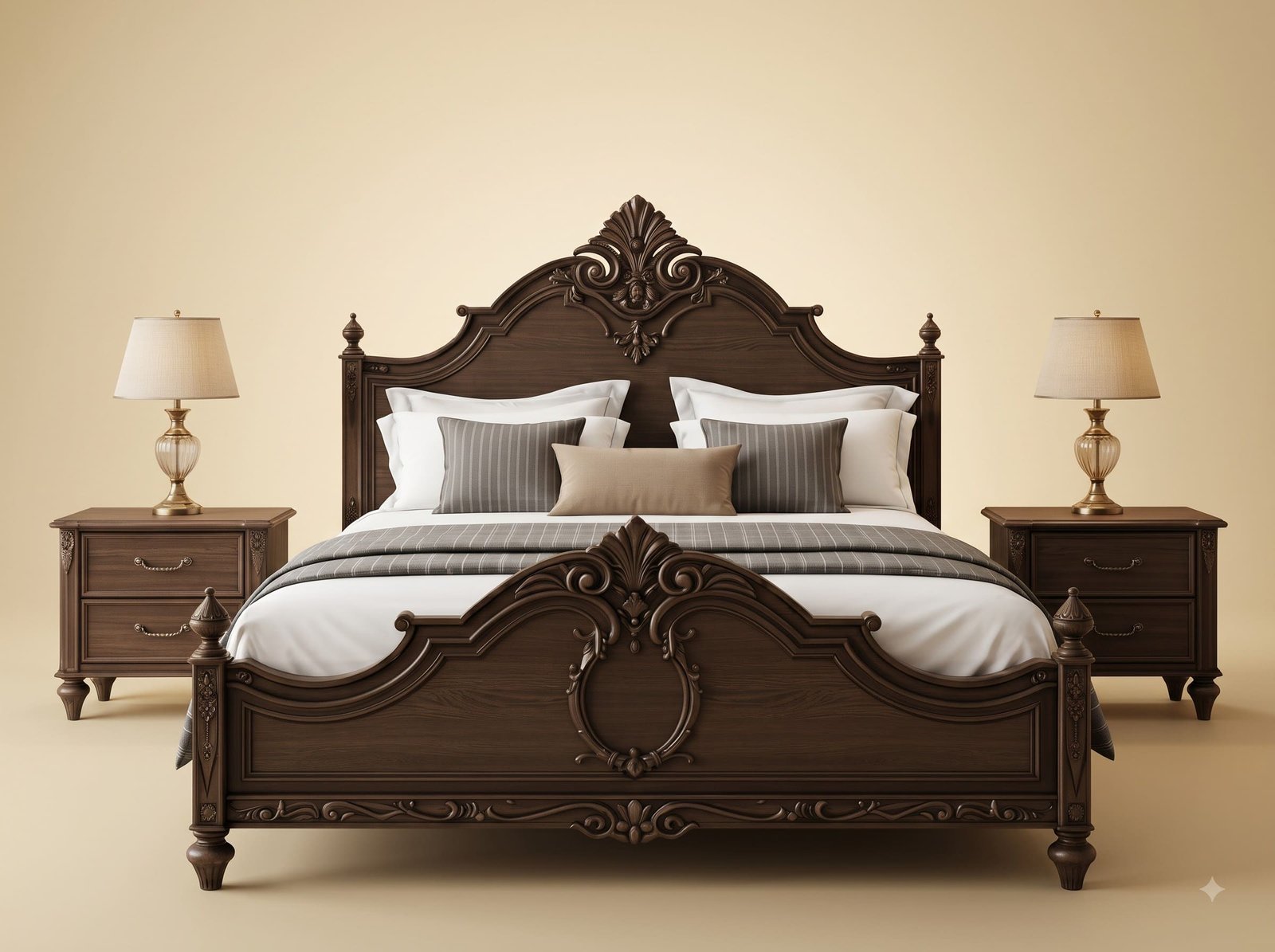
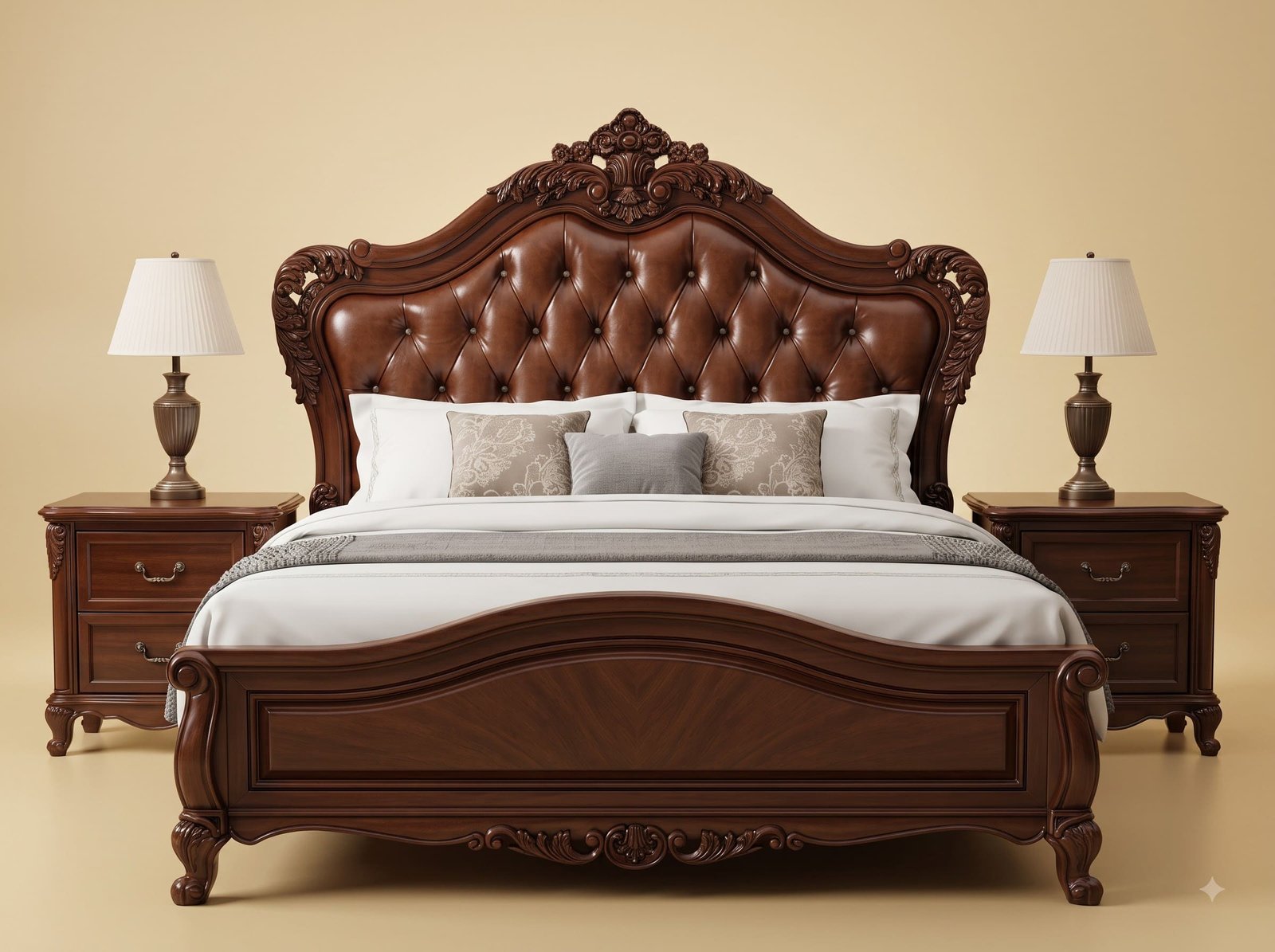
Upholstered beds are usually built as a fabric object with a wooden skeleton hidden inside. This one is built the other way round. The teak is finished to be seen, in a mahogany polish that keeps the grain legible across the footboard panel, the posts and the drawer fronts, and the leather is introduced only where a body actually rests against the bed. That decision drives everything else. The carved crest cannot rely on gold to define it, so it is cut with strong undercuts that hold shadow. The footboard panel is book-matched, meaning two leaves of teak are opened like a book so the figure mirrors across the centre line, which is a detail that only matters if you intend the wood to be looked at.
The buttoning is done after the frame is finished, not before. An upholsterer works the tan hide into the carved recess and pulls each button through by hand, adjusting the fold at every point so the diamonds stay even as the panel curves. Leather cannot be stretched and re-stretched the way fabric can; a misplaced button leaves a permanent mark. It is slower and less forgiving than fabric work, and it is the reason this design is made by hand by master Indian artisans rather than assembled from parts.
 Ask Price On WhatsApp